What the Cold Does to a 1970s Beavercreek Garage Door Pros
Beavercreek's 1938-1998 housing stock means many garage doors predate insulation codes. Here's what cold winters do to them and what repair work costs here.
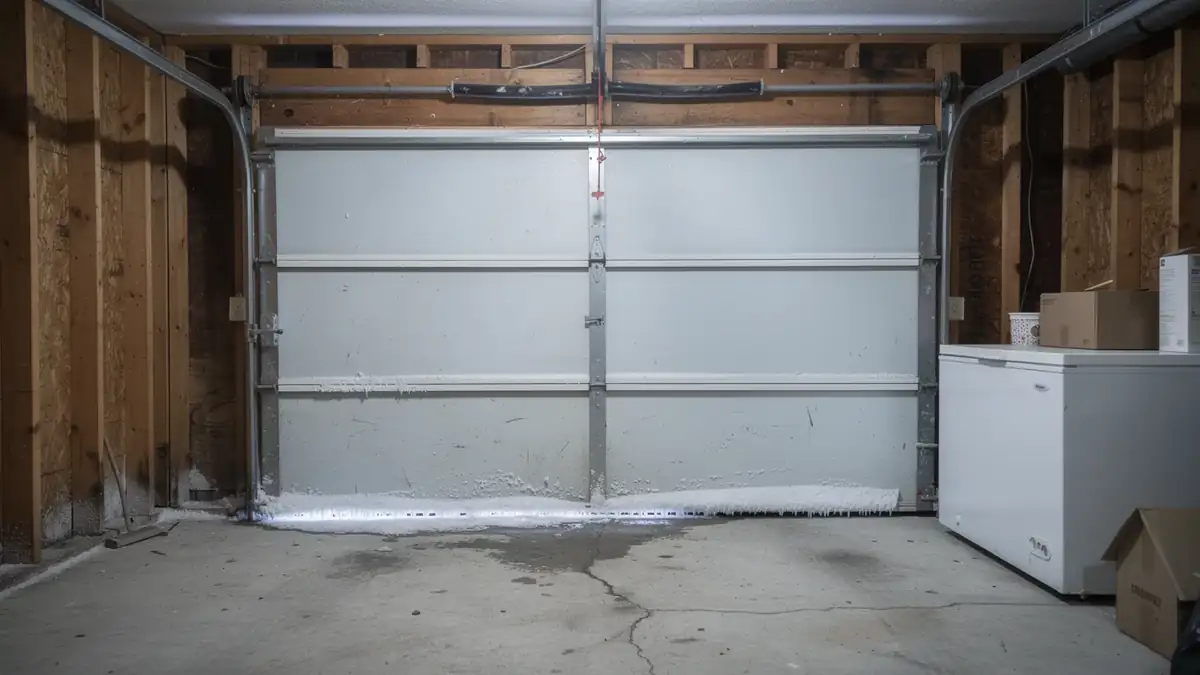
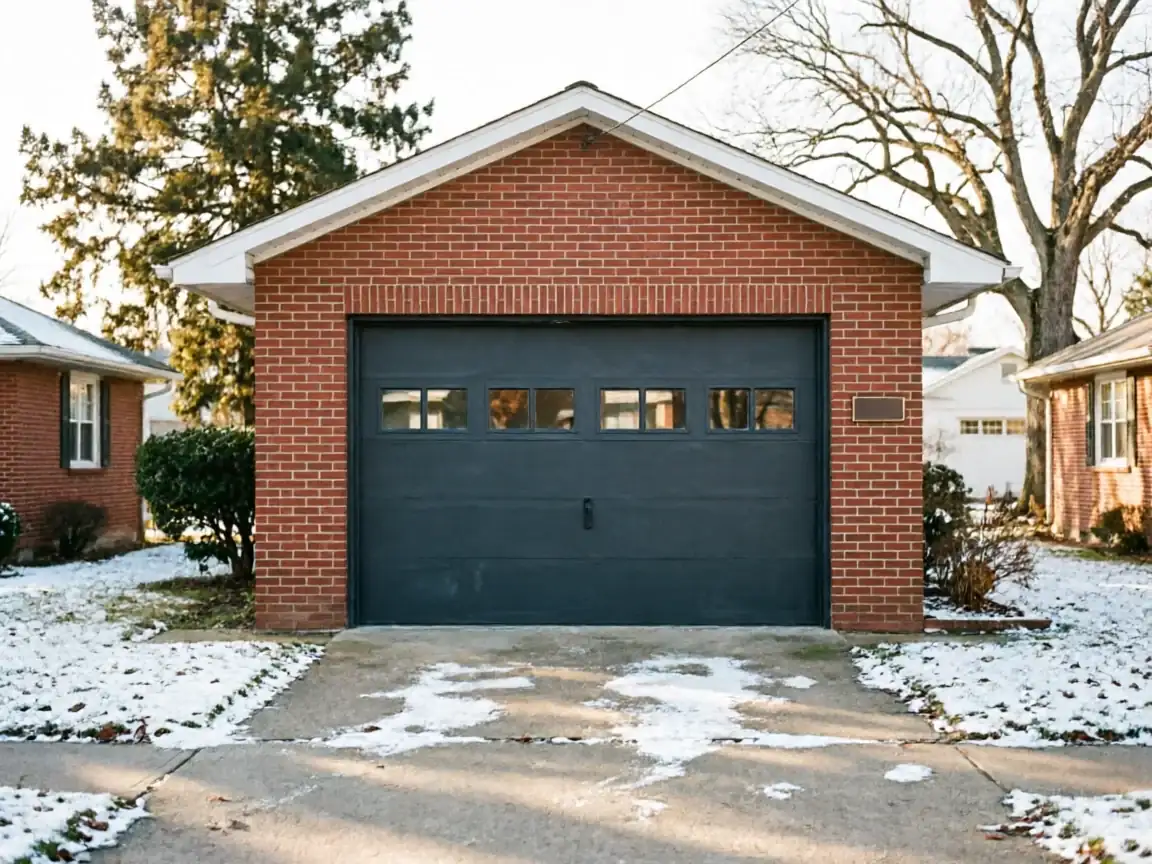
Beavercreek sits in a climate band classified as cold and severe, and most of the housing in town went up between 1938 and 1998, with the median build year landing around 1971. A door built to that era's spec wasn't engineered with today's thermal breaks or insulated steel skins. Through a hard Ohio winter, the metal on an uninsulated panel contracts, the weatherstripping along the bottom goes stiff and splits, and the gap under the door widens enough that you can feel the draft on the far side of the garage. On the older end of that build range - houses from the late 1930s through the 1950s - you're also looking at hardware sized for lighter doors, torsion springs and tracks that weren't built to carry a heavier, insulated replacement panel without adjustment. Across the 31 named areas that make up this build stock, the pattern repeats: a door that worked fine in October seizes or drags once temperatures drop, because the cold is acting on materials that were never meant to handle it well. That's not a design flaw unique to one street - it's what happens when a region with genuinely severe winters is full of homes built decades before insulated garage doors were standard equipment.
What Is Going On
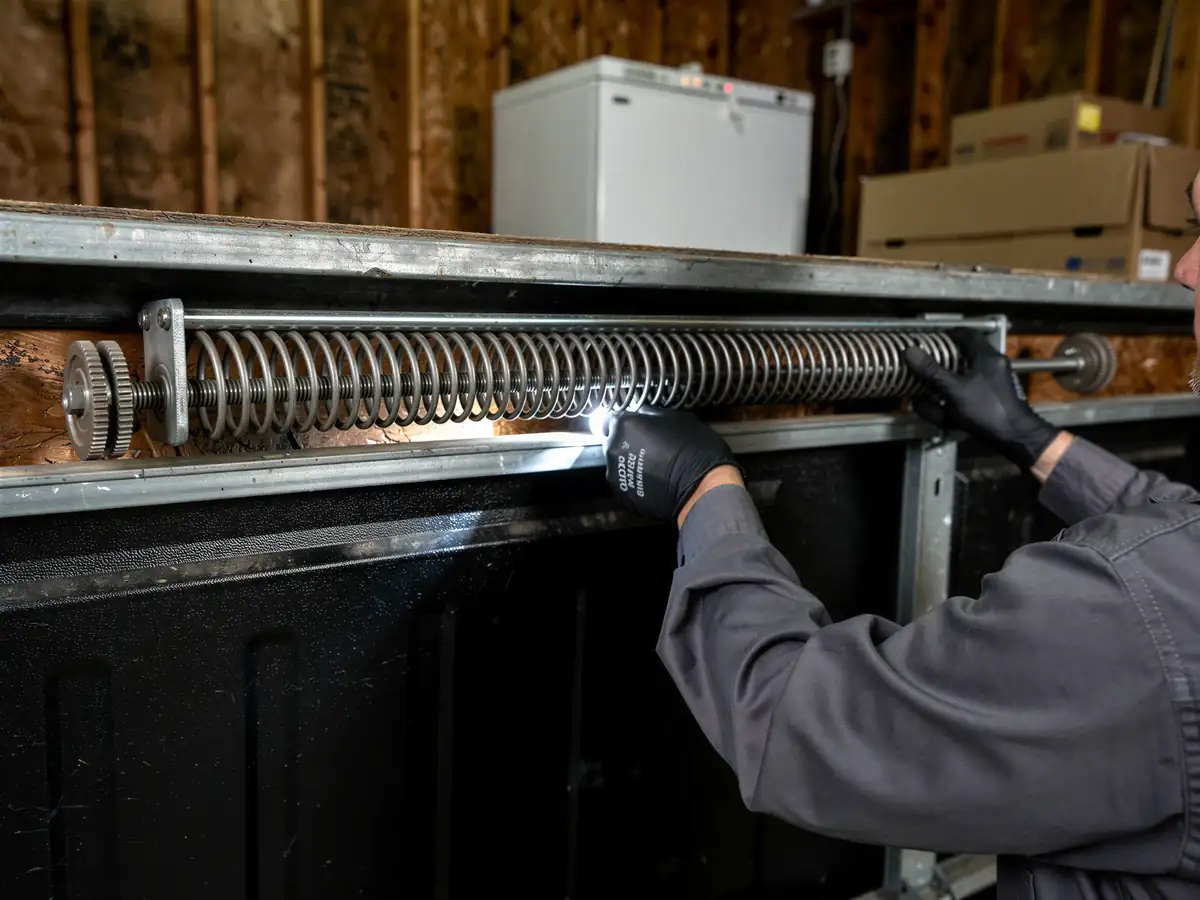
The reason this shows up so often here comes down to the gap between the door and the house it's attached to. A home from the 1960s or 70s - the most common build decade across this service area - usually still has its original single-layer steel or wood door, or a first-generation replacement from the 80s or 90s. Neither was built with the double-wall, insulated construction that's now standard. Cold makes steel brittle at the hinge points, so panels that flex fine in July start cracking or denting in January. Springs are the other half of it: torsion springs lose tension over time, and in houses this old, most have already been replaced once or twice by whoever owned the place before you - sometimes with a spring sized for the original lightweight door, not the heavier insulated panel swapped in later. That mismatch is one of the most common things we find on a service call in this area: a newer door bolted onto 50-year-old track and spring hardware that was never upgraded to match it. None of this means the house was built badly. It means the door is doing a job the original builders didn't plan for, and nobody's gone back to correct the hardware since.
What You Pay
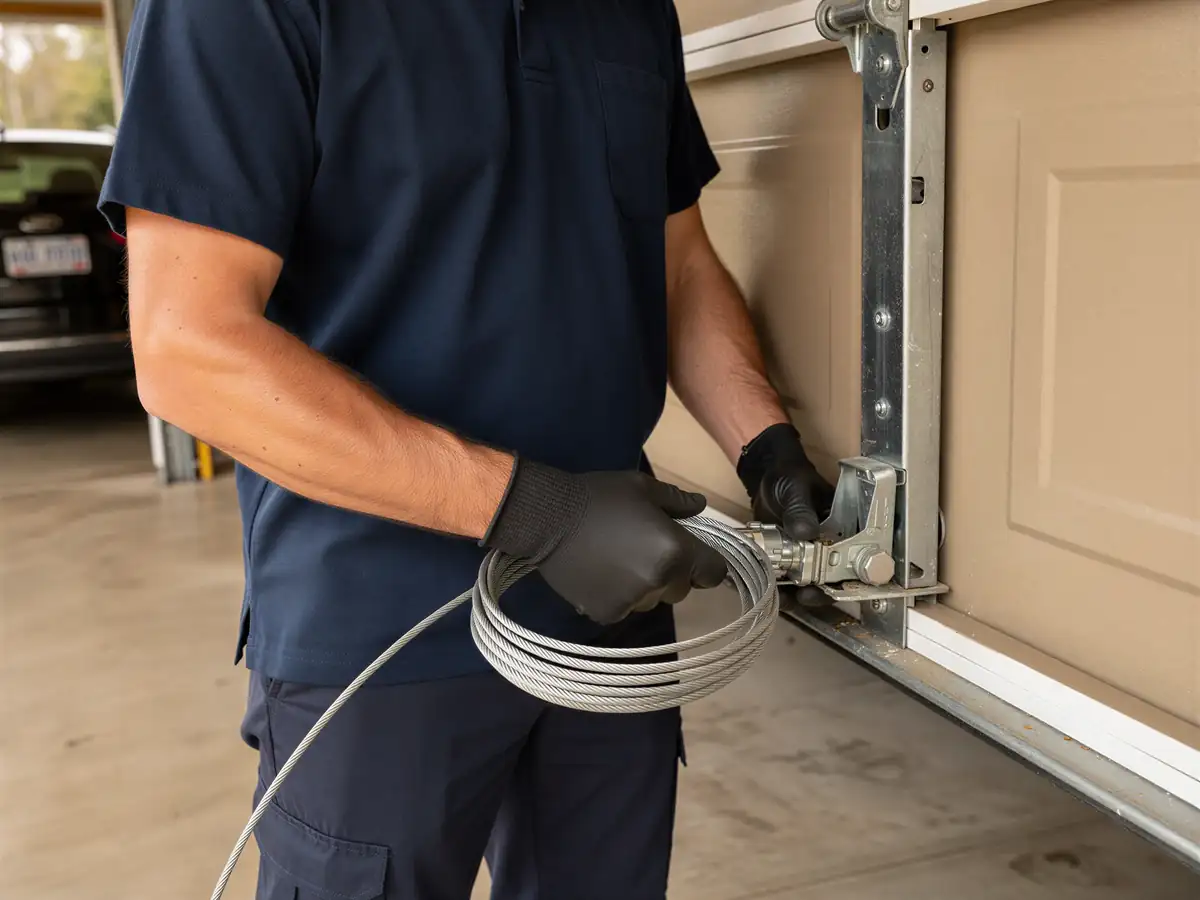
We don't have a flat number to hand you here, because what a repair costs depends on what's actually wrong - a worn weatherstrip is a different job than a torsion spring matched to the wrong door weight. What we can tell you is what we see driving the bill in this area. With roughly 72,875 owner-occupied houses in the broader service area and a median household income near $70,000, most of the work we price out is repair and targeted hardware replacement rather than a full door swap - fixing the mismatch between an old spring set and a newer panel, or replacing weatherstripping and rollers that have given out from age and cold, rather than tearing out a door that still has working steel. Full replacement comes up when the panel itself has cracked or rusted through, which happens more on the oldest end of the 1938-1998 build range. If your door is from that older bracket, expect the conversation to include whether the opener and track are original too, since replacing one piece on hardware this age usually means another one fails within the year.
Leaving It Alone
Ignoring a dragging door through one more winter rarely fixes itself, and in houses built before insulation rules, the deferred problem usually compounds. A spring that's audibly straining in cold weather is closer to failure than it would be in a mild climate, and a broken torsion spring on a door this heavy is not a safe DIY fix - that's one job we always tell people to leave alone themselves. On the other hand, we'll also tell you when a repair isn't worth it: if the panel is a 1970s-era wood door that's swelled and warped from decades of freeze-thaw cycles, patching the weatherstripping again is just delaying a replacement you'll need anyway. We can't give you a timeline for parts on doors that old - some original hardware isn't made anymore, and finding a matching panel for a non-standard width from that era can take longer than a modern order. That's the honest limit of what we can promise on houses this age: we can diagnose it fast, but sourcing an exact match for 1960s hardware sometimes isn't fast at all.
How it works
From “it’s stuck” to “it’s fixed”
1
Tell us what’s wrong
Describe the symptom - won’t open, loud bang, opener runs but the door won’t move.
2
On-site diagnosis
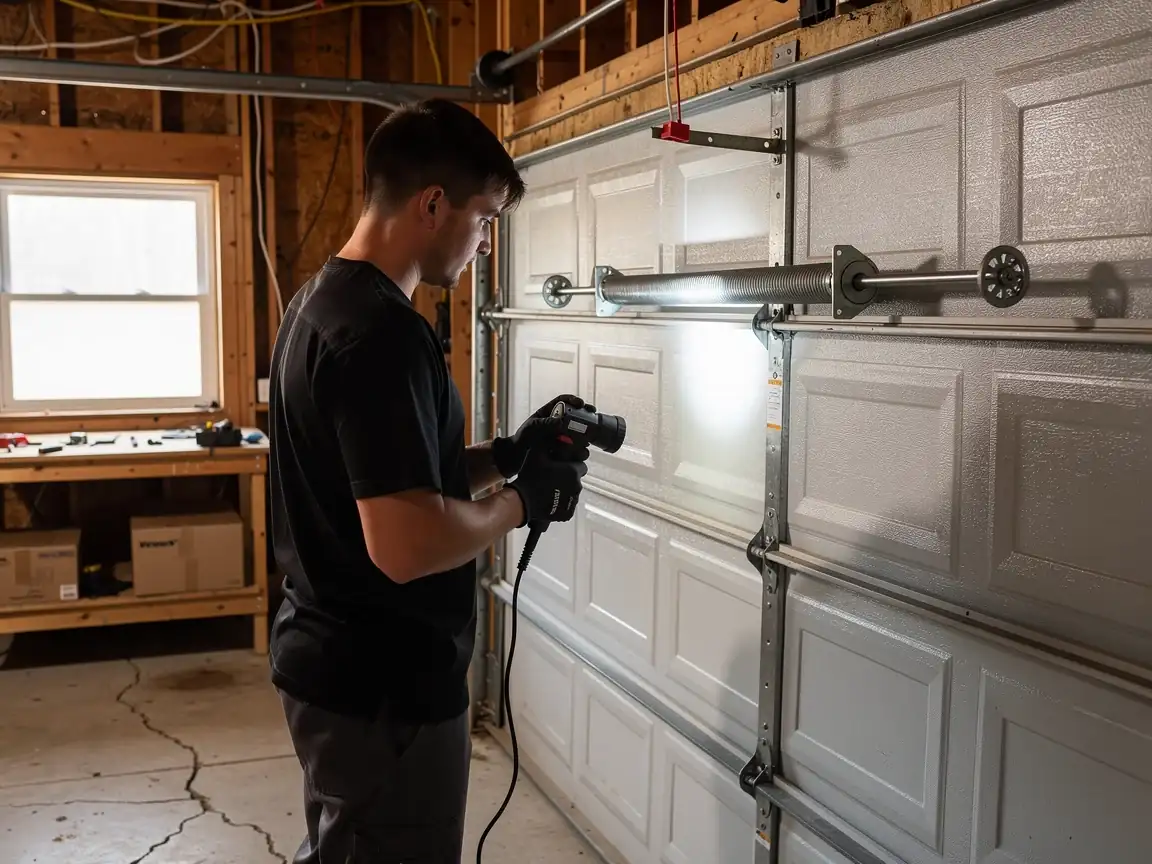
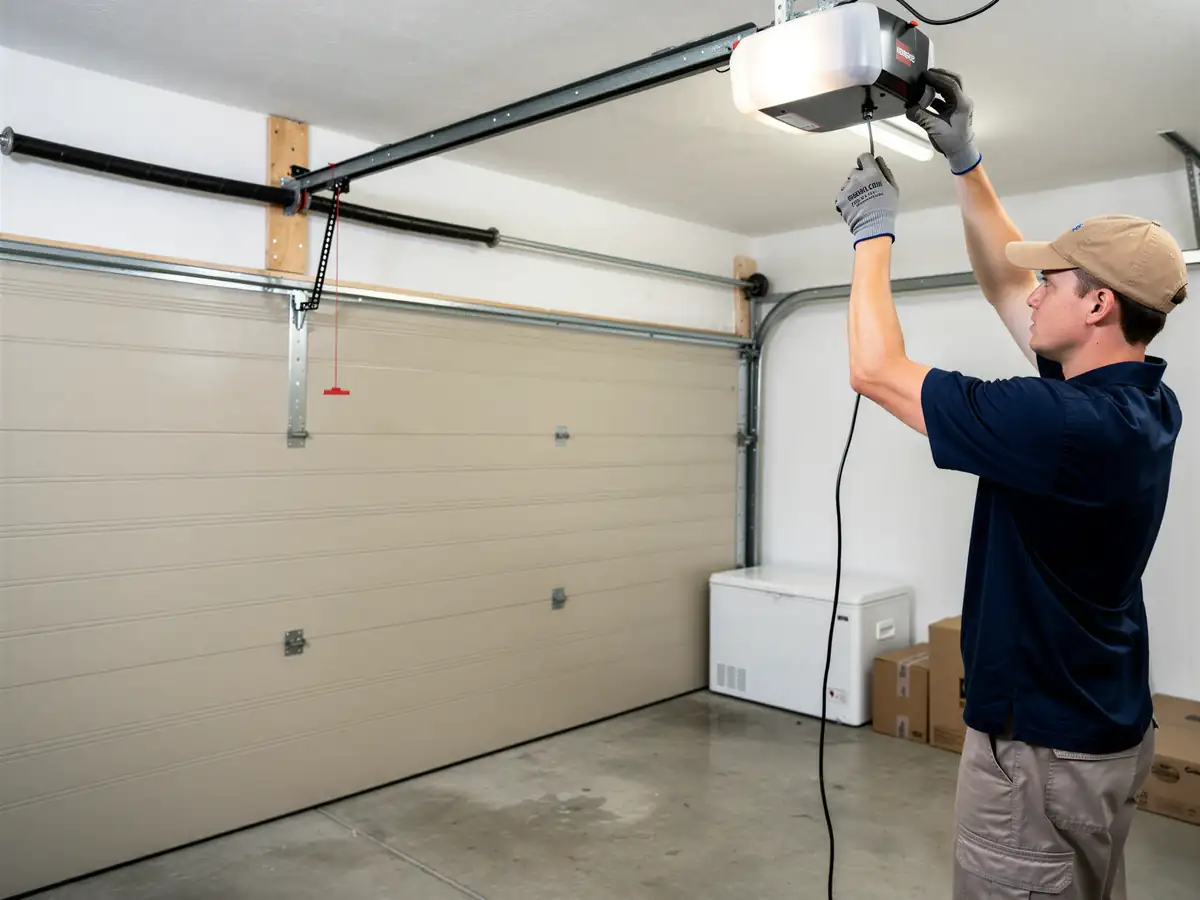
A technician tests the door under power and by hand and finds what actually failed.
3
Clear, up-front plan
You get the fix that’s needed and what drives the cost - before any work starts.
4
Repaired & tested
The repair is done, the door is set true and tested, and the work area left clean.
Not sure which repair your door needs in Beavercreek, OH? Describe what it’s doing - every job starts with a diagnosis.
Why does my garage door stick every winter but not in summer?
Most homes here are from the 1938-1998 build range, and the doors from that era weren't insulated or built with thermal breaks. Cold makes the steel contract and the weatherstripping stiffen, so a door that moves freely in warm weather starts dragging or binding once temperatures drop into the severe-cold range this area gets.
Is it normal for my old torsion spring to sound strained in cold weather?
It's common on houses this age, but it's not something to leave alone. Many torsion springs in this area's older housing stock were sized for a lighter original door and have been working harder ever since a heavier panel got swapped in. A spring straining in cold is closer to failure, not further from it.
Should I repair my old door or just replace it?
It depends on the panel. If the steel or wood is cracked, rusted, or warped from years of freeze-thaw, patching it again just delays a replacement. If the structure is sound and the problem is springs, rollers, or weatherstripping, repair usually makes more sense than tearing out a door that still works.
Ready to get your garage door sorted?
Tell us what it’s doing and where you are in Beavercreek - we’ll take it from there.