What the Weather Here Does to It
Beavercreek sits in a cold-severe climate band
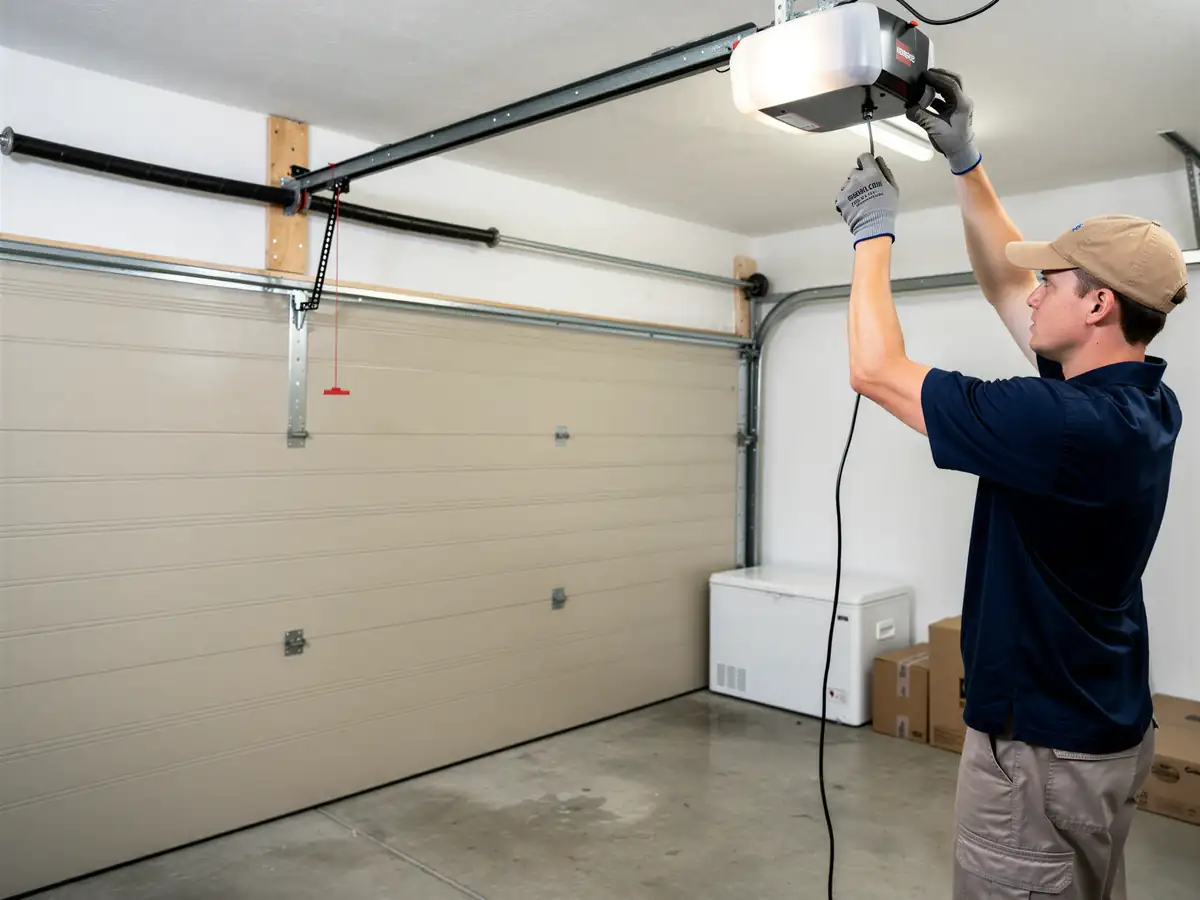
And that matters more to a garage door opener than people think. Grease in the gear housing stiffens when temperatures drop hard, which makes the motor work harder to pull a chain or belt through its travel. On older units, that extra load shows up as grinding, slow starts, or a door that stalls halfway up on the coldest mornings of the year. It's not the motor dying outright - it's the motor fighting conditions it was never calibrated for.
Power cuts compound the problem
A cold front that knocks out power for a few hours is also the kind of front that stresses the electrical grid hardest, and an opener with no battery backup just stops wherever it is - sometimes half-open, sometimes fully down with the manual release still engaged from the last outage. If your opener doesn't have a battery backup module, a winter power cut leaves you locked out or locked in, not just inconvenienced.
We're not going to tell you every opener in Beavercreek needs replacing because of this
Most don't. But the combination of cold-severe winters and aging gear is exactly why opener calls here cluster around the first hard freeze and the first big outage of the season, not randomly through the year.
What Is Going On
Housing in Beavercreek was mostly built between 1938 and 1998, with the heaviest stretch in the 1960s and 70s. That's the detail that actually explains most of our opener calls. A house from that era was very likely fitted with a chain-drive opener as standard equipment, upgraded at some point to a newer motor head but often left on the original rail, bracket, and wiring. None of that was built with battery backup in mind, because battery backup wasn't a standard feature when these systems went in.
So what we see on a service call is rarely "the opener is broken" in a simple sense. It's a motor that's aging alongside a rail that's worn, sensors that have drifted out of alignment over decades of settling, and a power supply with no backup path. A power cut just exposes all of that at once - the door won't open, the manual release is stiff from disuse, and the homeowner is standing in a cold garage trying to figure out which cord does what.
Across the wider service area - 144,820 households, with 72,875 of those owner-occupied houses - a large share are running on that same original-era hardware. It's not a defect specific to any one street. It's the age of the stock.
What You Pay
We don't publish a flat number here because opener jobs vary more than almost anything else we do - a logic board swap is a different job from a full motor and rail replacement, and a battery backup retrofit is different again. What we can tell you is how homeowners in this area tend to decide. With median household income here around $70,000, most people we talk to aren't looking for the top-shelf smart opener with every feature - they want the door working reliably through winter without overpaying for capability they won't use.
That usually means repairing a sound motor rather than replacing it, unless the gear housing is cracked or the motor itself has burned out. If a battery backup unit is the real fix for your power-cut problem, that's usually a smaller add-on to an existing opener rather than a full replacement - cheaper than most people expect, and often the single change that stops the "door stuck during an outage" problem for good.
We'll tell you straight if a repair isn't worth it. An opener motor that's failed twice in a year, on top of a worn rail, usually costs more to keep patching than to replace once.
Leaving It Alone
Here's the honest limitation
If your opener is original to a house built in that 1960s-70s wave and it's still running fine, we're not going to push you into replacing it just because it's old. Age alone isn't a failure. We've seen chain-drive units from that era outlast openers installed ten years ago, because the originals were simple machines with fewer parts to fail.
What we will say is that if you've never tested your manual release
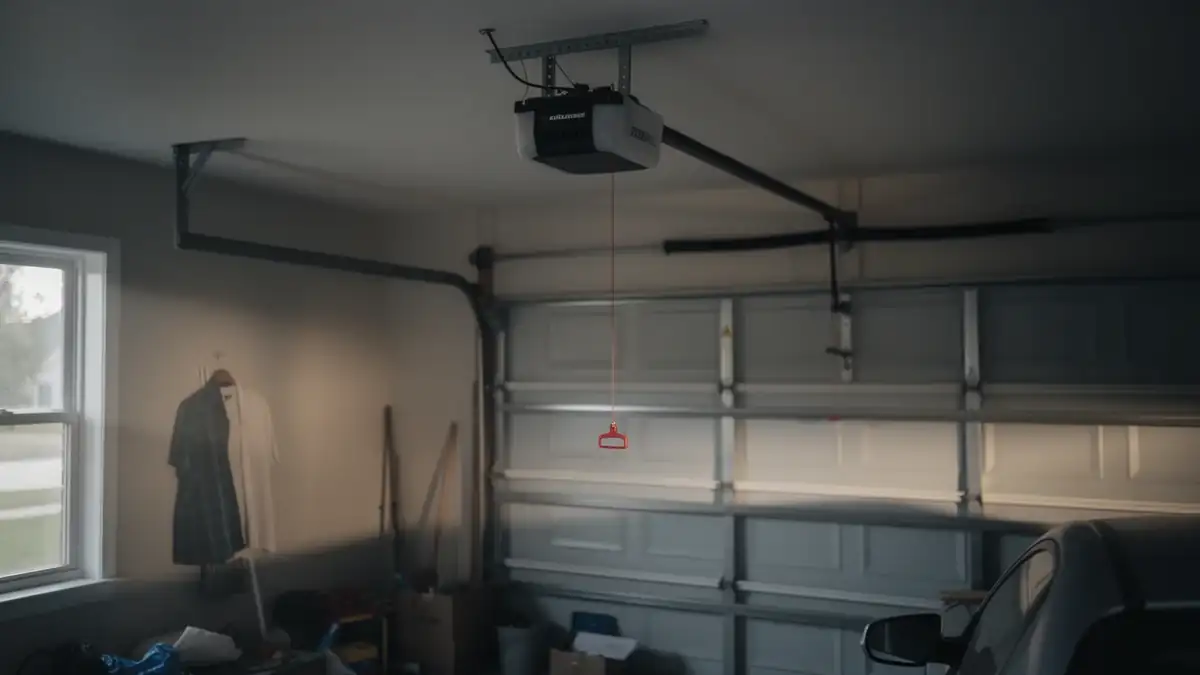
Do it before a power cut forces you to. Pull the red cord, see if the door moves freely, and put it back. If it's stiff or won't release the carriage, that's worth a call now rather than during an outage when you're standing in the cold trying to get a car out.
And if your opener doesn't have battery backup and you've had even one bad experience with a door stuck shut during a power cut
That's the one upgrade we'd actually recommend on its own merits - not because the rest of the opener is bad, but because cold-severe winters here make outages a when, not an if.