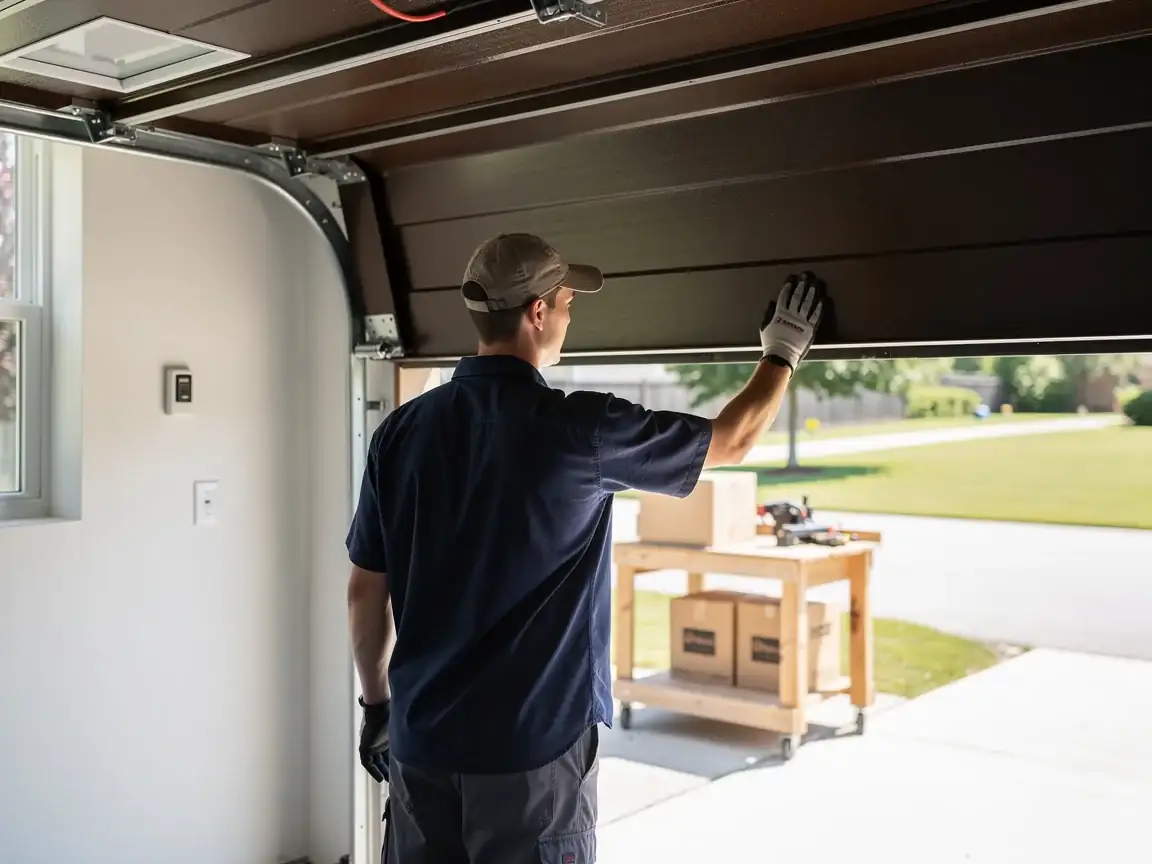
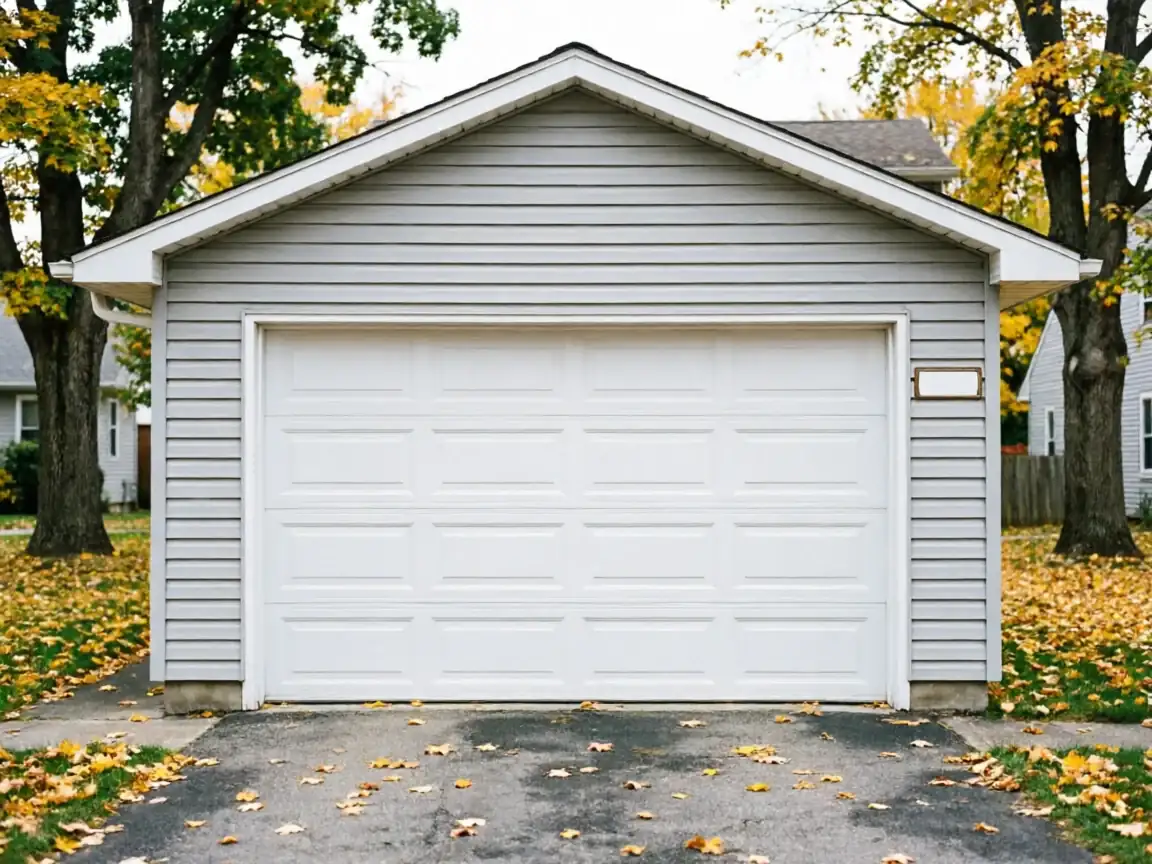
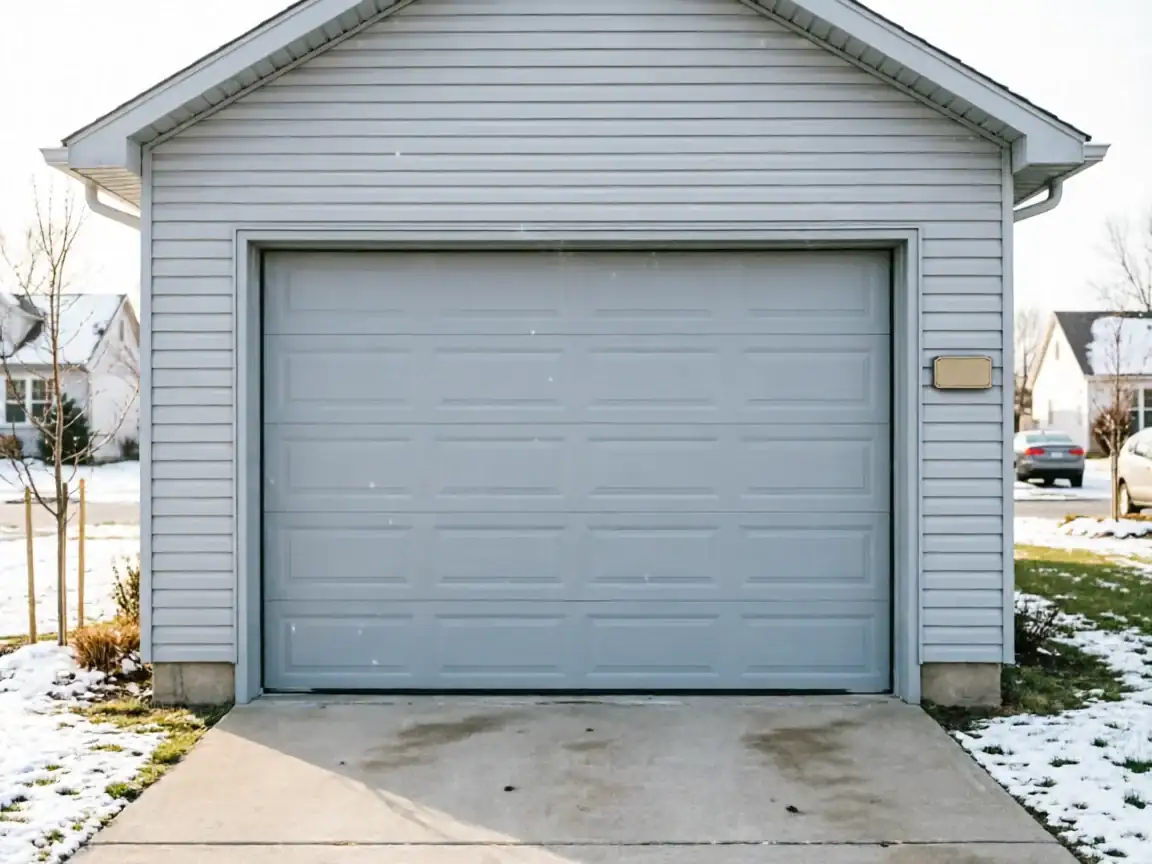
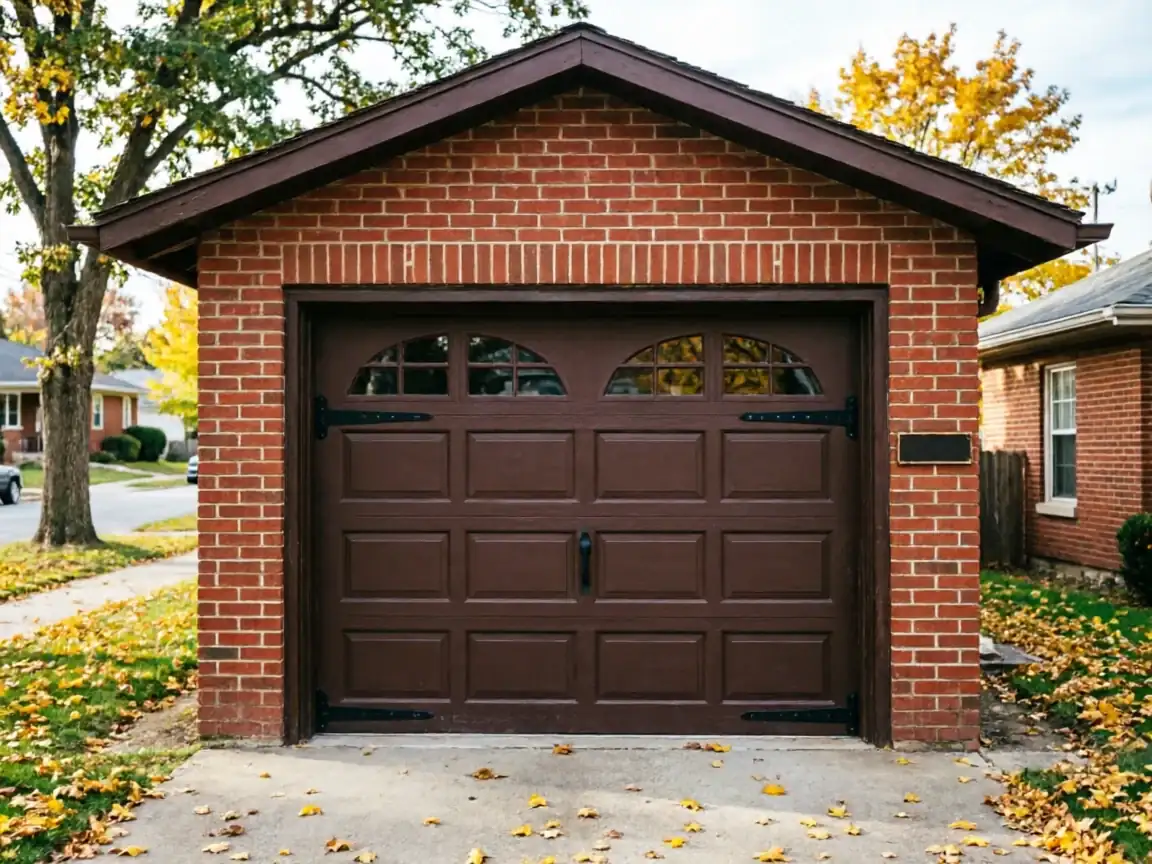
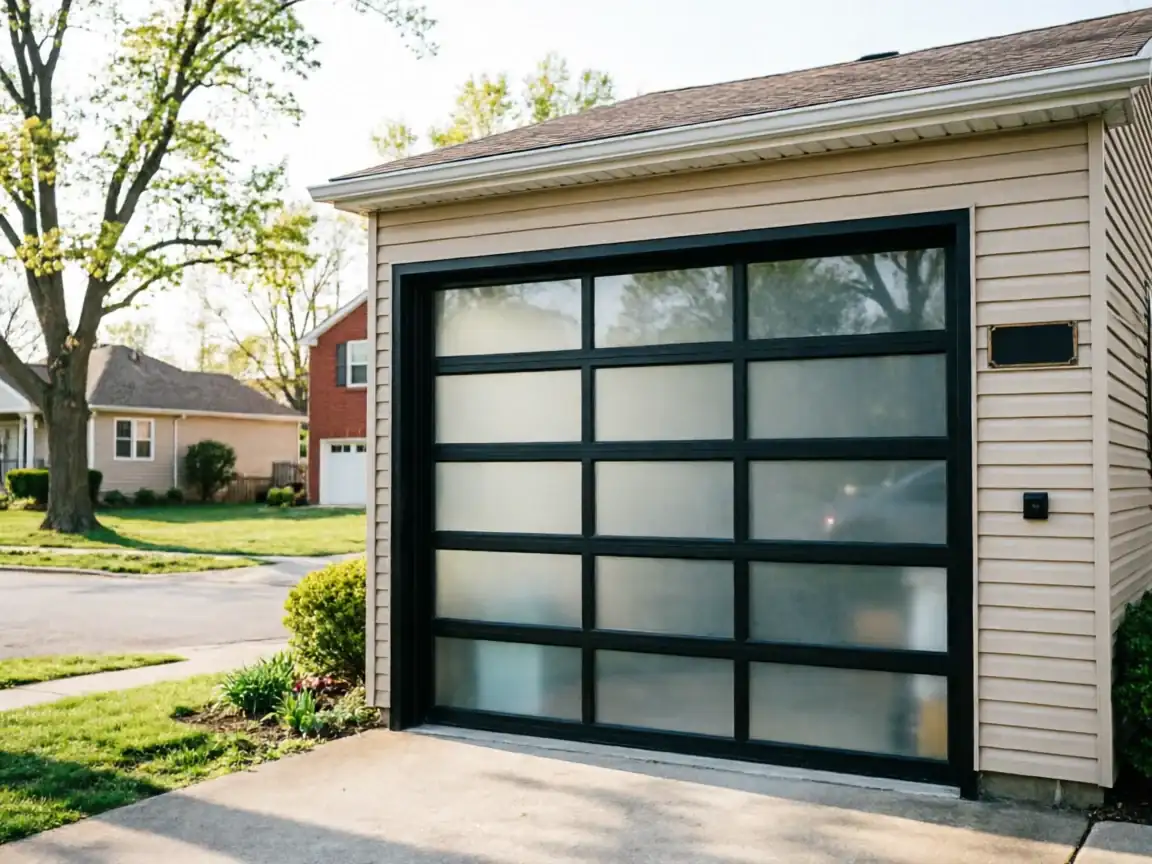
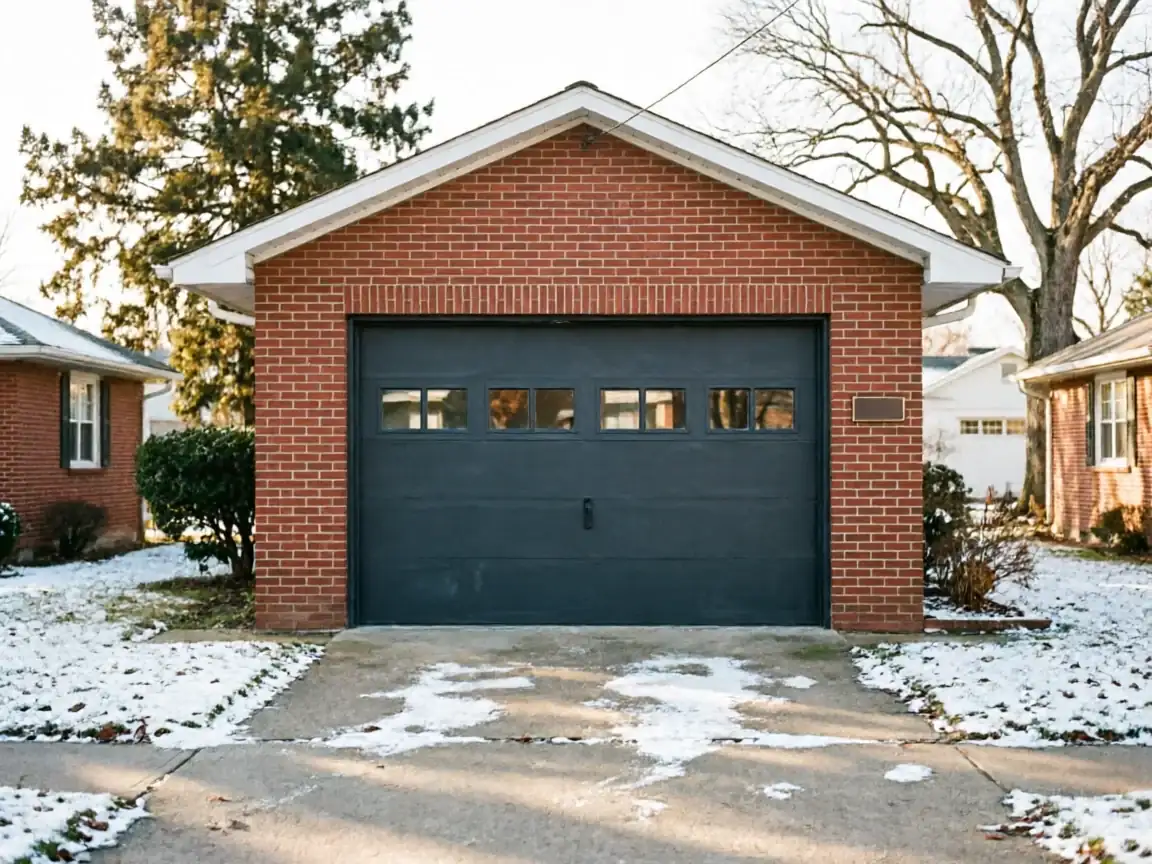
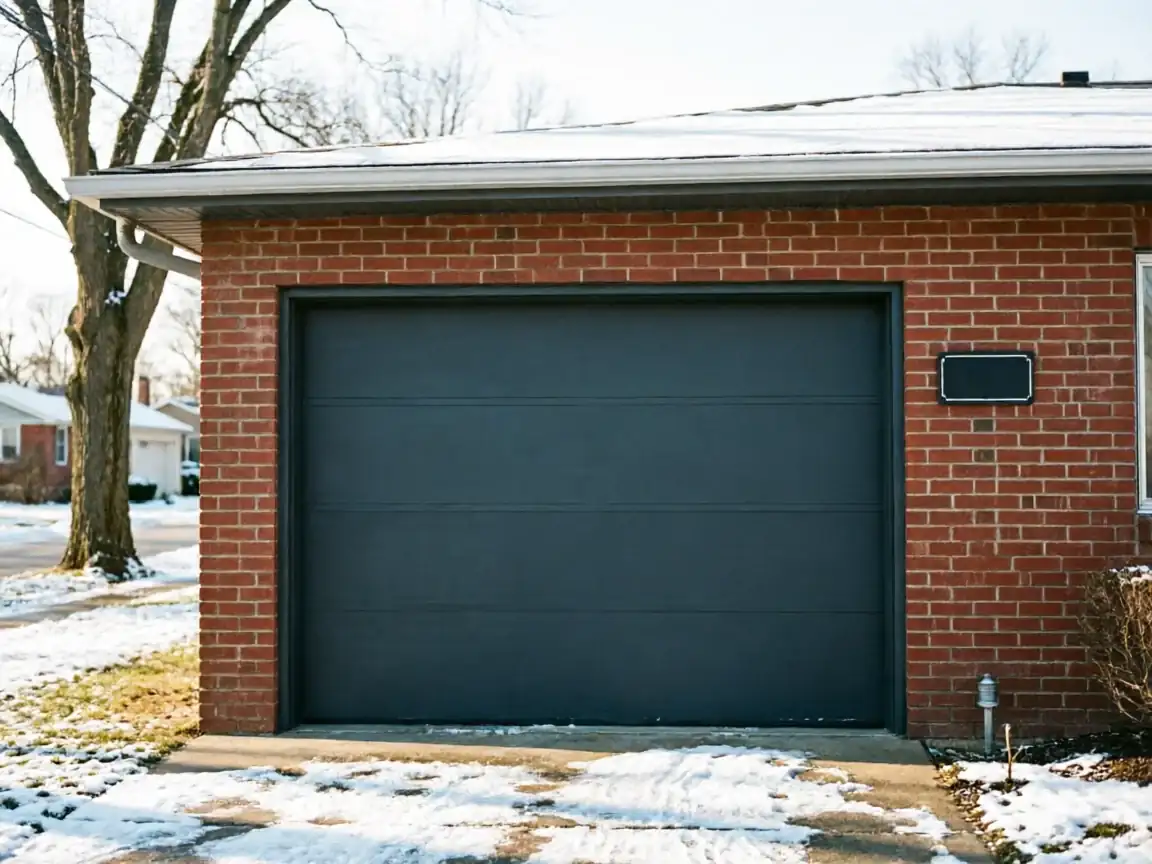
Garage door repair and install for Xenia homes built mostly around 1970, serving the area 7 miles from our Beavercreek base. Springs, openers, tracks, panels.
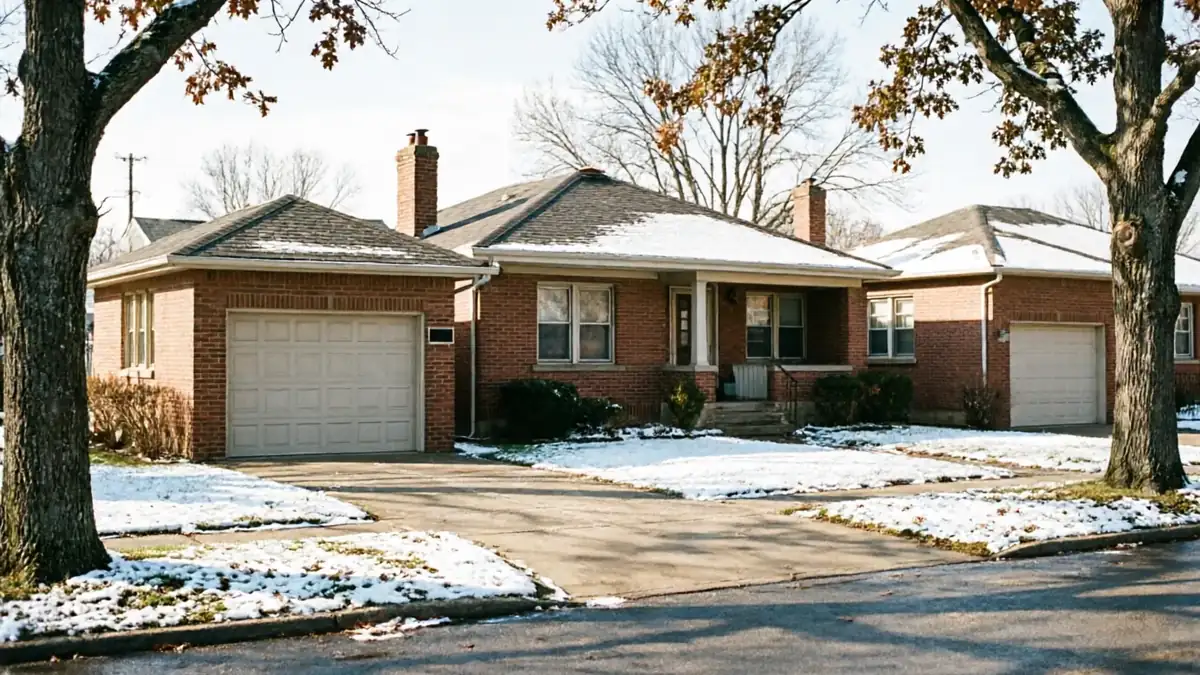
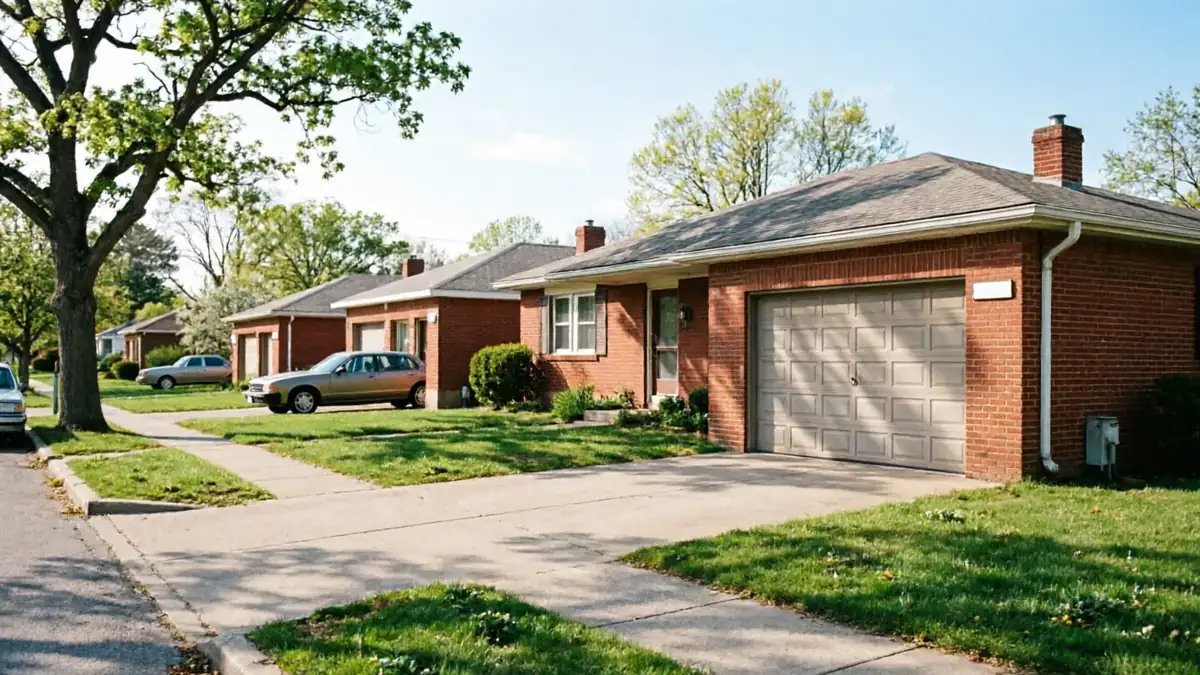
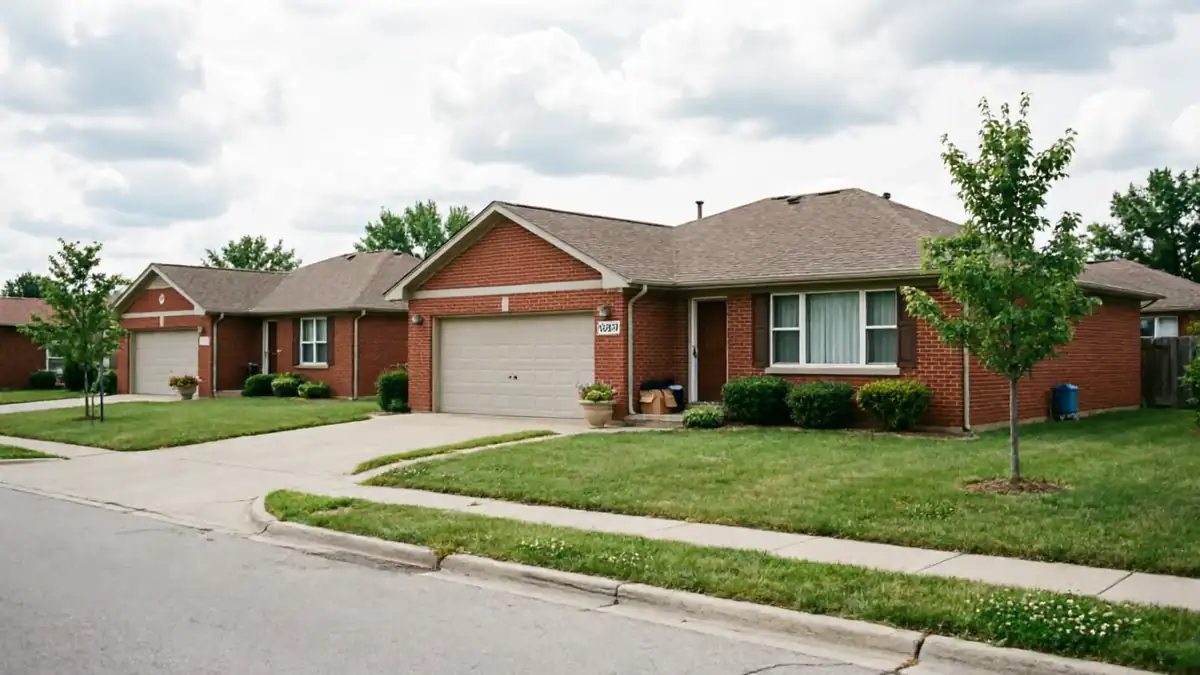
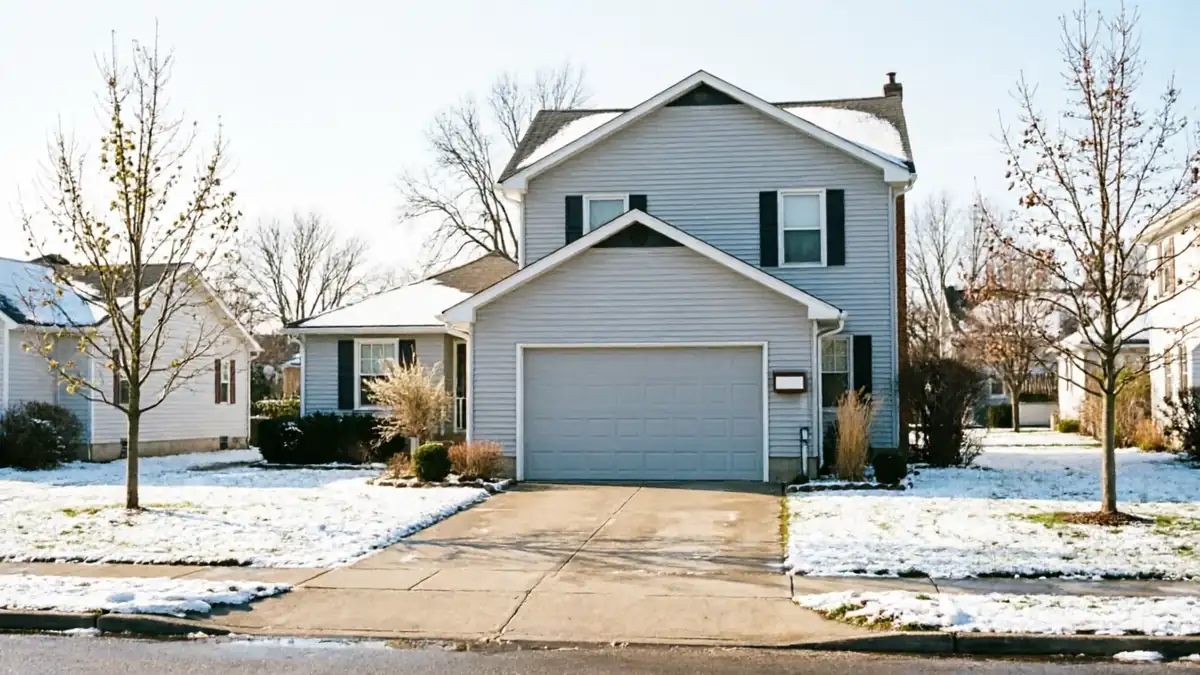
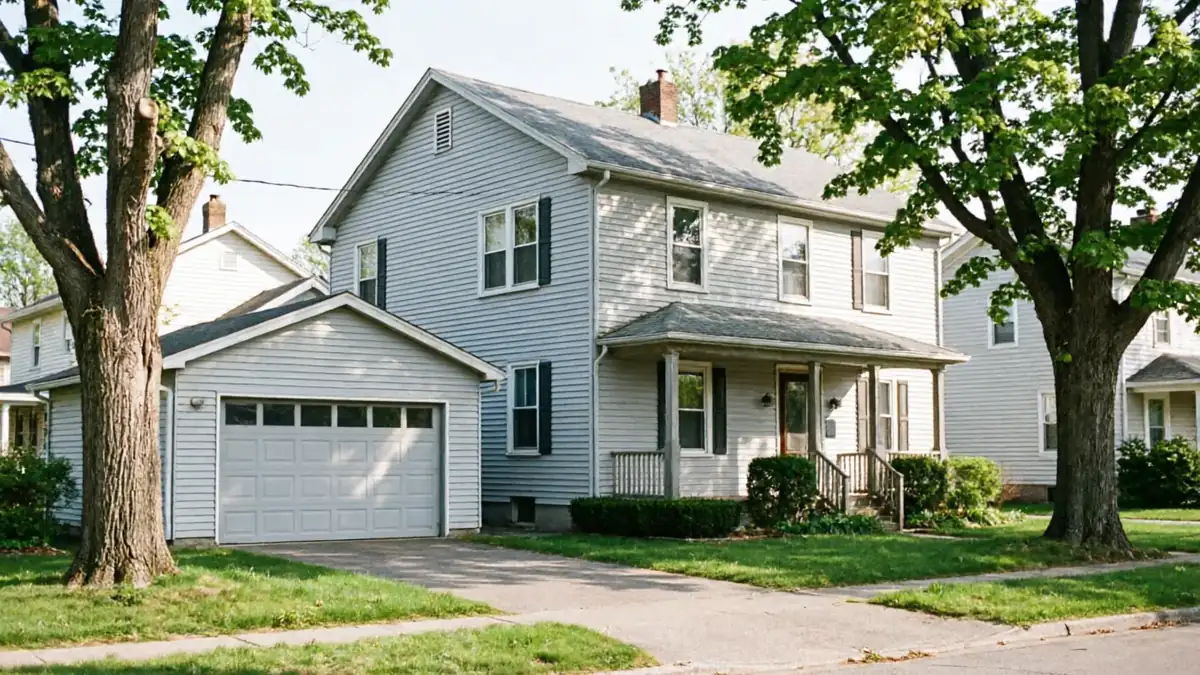
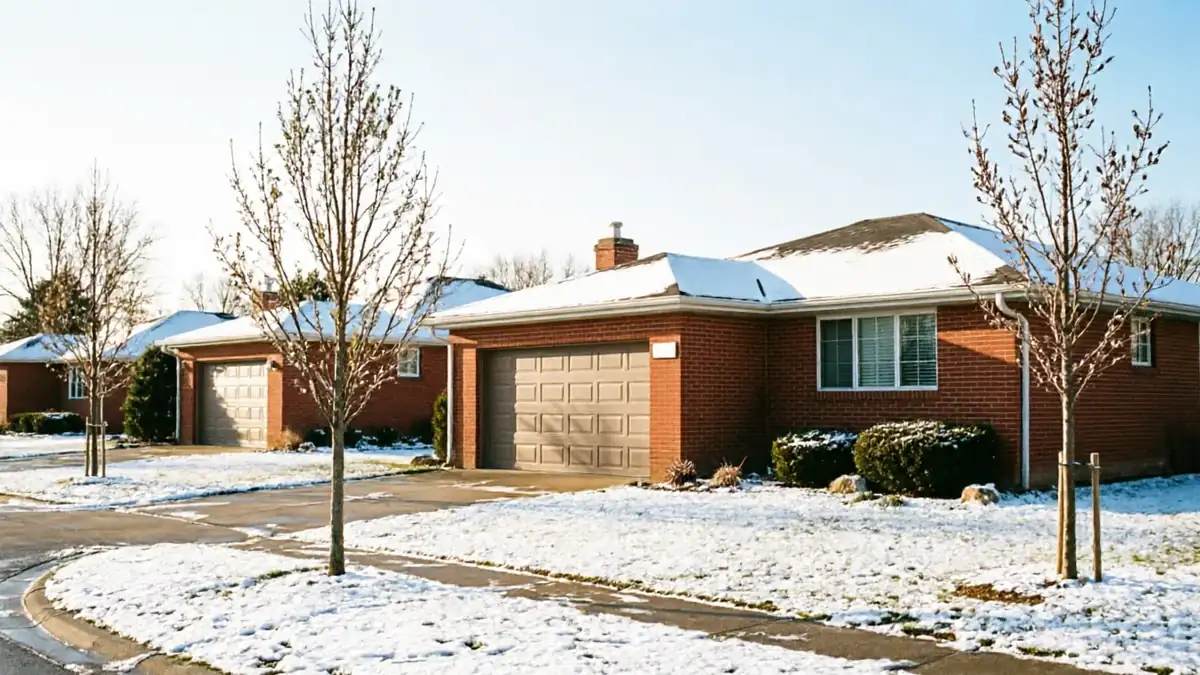
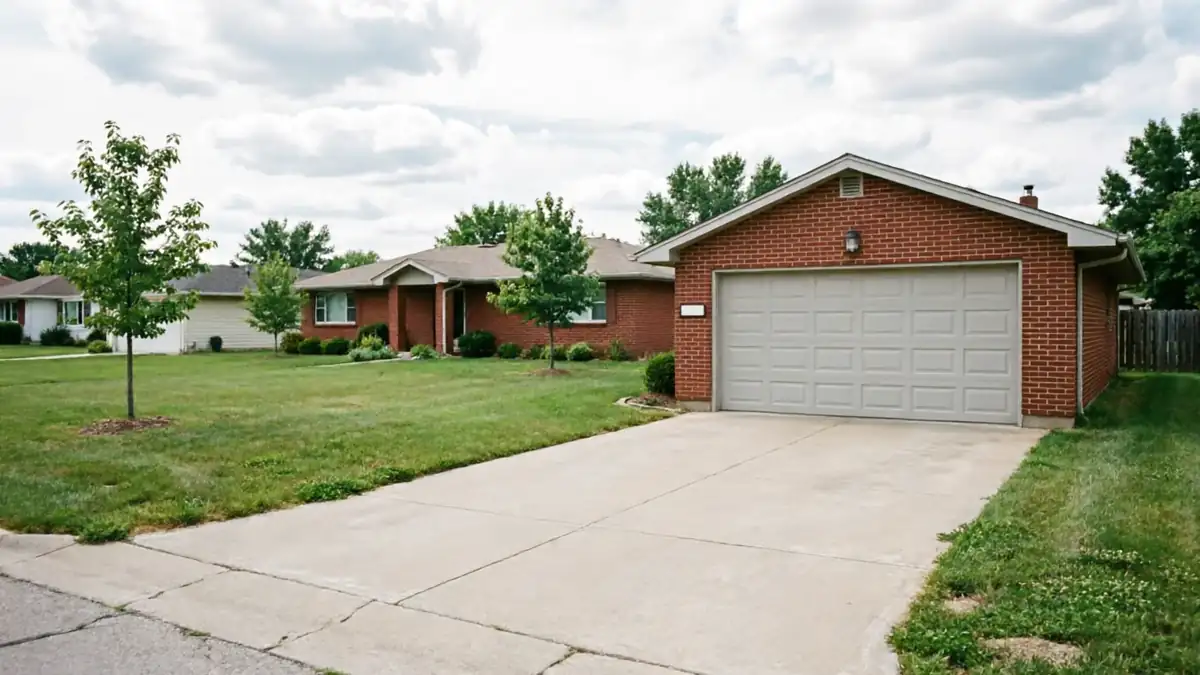
Xenia's housing stock centers on 1970, right in the middle of the broader 1938-1998 build window we see across this part of Ohio. That one number tells you a lot before we ever pull into a driveway. A house built around 1970 almost always came with a steel torsion-spring door on a bracket system that's been through fifty-plus winters of cold-band weather. Extension springs show up on some of the older garages mixed into these neighborhoods, but torsion is the norm by this era. The opener on these doors is rarely original - most homeowners are on their second or third unit by now, and the chain-drive openers common in the 1970s have mostly been swapped for something quieter. What does stick around from the original build is the track alignment and the jamb framing, both of which were sized for doors lighter than what's sold today. That mismatch is where a lot of our Xenia calls start.
Where We Stop
We run out of Beavercreek, about 7 miles from Xenia, and that's close enough that we don't treat this as an edge-of-territory stop. It's a normal part of the route. We don't keep a second location or a drop point in Xenia - every job starts with a truck coming from Beavercreek, which is worth knowing if you're comparing us to an outfit that's actually based in town. The distance doesn't change what we carry or how we price a job; it's just where the morning starts.
What That Means for Doors
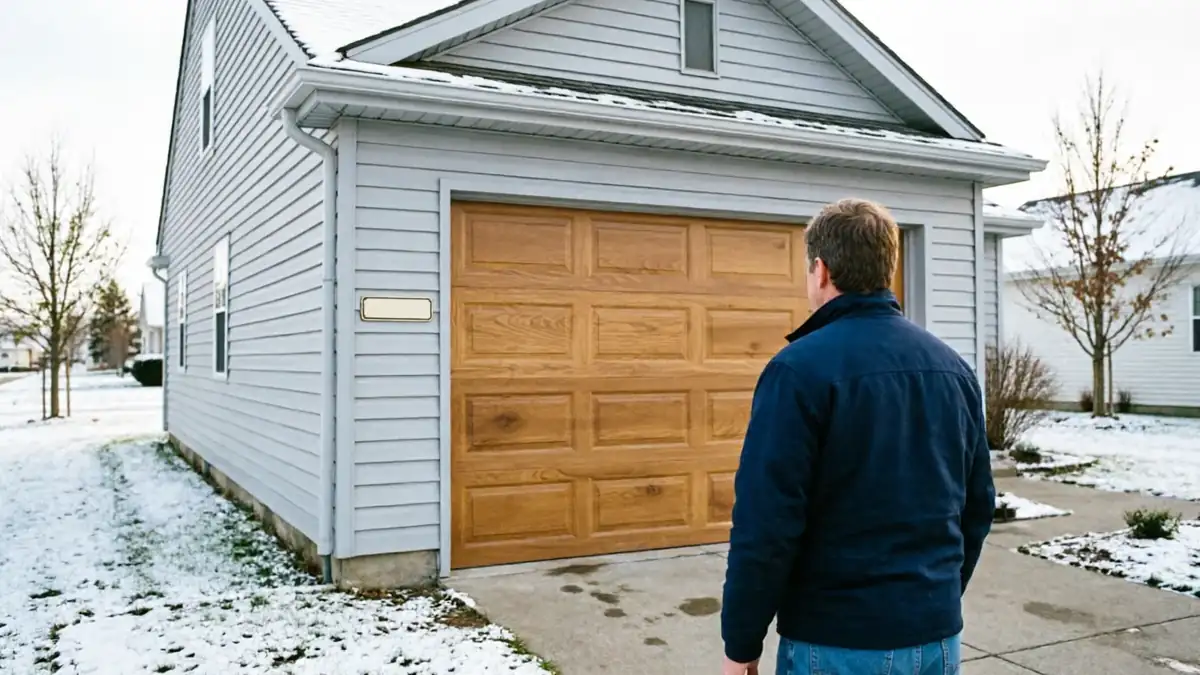
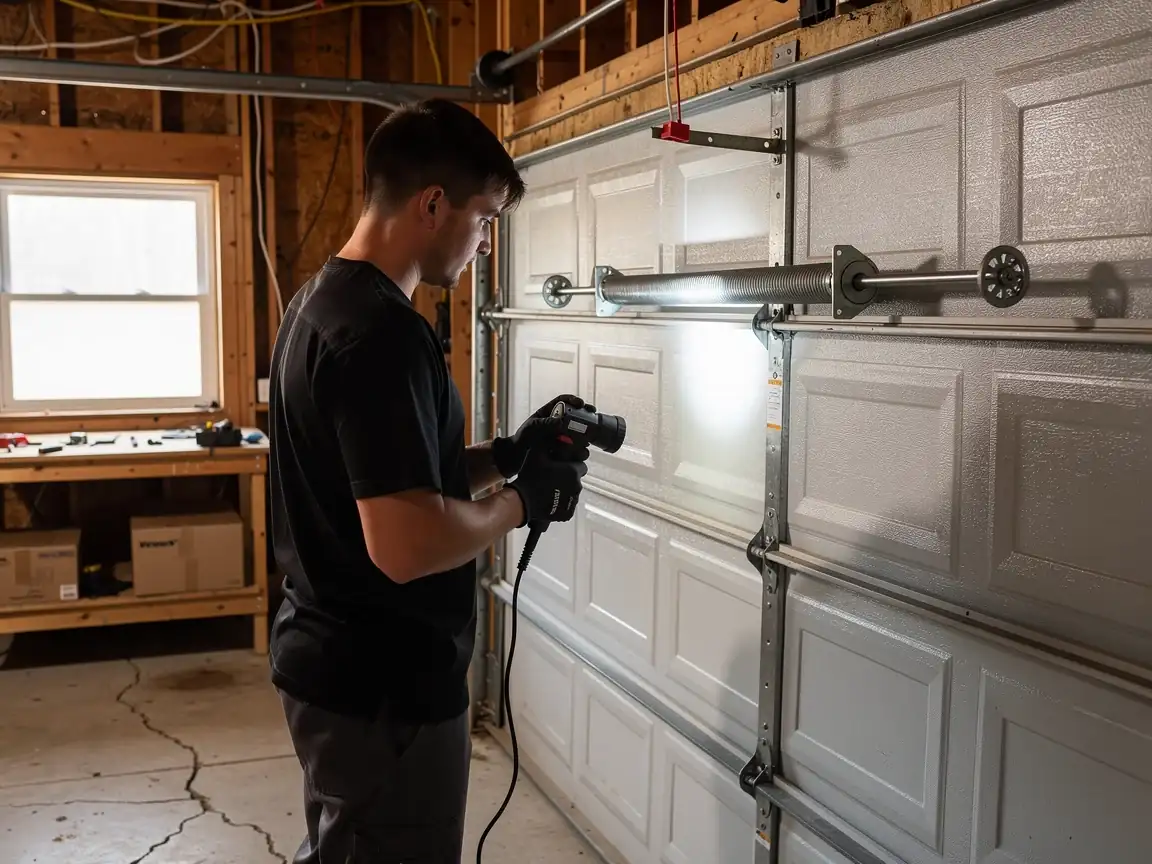
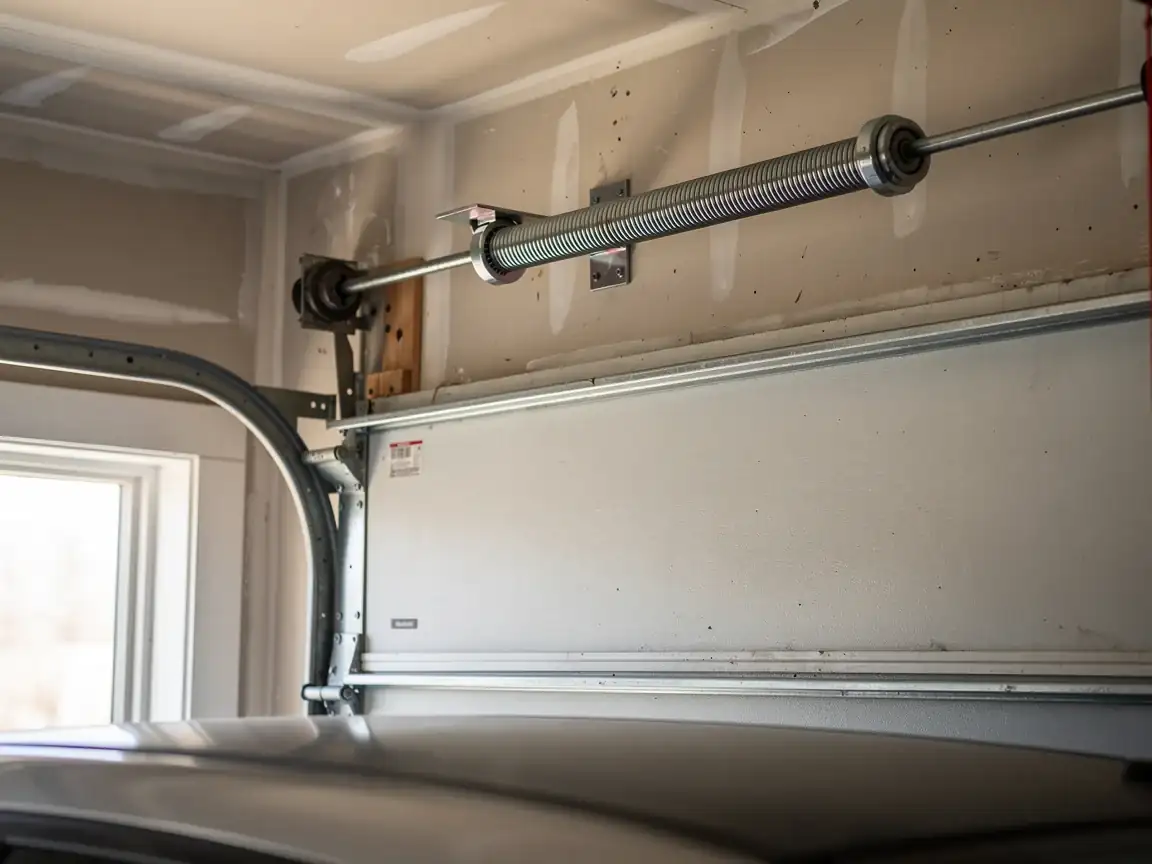
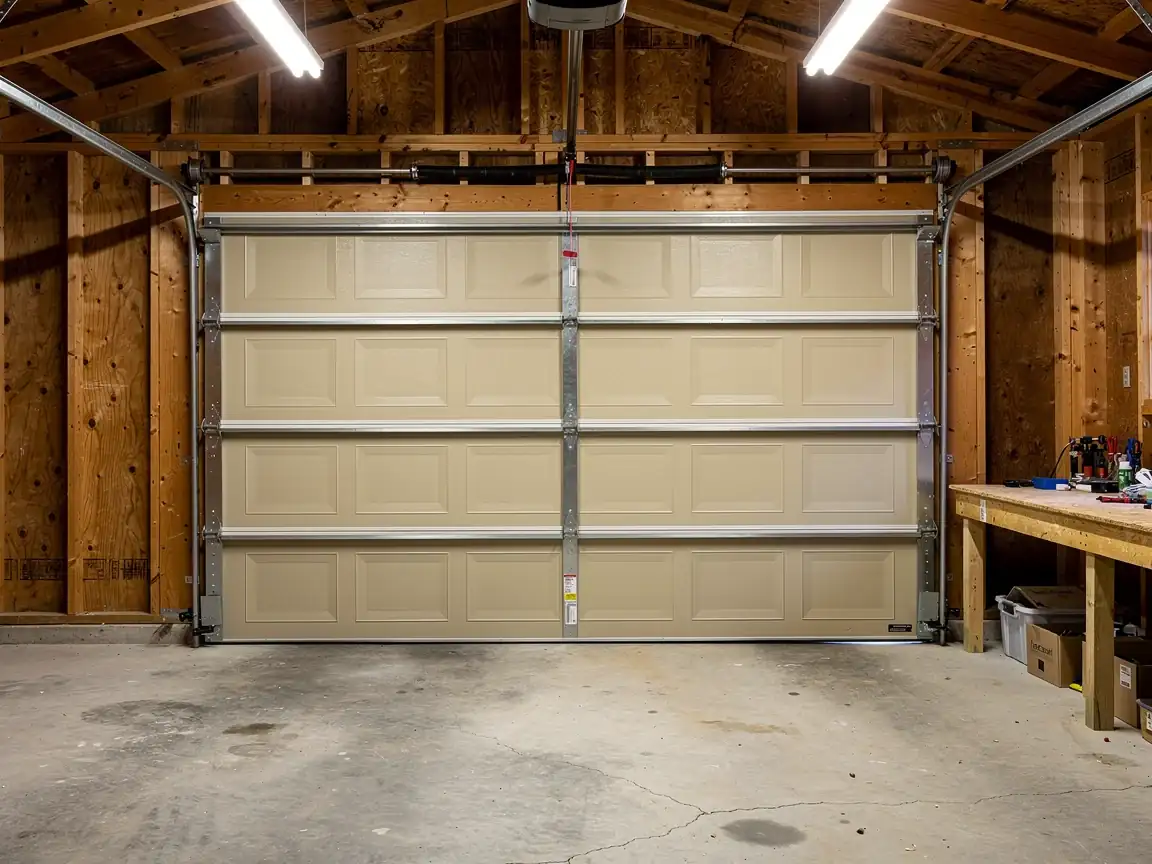
A door built to 1970-era specs wasn't engineered for the severe cold-weather cycling this region gets - steel contracts, lubricant stiffens, and torsion springs built with thinner wire fatigue faster than anything made in the last fifteen years. On Xenia's older torsion setups, that shows up as a spring that snaps on the first hard cold morning rather than failing gradually. Panels from this era are often lighter-gauge steel without the foam-core insulation you'd get in a current door, so they dent easier and don't hold heat - not a dealbreaker, but it changes the math on repair versus replace. Track brackets from a 1970 install are also commonly the older style that doesn't play well with newer safety-reversal openers, which means an opener swap on one of these houses sometimes turns into a bracket job too. We don't guess at this on the phone - we look at the actual hardware before quoting.
The Usual Work Here
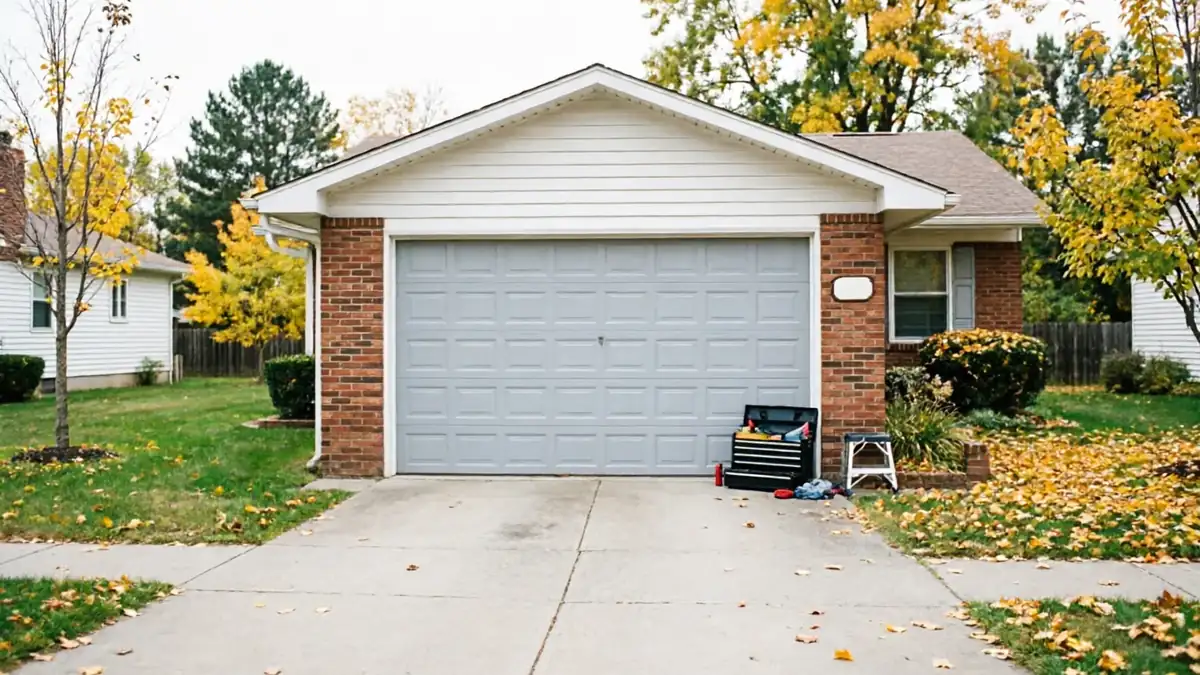
Across Xenia's roughly 10,691 households, the calls we get cluster around a handful of things: broken torsion springs on doors that have never been serviced, worn rollers rattling in original track, and openers from the chain-drive generation finally giving out. We also see a fair number of cable failures, since original-era cable and drum setups don't get inspected until something lets go. One honest limit: if a door's track, jamb, and springs are all original to a 1970 build and the panel is rusted through, we're usually going to recommend replacement over patching it piece by piece - the parts cost and labor to keep an original setup alive past this point rarely pencils out against a new door. We'll tell you that straight rather than stack repairs on a door that's done.
How it works
From “it’s stuck” to “it’s fixed”
1
Tell us what’s wrong
Describe the symptom - won’t open, loud bang, opener runs but the door won’t move.
2
On-site diagnosis
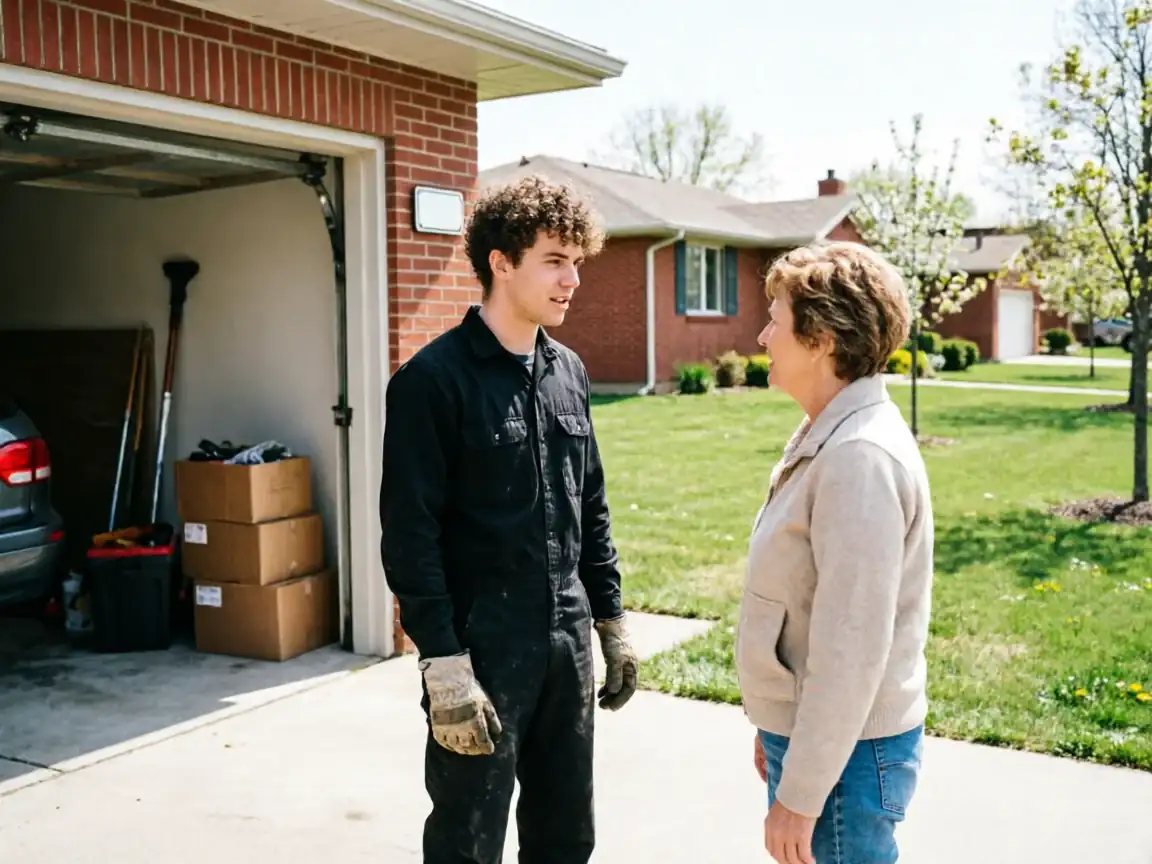
A technician tests the door under power and by hand and finds what actually failed.
3
Clear, up-front plan
You get the fix that’s needed and what drives the cost - before any work starts.
4
Repaired & tested
The repair is done, the door is set true and tested, and the work area left clean.
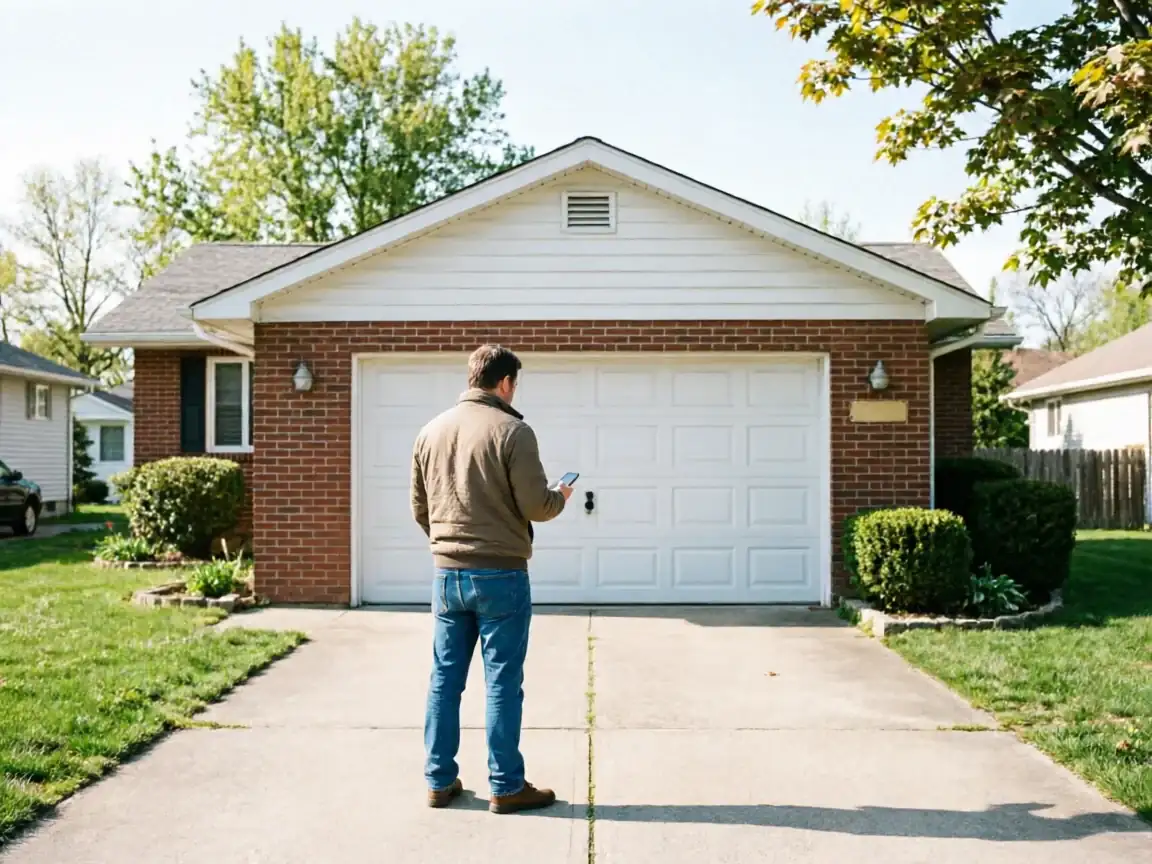
Not sure which repair your door needs in Beavercreek, OH? Describe what it’s doing - every job starts with a diagnosis.
No. We run out of Beavercreek, about 7 miles away, and cover Xenia as part of our regular service area. There's no separate drop point or yard in town - every job is dispatched from Beavercreek.
Why did my torsion spring break with no warning?
Most Xenia houses date to around 1970, and springs from that era of hardware are often original or close to it. Severe cold-weather cycling stiffens the wire over decades, so a spring that's been fine for years can snap on a hard cold morning without warning.
Is it worth replacing an opener on a 1970s door?
Usually, yes, if the track and brackets are sound - newer openers are quieter and have safety reversal that older chain-drive units lack. If the bracket is the old incompatible style, we'll flag that before the swap so you're not surprised by extra labor.
Should I repair or replace a door this old?
If the panel is rusted through and the track and springs are all original, replacement is usually the better call. We'll look at the hardware in person and tell you honestly when a repair isn't worth the money.
Ready to get your garage door sorted?
Tell us what it’s doing and where you are in Beavercreek - we’ll take it from there.