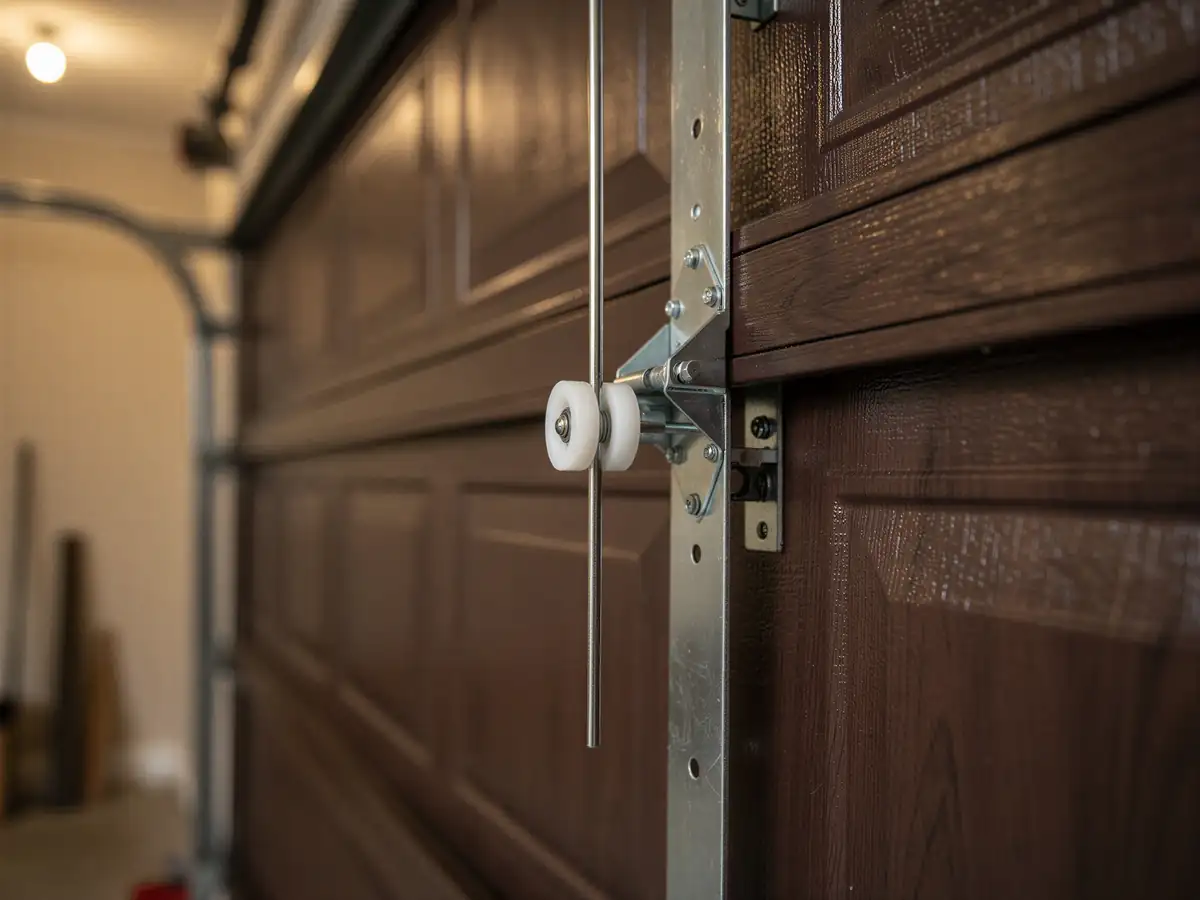
Why Your Garage Door Keeps Jumping the Track in Beavercreek
Beavercreek homes built mostly in the 1960s-70s face track misalignment from cold-weather ground shift and aging hardware. Here's what actually causes it.
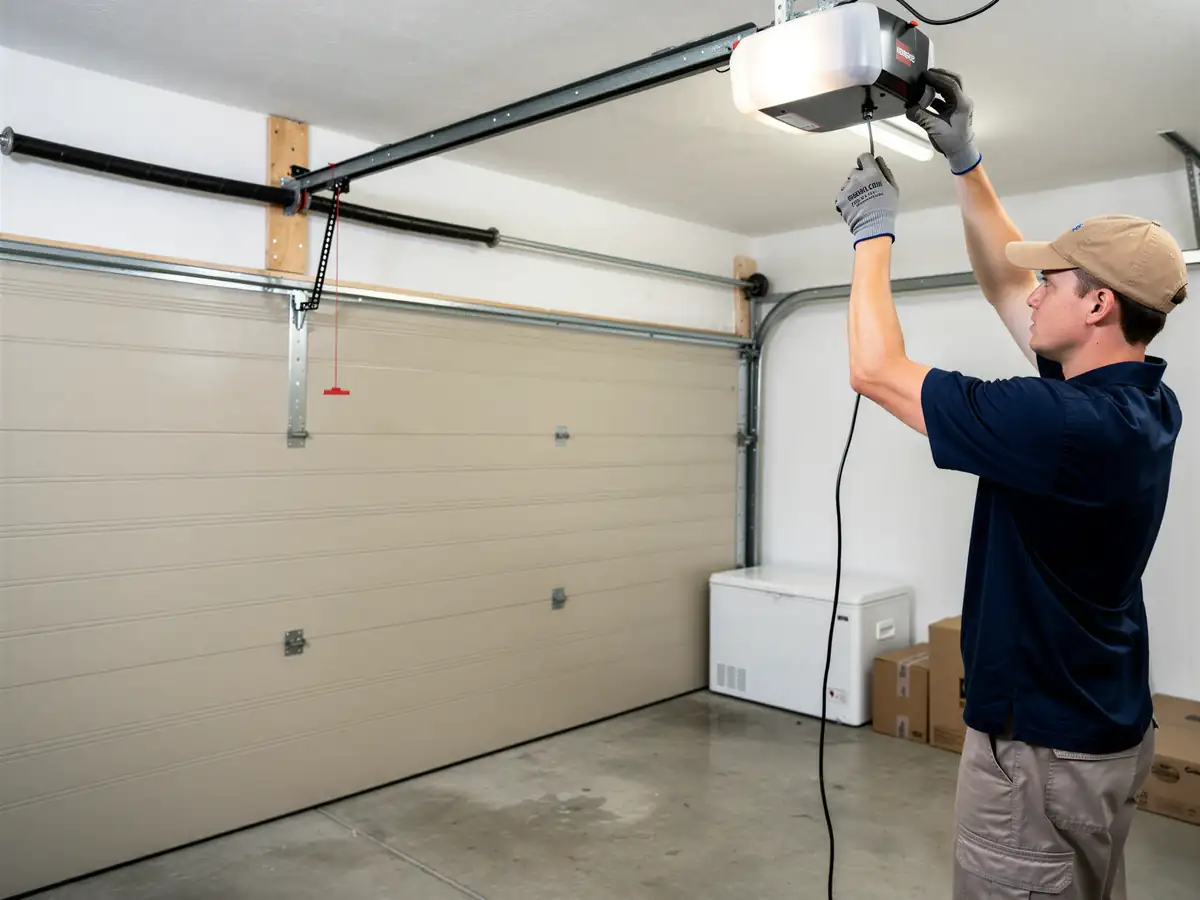
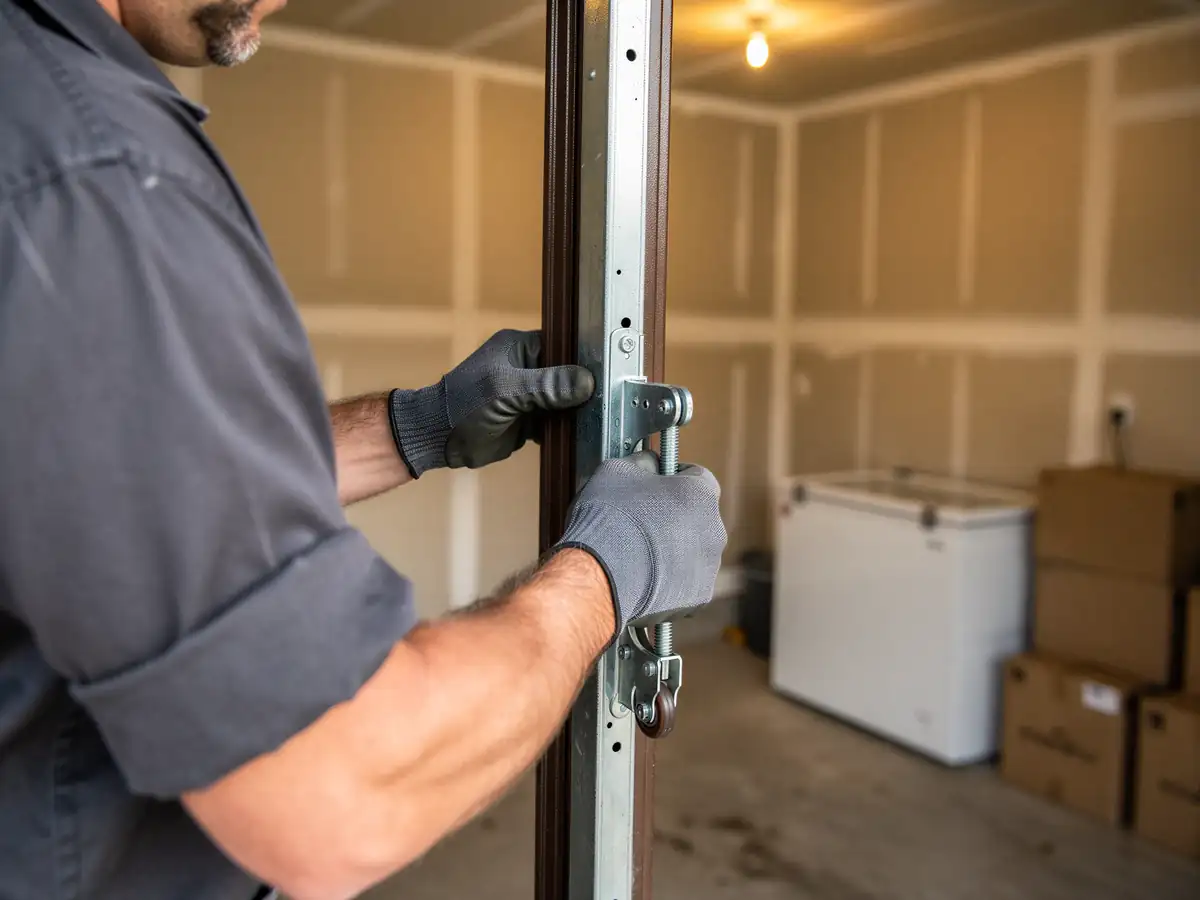
Beavercreek falls in a climate band the federal data marks as cold and severe, and that matters more for a garage door than most people think. The slab your track bolts to isn't floating free - it moves with the ground underneath it. Frost heave in a severe-cold zone pushes and settles the concrete pad at the base of the jamb a little every winter, and the vertical track is lagged straight into that jamb. Over enough winters, the track that was plumb in October is a few degrees off by February. The door still rolls, but the rollers are now riding against one edge of the track instead of running square in the channel. That's the point where a door starts binding on one side, or where you hear a scrape right before it jumps the track entirely. It isn't a defect in the door. It's what happens to a fixed steel rail bolted to a slab that isn't actually fixed. Homes with the older, lighter-gauge track brackets feel this first, because the bracket flexes instead of holding the rail rigid through the seasonal shift. A door that's stayed square through ten winters can still go off in the eleventh, especially after a hard freeze-thaw stretch, because the cumulative movement finally exceeds what the roller clearance can absorb.
What Is Going On
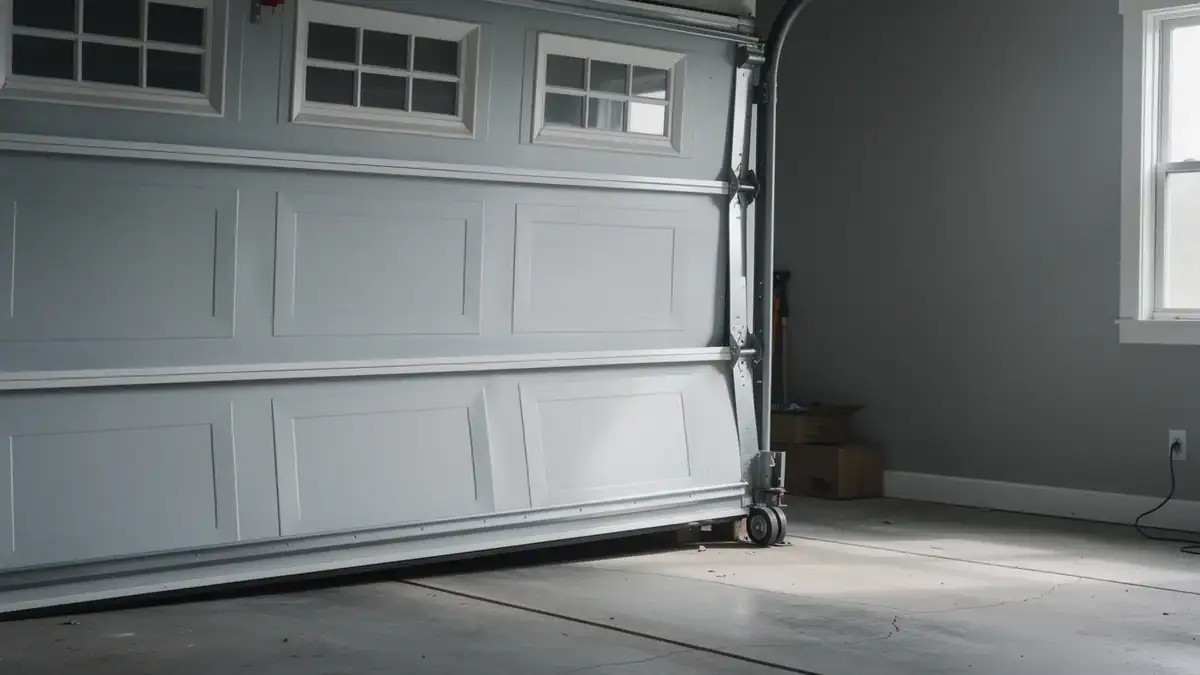
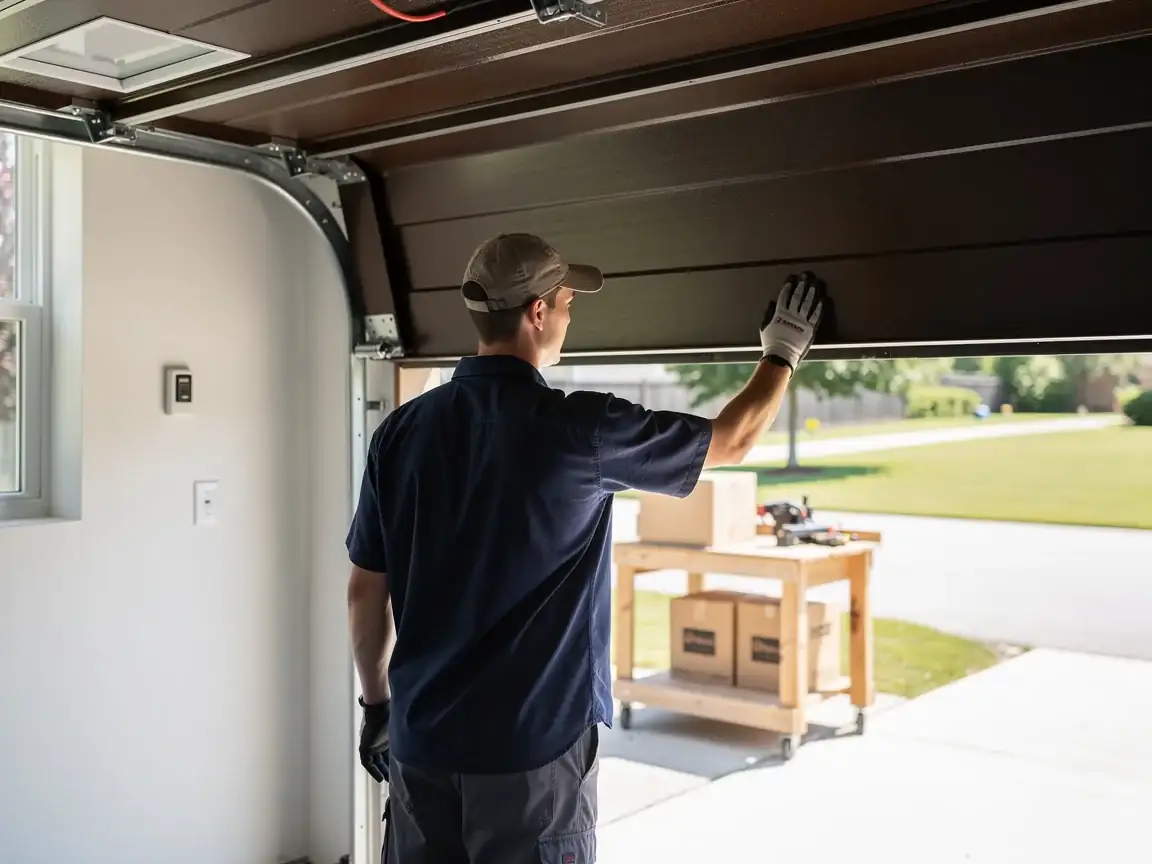
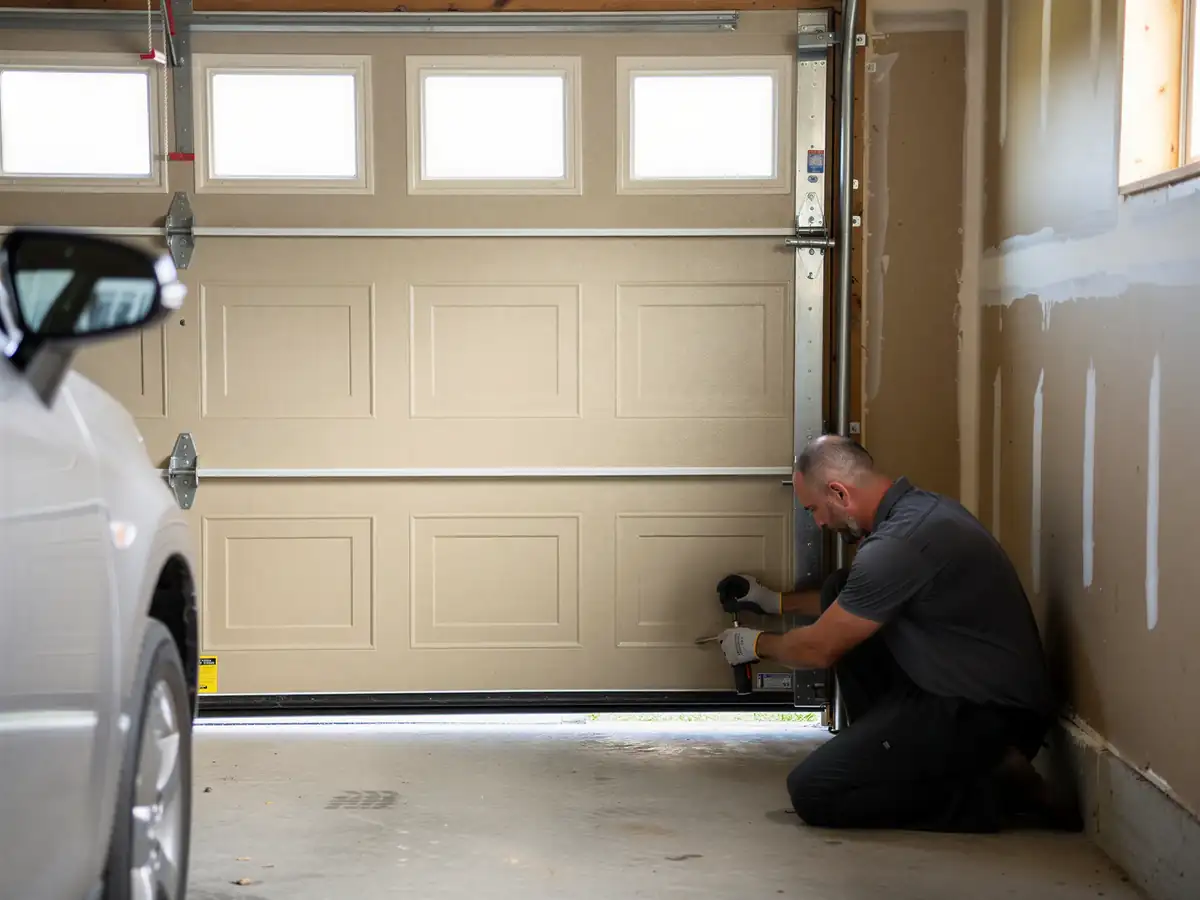
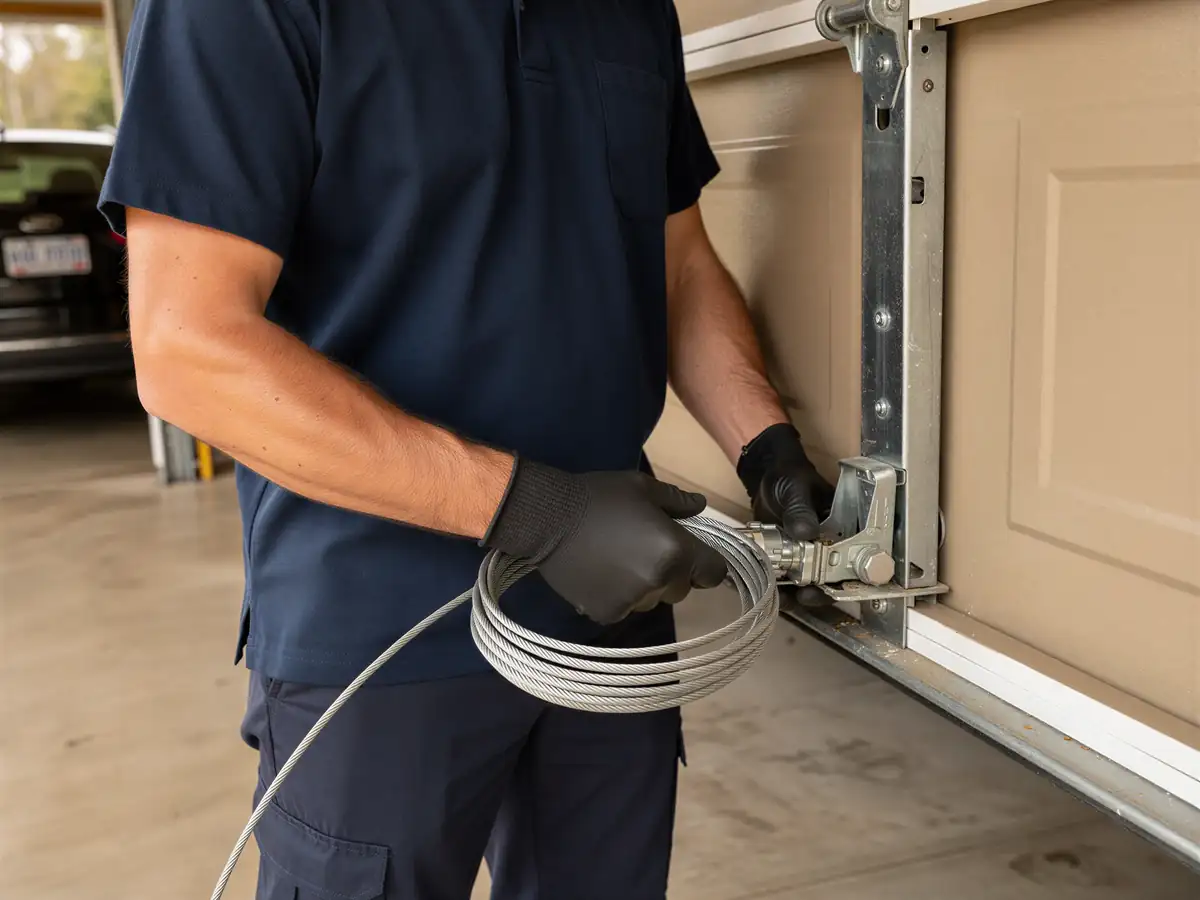
Most of the housing around here was built between 1938 and 1998, with the median landing around 1971, and that 1960s-70s run is the bulk of what we see. Track systems from that era were built to a lighter spec than what ships today - thinner rail gauge, fewer mounting points per section of track, brackets that were adequate in 1971 and are tired now. When a track goes off, it's rarely one dramatic event. It's a bent rail from a car bumper tap that nobody noticed, a loose mounting bracket that's been walking for months, or a roller that wore down enough to drop out of the channel on an upswing. Doors with worn rollers ride low in the track and catch on the horizontal curve where the track bends toward the ceiling - that's the single most common place we find a door actually off the rail. On older installs, the rear track hangers were often fastened to framing that's shifted slightly over fifty-plus years, which throws the whole rail out of alignment even when the track itself is fine. Cables that have frayed or stretched unevenly pull one side of the door up faster than the other, which forces the rollers sideways against the track wall until something gives.
What You Pay
We can't give you a number here without seeing what's actually wrong, and that's not a dodge - a bent section of track, a bracket that needs re-anchoring to the jamb, and a full roller-and-cable replacement are three different jobs with three different price tags. What drives the cost is almost always the age and condition of what's already on the door, not the brand or the color. A door that's been running on its original 1970s-era rollers and track is a different job than one that got new rollers five years ago and just took a bump. If your household income and budget call for the cheapest fix, ask directly whether a track realignment will actually hold, or whether it's a patch on hardware that's going to drop off again in a year. Sometimes the honest answer is that the track itself is fine and it's the opener's travel limits that are forcing the door against the rail - that's a settings fix, not a parts replacement, and it should cost accordingly. Get the specific cause named before you agree to a specific fix.
Leaving It Alone
A door that's slightly off track doesn't fix itself, and it doesn't stay slightly off, either. Every cycle it makes while misaligned works the roller harder against the edge of the channel, which widens the gap a little more each time. Left running, that usually ends one of two ways: the roller finally drops clean out of the track, or the cable that's been compensating for the misalignment frays through and lets the door come down unevenly, fast, on whatever's under it. Neither is a weekend fix anymore. The honest limitation here is that we can't always tell you over the phone whether what you're describing is a ten-minute bracket tightening or a full track swap - it genuinely depends on how long it's been running that way and what the rollers look like underneath. If your door is still rolling and just sounds rough or looks slightly crooked at the top, that's the window to call before it becomes a door that won't move at all. Given how much of the housing stock here is pushing fifty years old, a lot of doors are closer to that second outcome than their owners think.
How it works
From “it’s stuck” to “it’s fixed”
1
Tell us what’s wrong
Describe the symptom - won’t open, loud bang, opener runs but the door won’t move.
2
On-site diagnosis
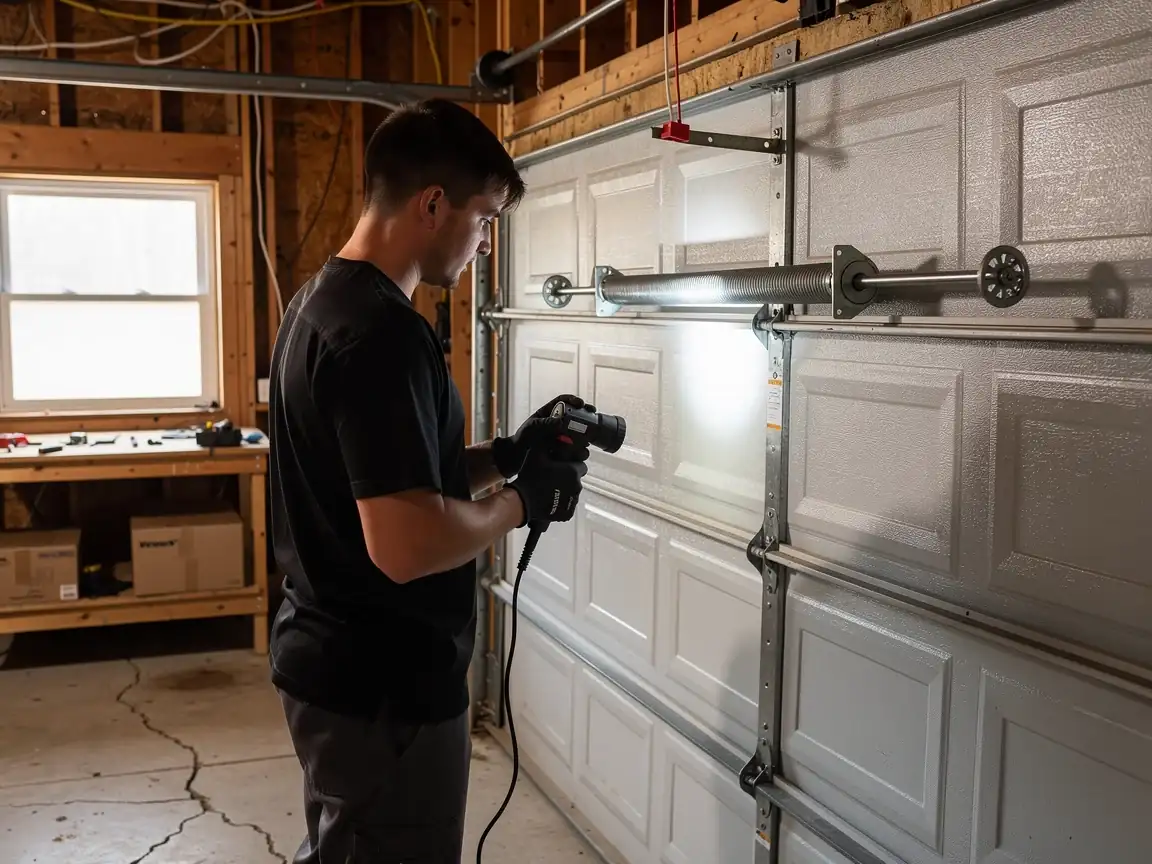
A technician tests the door under power and by hand and finds what actually failed.
3
Clear, up-front plan
You get the fix that’s needed and what drives the cost - before any work starts.
4
Repaired & tested
The repair is done, the door is set true and tested, and the work area left clean.
Not sure which repair your door needs in Beavercreek, OH? Describe what it’s doing - every job starts with a diagnosis.
Why did my garage door suddenly jump off the track after years of working fine?
Usually it's cumulative, not sudden. Seasonal ground shift from our cold-severe winters moves the slab the track is bolted to a little each year. Add a worn roller or a loosening bracket, and the door finally exceeds the clearance it had. The last winter didn't cause it - it was the one that pushed it past the tipping point.
Is a crooked track a sign I need a whole new door?
Not usually. Most of what we see on homes from the 1960s-70s building era is a bent rail section, a bad bracket, or worn rollers - all repairable. Replacement makes sense when the track, rollers, and cables are all original and all failing at once, not when one piece acts up.
Can I push the door back onto the track myself?
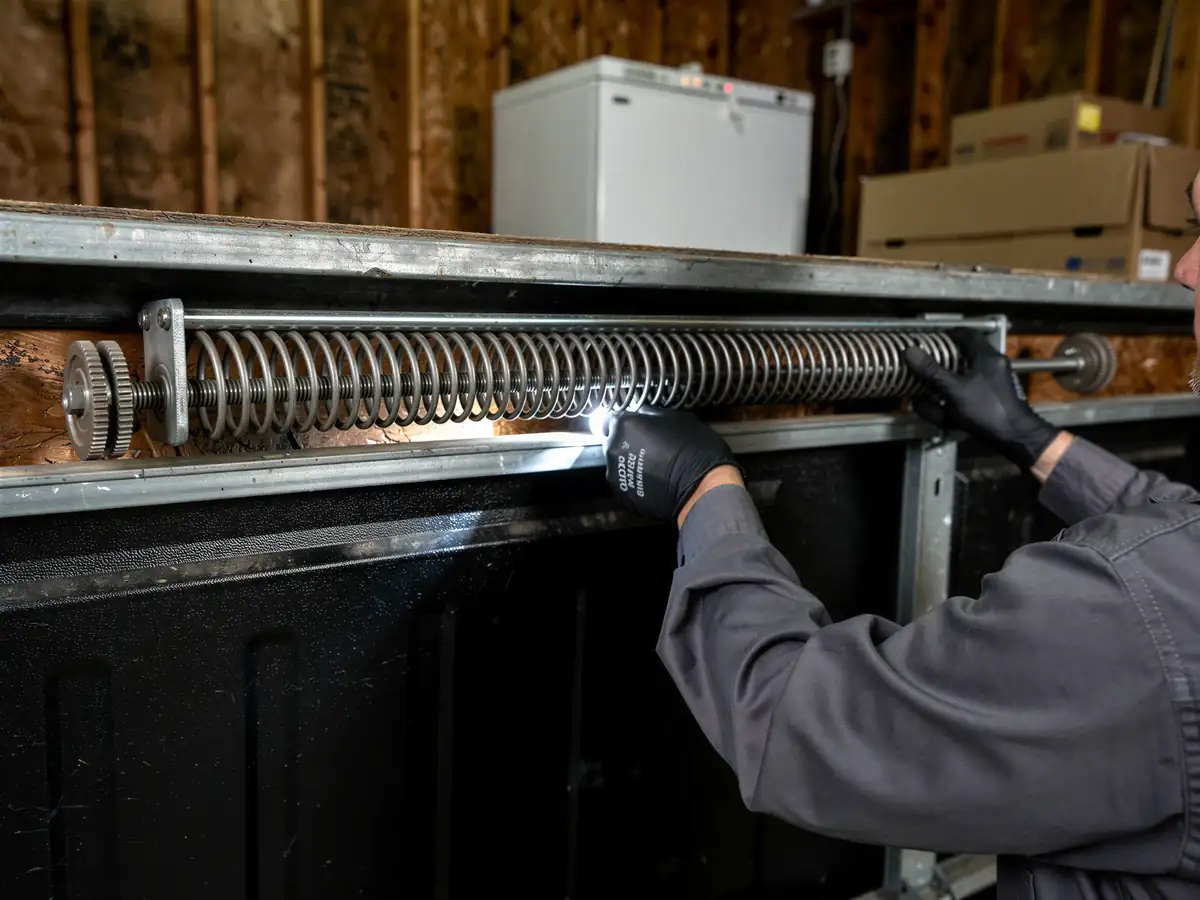
We'd rather you didn't. A door under spring tension that's partway off the track can drop without warning once you start moving it. If it's still on the rail but running rough, that's safe to leave alone until someone looks at it. If it's actually off, don't force it.
Ready to get your garage door sorted?
Tell us what it’s doing and where you are in Beavercreek - we’ll take it from there.