What That Noise From Your Garage Door in Beavercreek Means
Beavercreek homes built mostly 1960s-70s with original hardware make specific noises in cold weather. Here's what grinding, popping, and banging actually tell you.
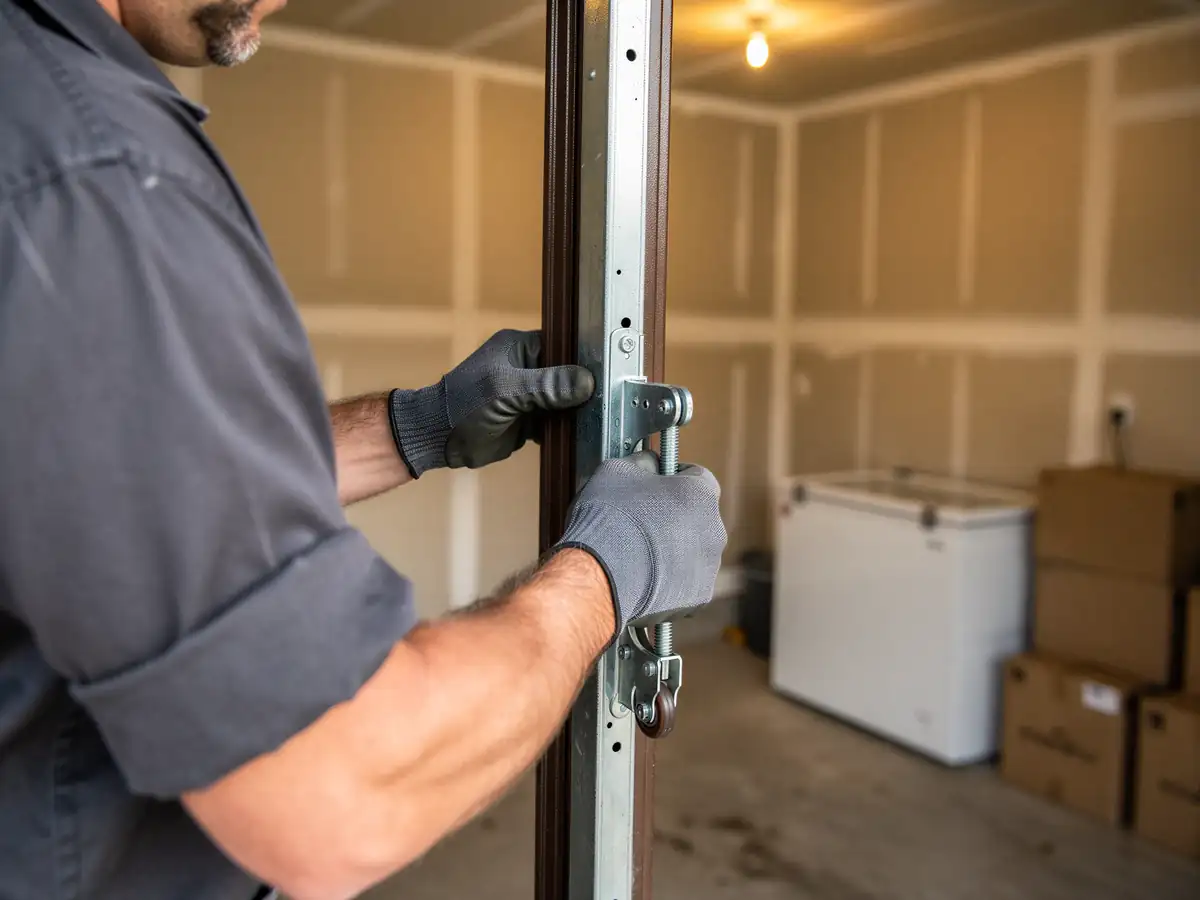
Beavercreek sits in a cold-climate band with severe winter swings, and that matters more for a garage door than most people think. Steel panels contract in a hard freeze, and the grease in an old spring or roller gets stiff before it gets loud. A door that ran quiet in September will start to groan by December, not because anything broke, but because the metal and the lubricant are both shrinking at different rates. Nylon rollers crack in cold faster than steel ones wear, and if your rollers are original to a house built decades ago, cold is what finally finds the crack. The same freeze-thaw cycle that heaves driveways works on a garage door track too - a slight shift in the slab over a few winters throws the track out of plumb by a fraction of an inch, enough to turn a smooth ride into a scrape you can hear from the kitchen. None of this is dramatic. It shows up as a new sound in November that wasn't there in July, and that's usually the first and only warning you get before a part fails outright.
What Is Going On
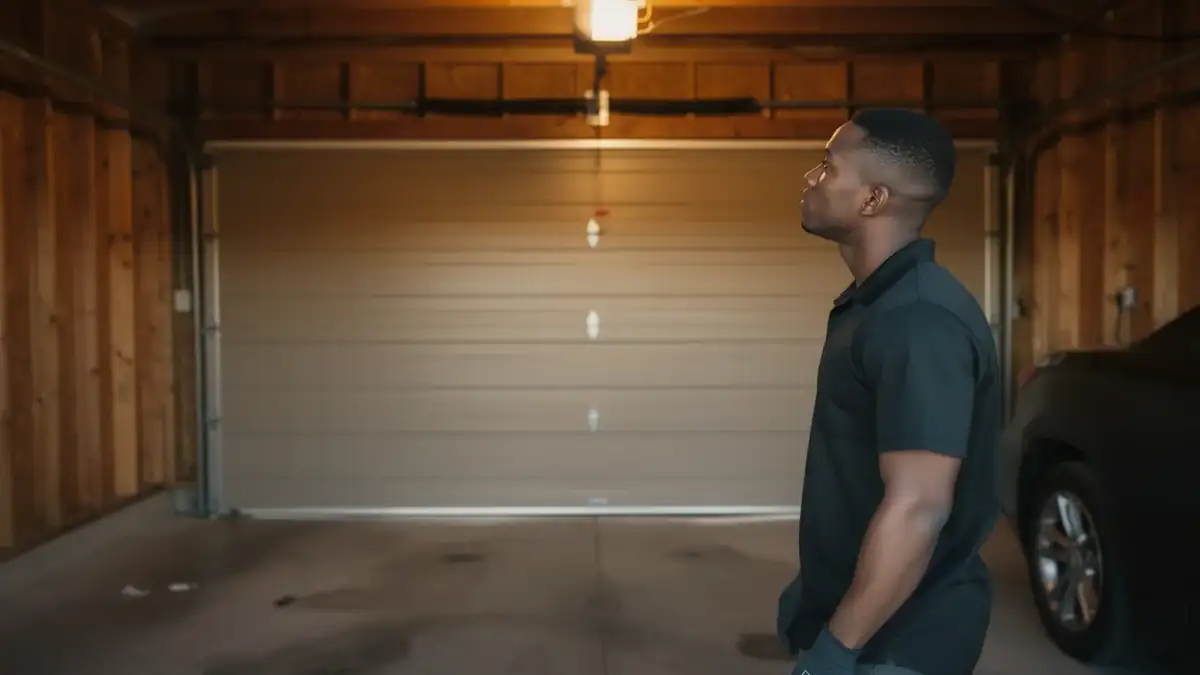
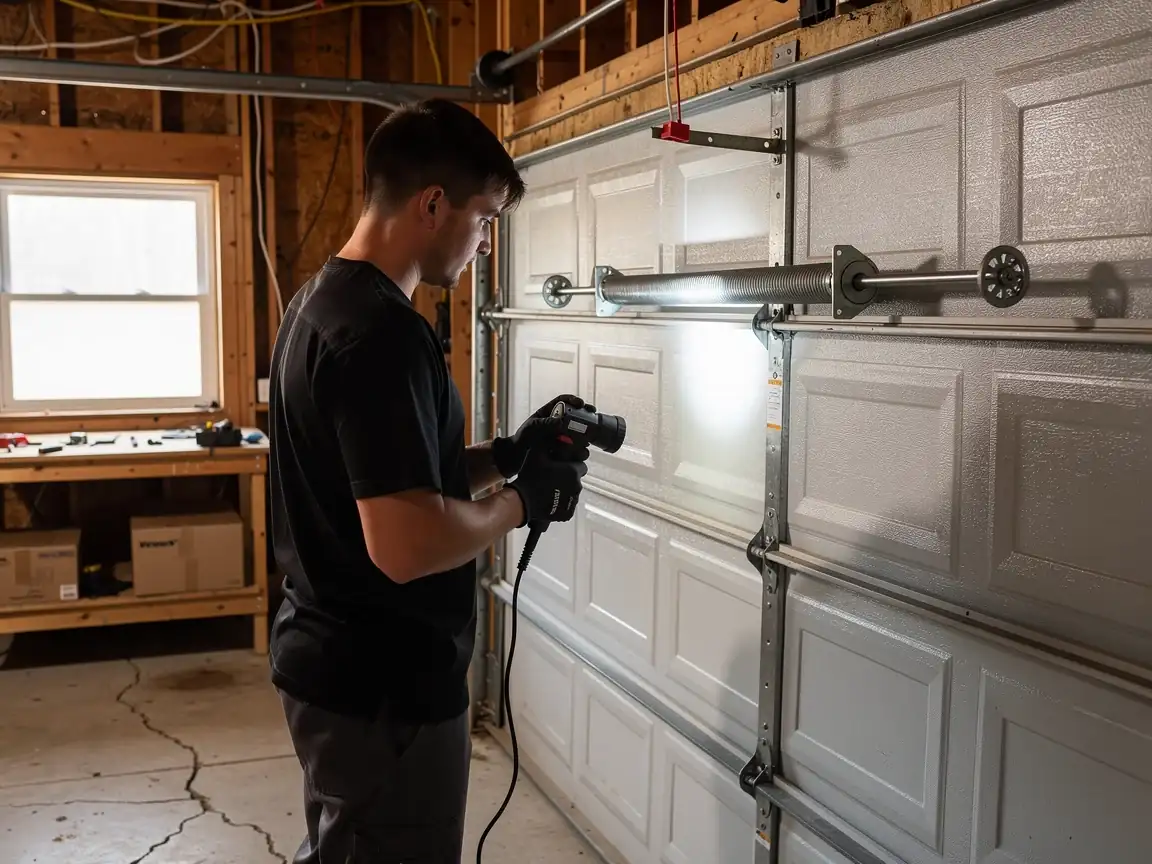
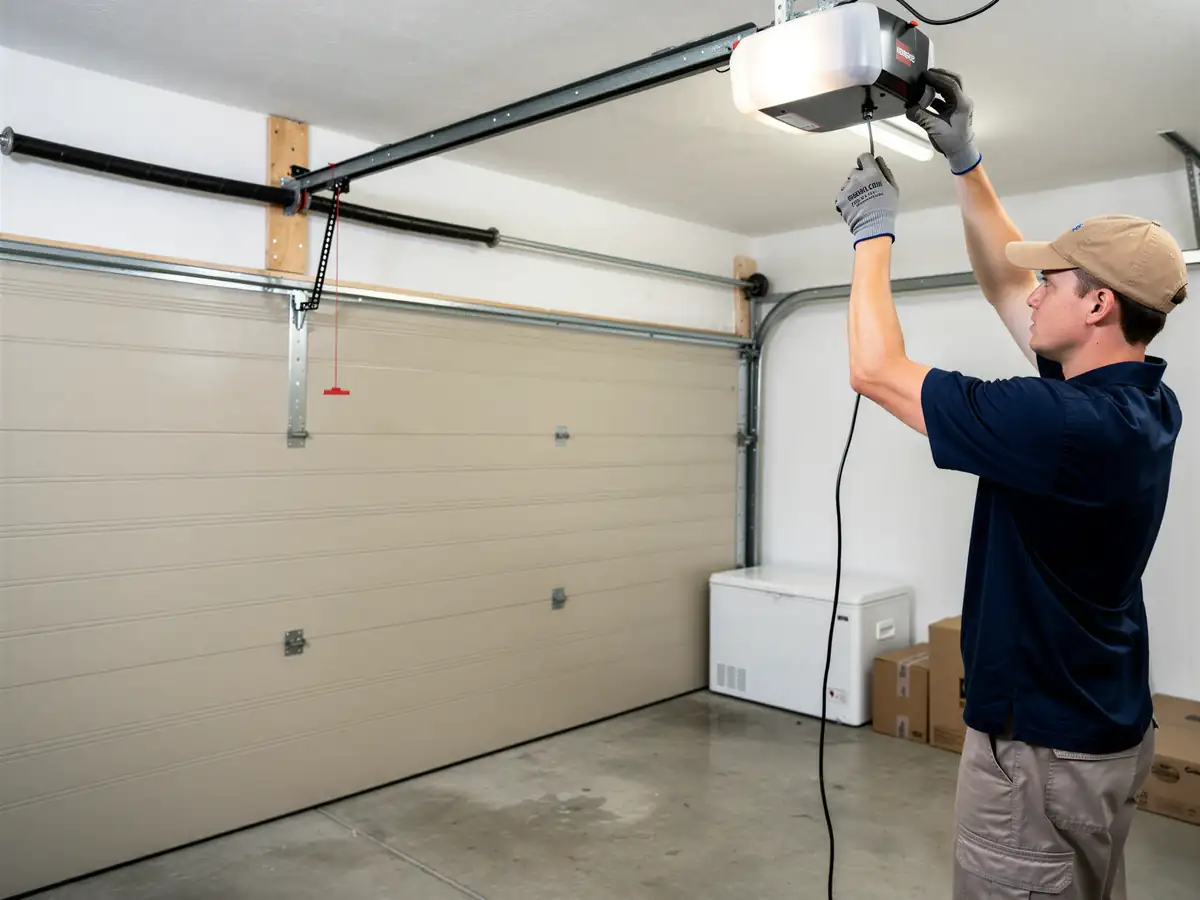
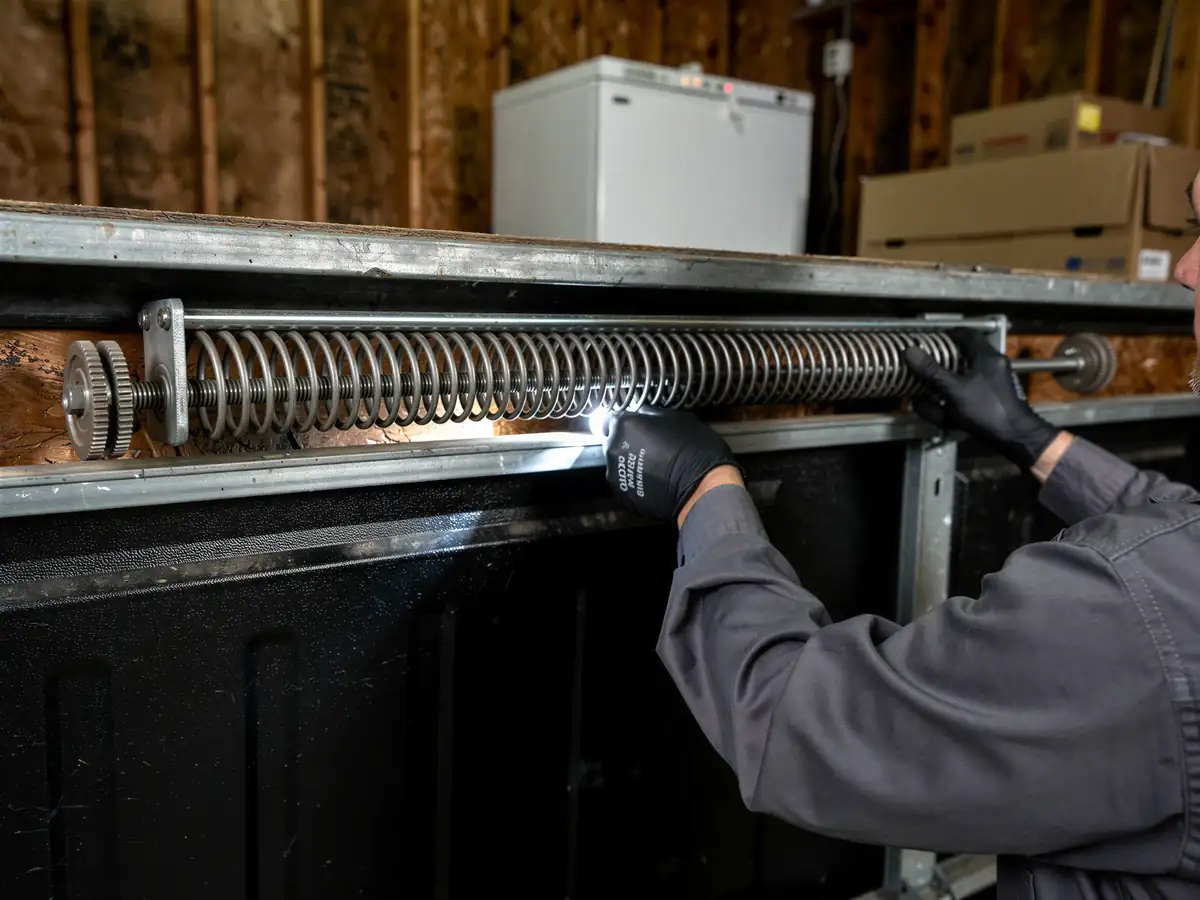
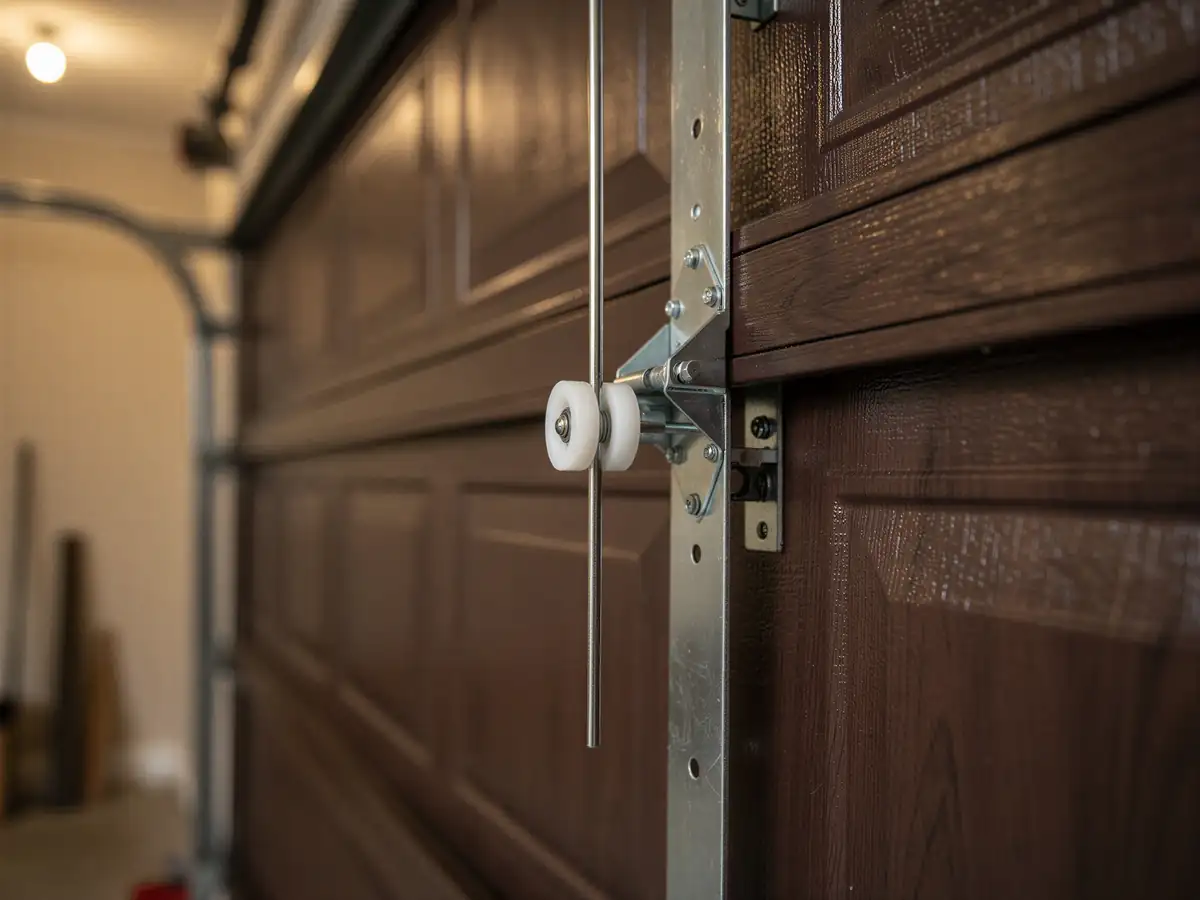
Most houses on this side of Beavercreek were built between 1938 and 1998, with the bulk of that stock going up in the 1960s and 70s across the area's 31 named neighborhoods. A door that age, if it's never been replaced, is running on hardware nobody stocks on the truck anymore - a one-piece torsion spring sized for a lighter door, or a center-mounted opener driving a chain that's stretched past its last adjustment. A grinding noise on the way up is often that chain slapping a loose rail. A sharp bang, usually one loud pop followed by the door refusing to move, is a torsion spring letting go - on a house this old, that spring has had fifty-plus winters of flex cycles behind it. A rhythmic thump every few feet is almost always a flat spot on a roller, worn from the same freeze-thaw movement in the track. None of these noises are random. Each one points to a specific part under a specific kind of stress, and on housing stock this old, the stress has usually been building for years before it makes a sound you notice.
What You Pay
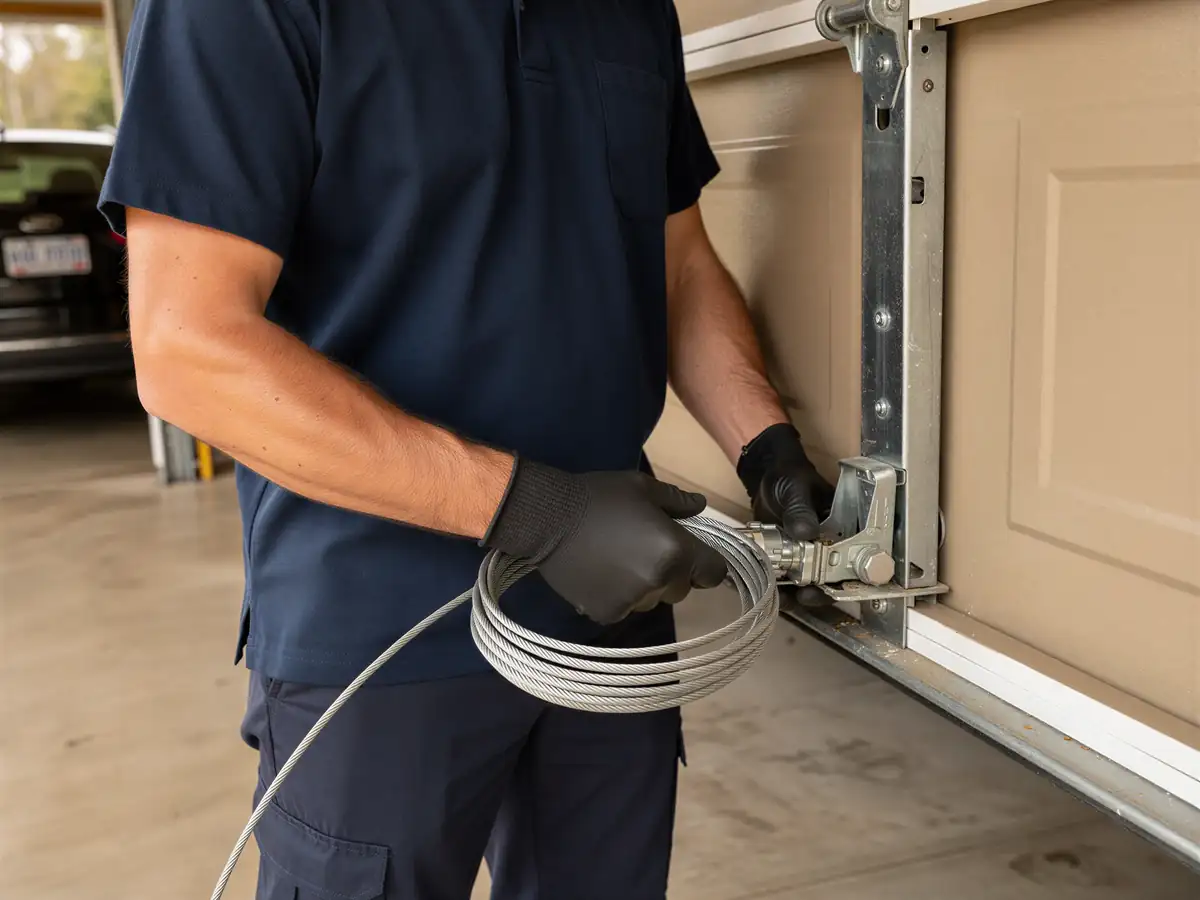
I won't put a number here I can't back up - what a repair costs depends on whether it's a roller, a cable, or a full spring set, and I'm not going to quote a flat price for all three. What I can tell you is this: across the Beavercreek service area, median household income runs around $70,000, and most of the roughly 72,875 owner-occupied houses here are carrying a mortgage on a place built before 1998. That combination means most owners I talk to want a straight answer on whether a part is worth fixing versus whether the door's age makes replacement the better math - not a guess dressed up as a quote. Ask for the breakdown on parts versus labor before anything starts, and don't let anyone talk you into a full opener swap when the noise turns out to be one dry hinge.
Leaving It Alone
Here's the honest limitation: I can't tell you over the phone whether a noise is a ten-dollar roller or a spring about to let go, and I won't guess just to get a truck out the door. What I can tell you is what not to do - don't keep running a door that bangs once and then quiets down, because that's usually a spring that's partially failed, not fixed itself. On a house built in the 1960s or 70s, original torsion hardware wasn't engineered for forty-plus years of Ohio winters, and a door that's been quietly complaining since the first cold snap of the season is not a door to ignore until spring. The parts are small. The spring under tension on a double door is not. If the noise changed suddenly, in cold weather, on an older door, that's the one combination worth a look before you touch anything yourself.
How it works
From “it’s stuck” to “it’s fixed”
1
Tell us what’s wrong
Describe the symptom - won’t open, loud bang, opener runs but the door won’t move.
2
On-site diagnosis
A technician tests the door under power and by hand and finds what actually failed.
3
Clear, up-front plan
You get the fix that’s needed and what drives the cost - before any work starts.
4
Repaired & tested
The repair is done, the door is set true and tested, and the work area left clean.
Not sure which repair your door needs in Beavercreek, OH? Describe what it’s doing - every job starts with a diagnosis.
My garage door started grinding this winter but worked fine all summer - why now?
Cold is the trigger. Steel and nylon parts stiffen and contract in winter, and grease thickens, so wear that was silent in warm months suddenly makes noise. On houses built in the 1960s-70s common across Beavercreek, original rollers and bearings are the usual source once temperatures drop.
Is a loud bang from my garage door an emergency?
If the bang was followed by the door refusing to lift, or lifting unevenly, treat it as one. That's the typical signature of a torsion spring failing. Don't try to force the door open or closed - the remaining tension in the system can move the door unpredictably.
Should I just replace the opener if it's making noise?
Not necessarily. A noisy opener is often a stretched chain or a loose rail bracket, both cheaper fixes than a new unit. I'd rather diagnose the specific sound than swap a whole opener on a guess, especially on an older house where the opener may not be the oldest part in the system.
Ready to get your garage door sorted?
Tell us what it’s doing and where you are in Beavercreek - we’ll take it from there.