Why Cold Weather Snaps Springs on Beavercreek Garage Doors
Beavercreek's 1960s-70s housing stock and cold winters push torsion springs to fail fast. Here's what happens, what it costs, and when to leave it alone.
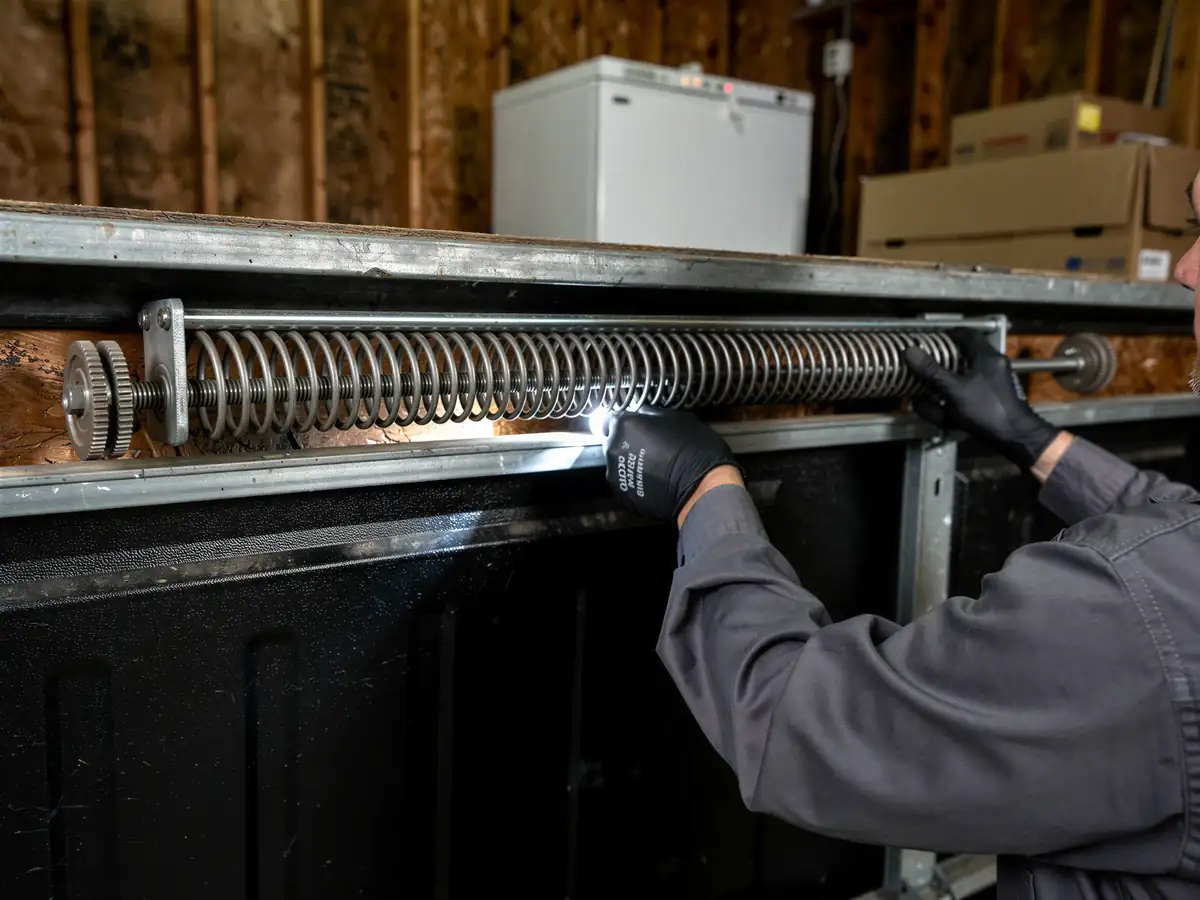
Beavercreek sits in a cold-severe climate band, and that matters more for your garage door than most people think. Steel contracts when it gets cold, and a torsion spring is just coiled steel under constant tension. Every winter morning the metal tightens a little more, and the spring that's already near the end of its life cycle finds the one cold snap that pushes it past the breaking point. This isn't a defect. It's what happens to a 20-year-old spring in a climate that swings hard between a humid summer and a hard freeze. Houses in this area were mostly built between 1938 and 1998, with most of the stock going up in the 1960s and 70s, which means a lot of original or first-replacement springs are well past due for failure regardless of the weather. Cold just picks the day. If you hear a loud bang from the garage on a cold morning and the door won't budge, that's almost always the spring, not the opener.
What Is Going On
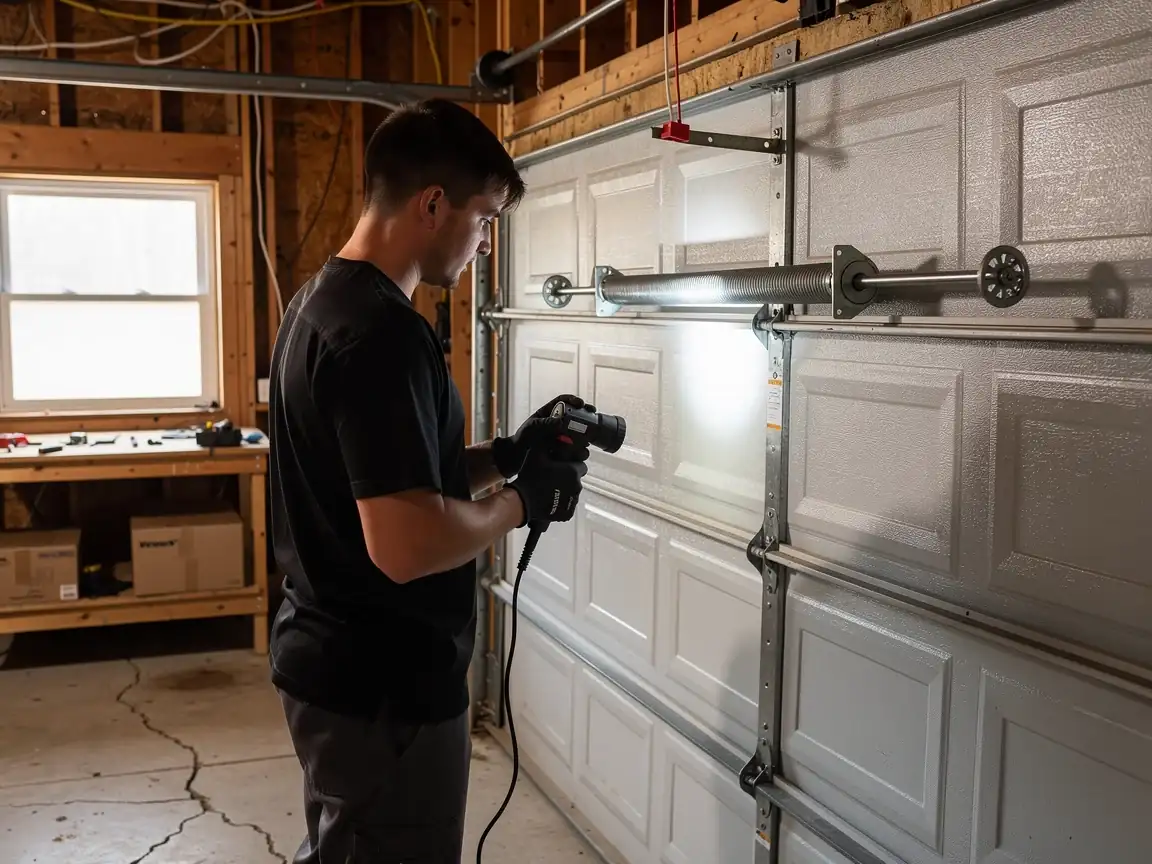
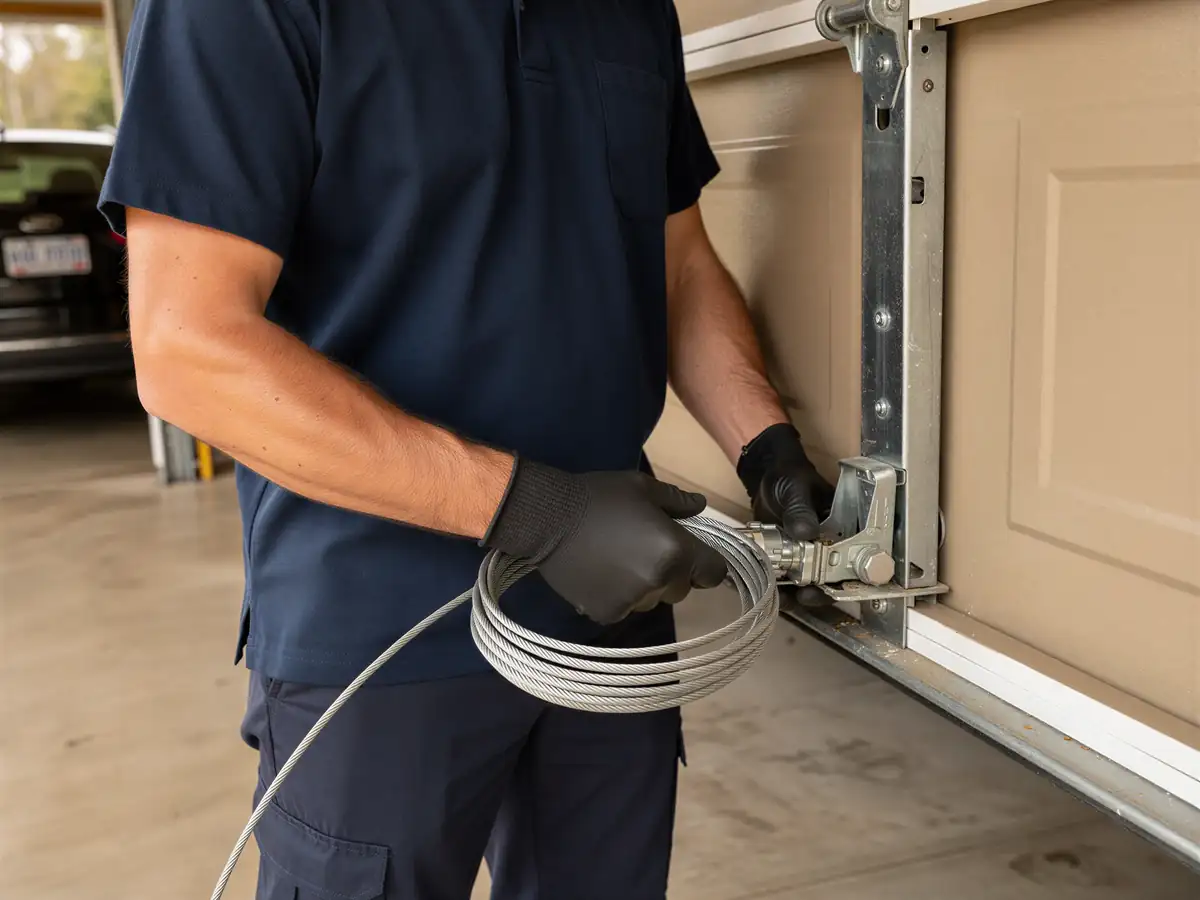
A torsion spring is rated for a number of open-close cycles, somewhere around 10,000 for a standard residential spring. Houses built in the 1960s and 70s era that makes up most of this area have had 50-plus years to burn through that cycle count, and a lot of them never had the spring swapped out even once. Add cold-weather contraction and you get metal fatigue showing up right when you need the door most, like before a work day in January. When it lets go, the door becomes too heavy to lift by hand safely, and the opener will strain or burn out trying to force it. The cable can come off the drum too when the spring loses tension unevenly, which is a separate repair on top of the spring itself. None of this is specific to one house. It's specific to how old the springs are across this part of Ohio and how hard the winters are on tired steel.
What You Pay
We don't have a flat number to put here that would hold up across every door size and spring count, and we're not going to guess at one. What we can tell you is how the job scales: a single spring on a standard door costs less than replacing both springs on a double-wide door, and if the cable or drum got damaged when the spring broke, that adds to the bill. Median household income across the service area runs around $70,000, and most of the double-spring jobs we see are on the larger doors that go with the bigger lots further out from the center of town. If you're calling around for quotes, ask whether they're pricing one spring or a matched pair, because a mismatched pair on a torsion bar is its own problem down the road.
Leaving It Alone
Here's the honest part: if only one spring on a two-spring door has broken, you can sometimes get by on the other spring for a day or two if you absolutely have to get the car out, using the opener sparingly and lifting carefully. We don't recommend it past that. A single working spring on a double door is carrying double the load it was built for, and it will go next, usually without warning. We also won't try to talk you into replacing springs that still have good life left just because it's cold out - if a spring is only a few years old and the door is balancing and cycling fine, there's no reason to touch it. The honest limitation here is that we can't tell you over the phone whether your spring is at year 2 or year 22; that's a look-and-listen job in person.
Cold steel is less flexible, and a torsion spring near the end of its cycle life is already fatigued. The temperature drop is often the last stress that finishes off a spring that was going to fail soon anyway, given how old most of the housing stock is in this area.
Is it safe to open the door myself after a spring breaks?
No. Without the spring carrying the weight, the door can weigh well over a hundred pounds and drop fast if the cable has also slipped off the drum. Leave the door closed and call for the repair rather than forcing it by hand.
Do I need to replace both springs if only one broke?
On a two-spring door, yes, most of the time. The other spring is usually close behind in age and cycle count, and a mismatched pair puts uneven strain on the torsion bar. We'll tell you honestly if yours looks like an exception.
Ready to get your garage door sorted?
Tell us what it’s doing and where you are in Beavercreek - we’ll take it from there.