What You Pay
We don't post a flat number for cable repair here because what's on your door changes the job more than the town does
A snapped lift cable on a newer torsion setup is a different repair than a frayed cable on a drum system from a door installed when the house was built. Oakwood's housing centers on 1938, well before the 1960s-70s stock that makes up most of the rest of the service area, so we're more often pricing out original or early-replacement hardware rather than a modern kit off the shelf.
What drives the number on our end
Whether both cables need replacing or just one, whether the drums are worn enough to swap too, and whether the track has shifted from years of an uneven cable pulling on one side. We quote after we see the door, not before, because guessing on an older setup usually guesses wrong. If your opener and springs were already upgraded at some point but the cables are original, that's a common split we see and it keeps the job smaller than a full system replacement.
What Is on the Truck
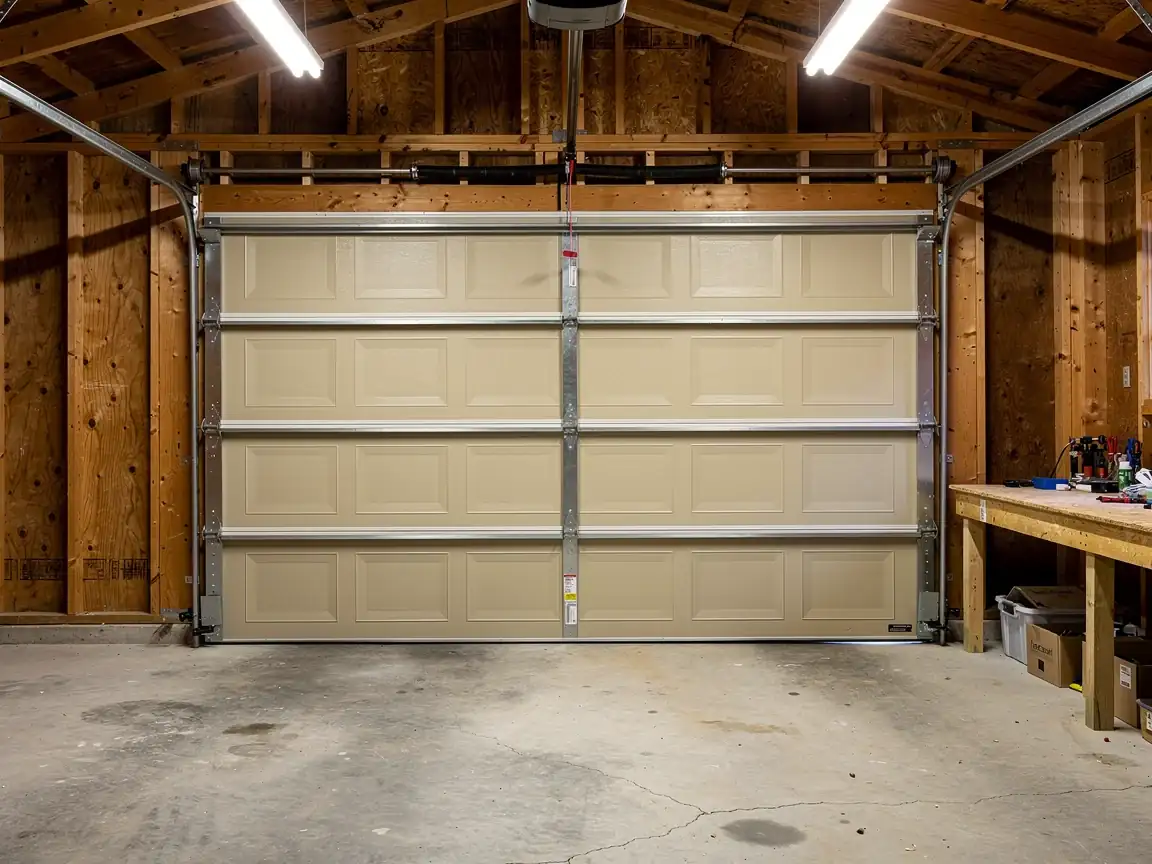
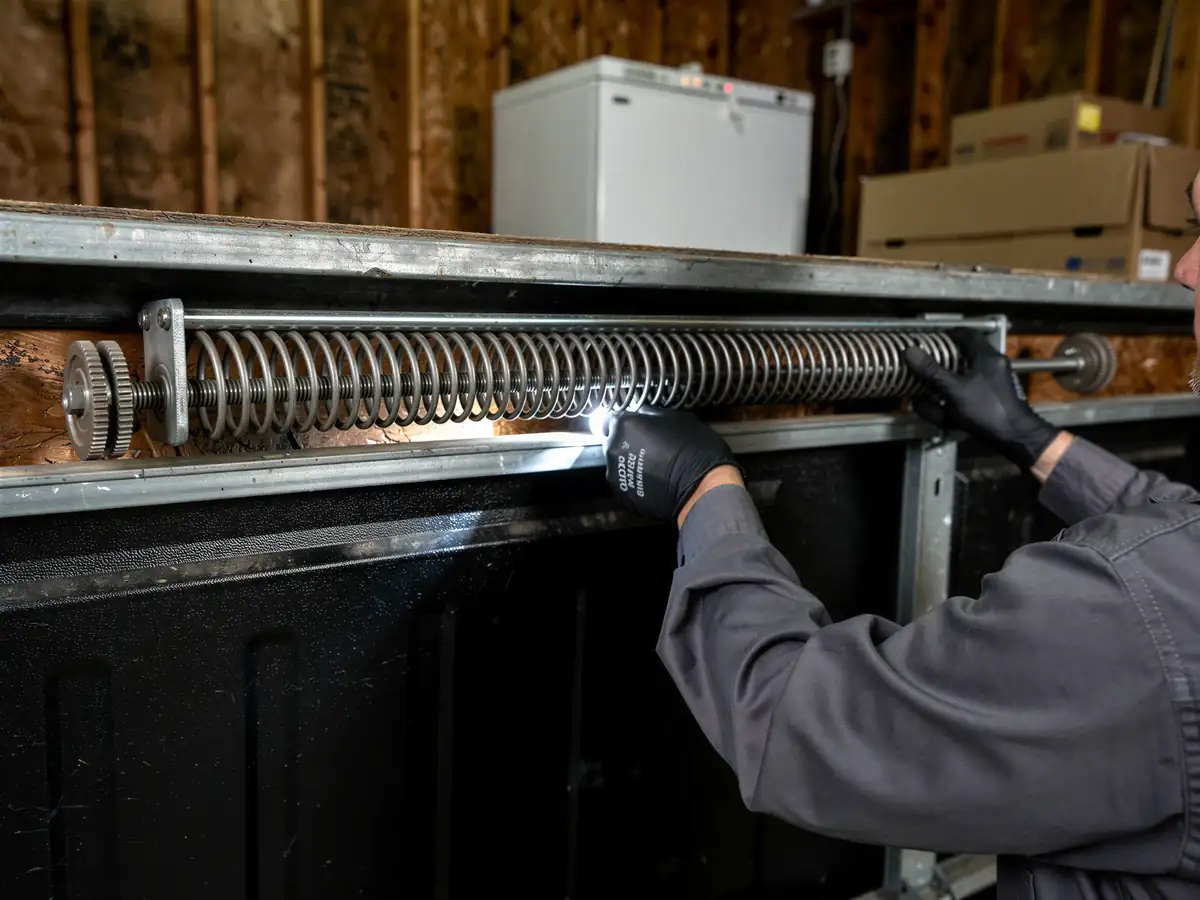
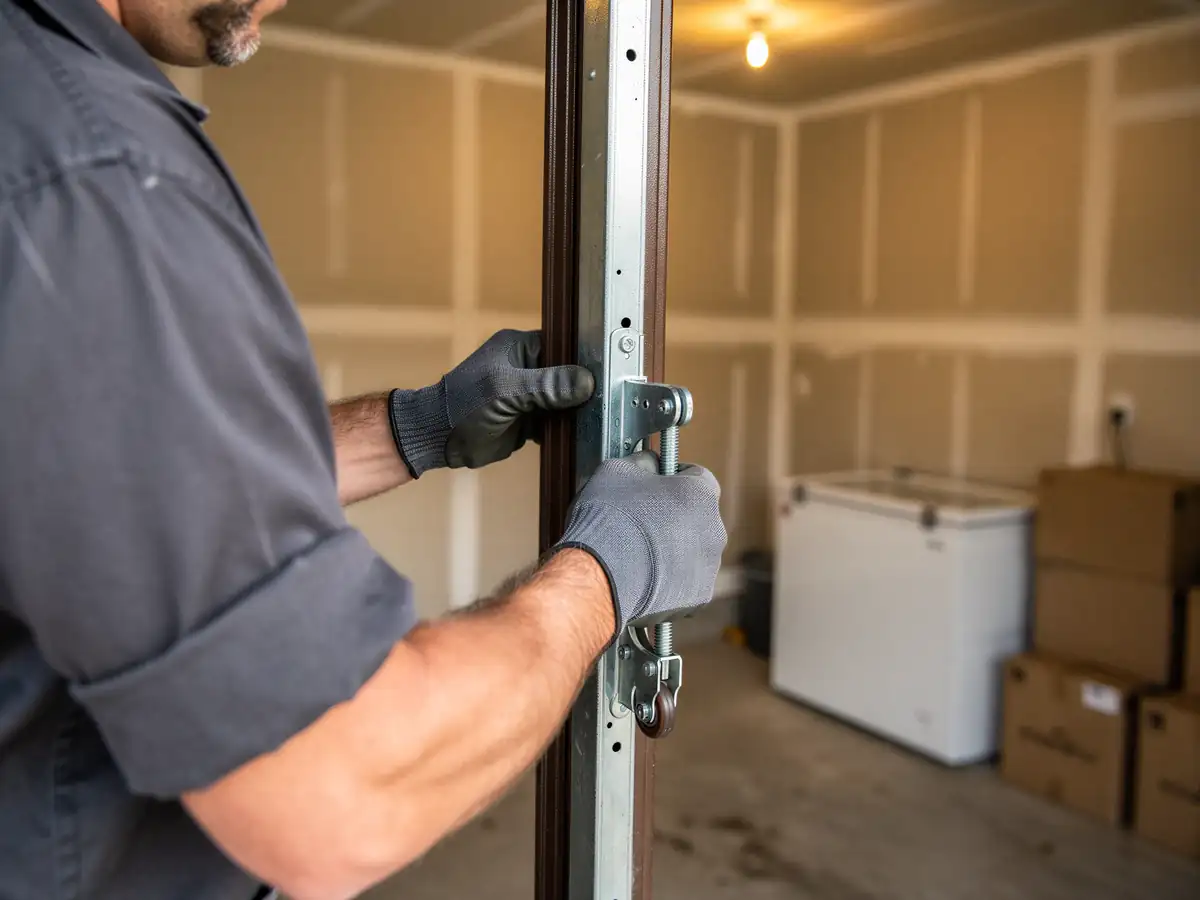
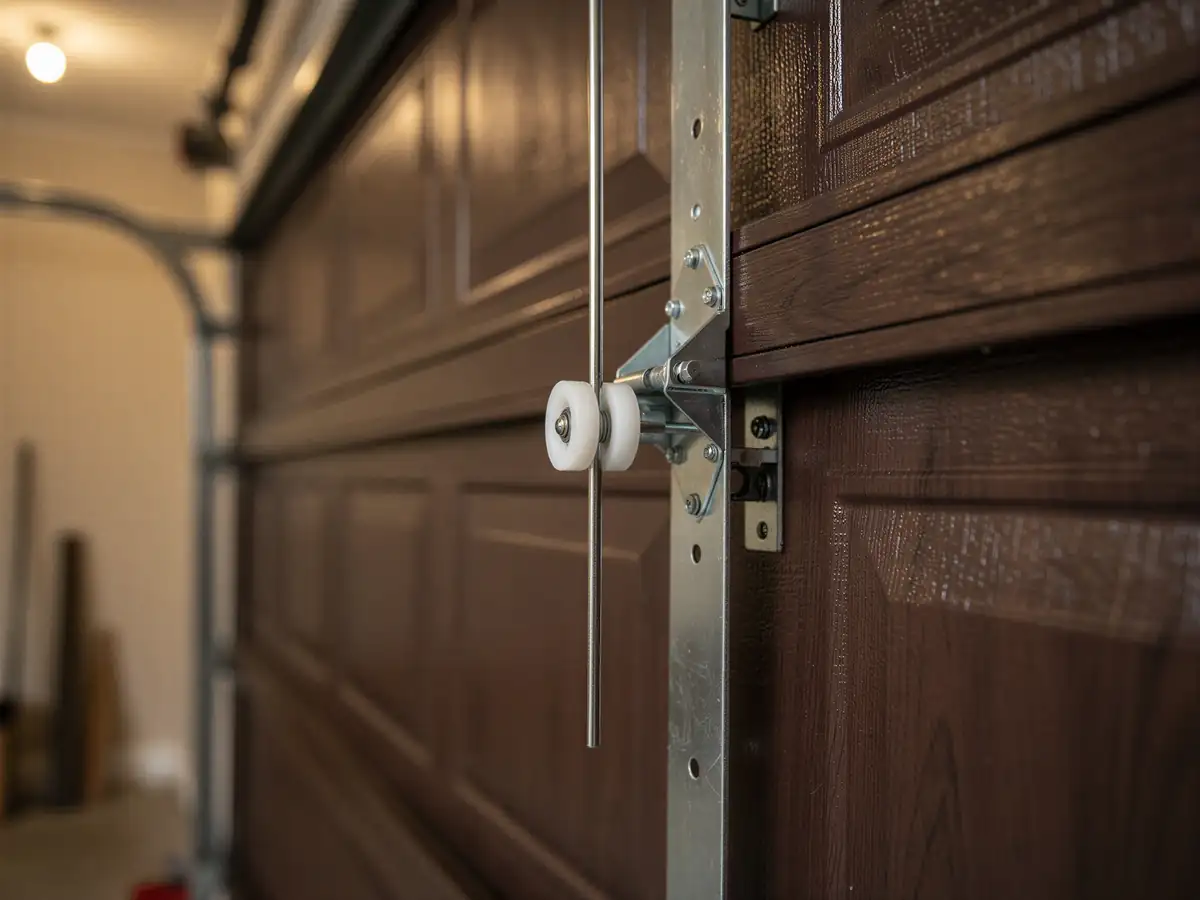
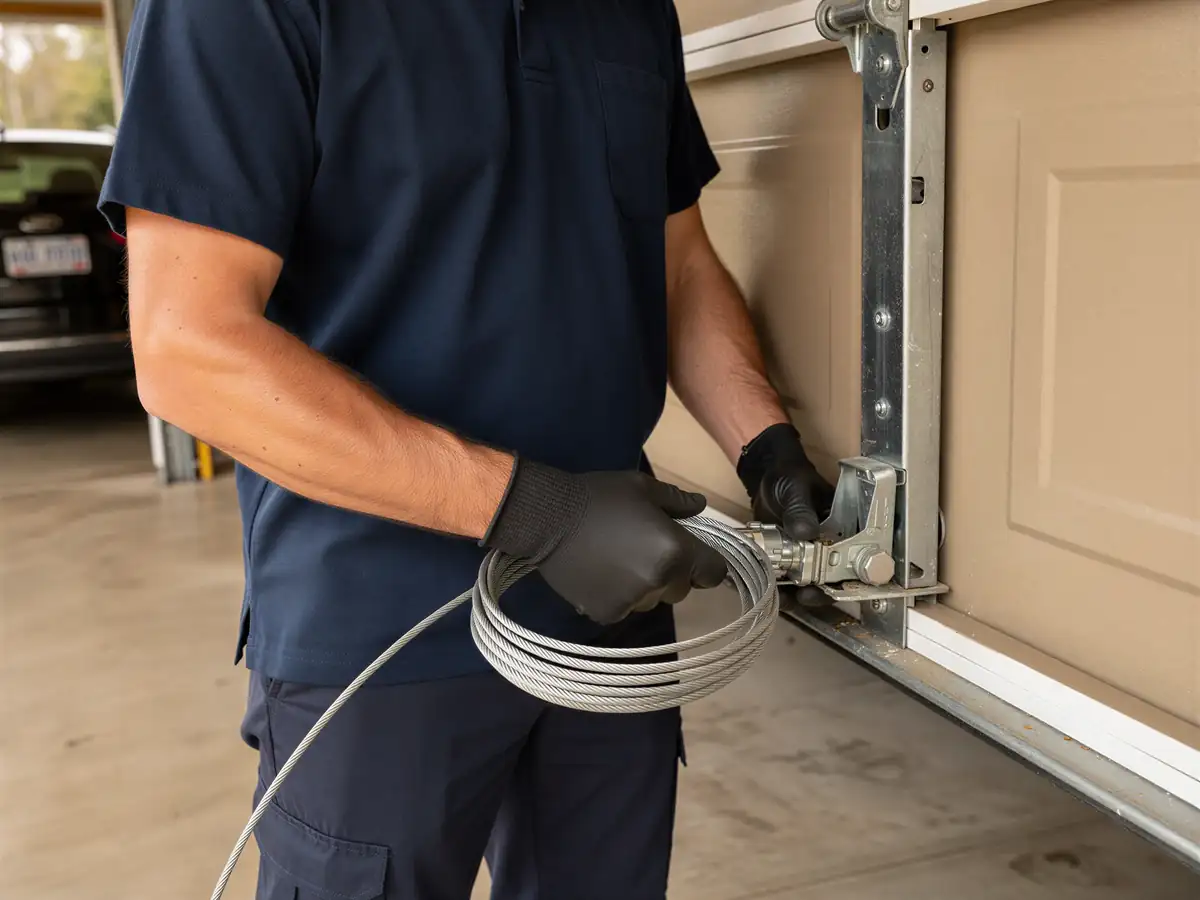
The truck carries standard aircraft-cable stock in the diameters and lengths that cover most residential doors, plus a run of drums and bottom brackets sized for the torsion systems common across the service area's newer stock. For Oakwood's older doors - the ones still running factory hardware from a 1938-era build, or a mid-century replacement - we also carry adapter brackets and a range of drum bore sizes, since narrower, older drums don't always match what a big-box kit assumes.
Honest limitation: if a door needs a cable sized or spooled for a discontinued drum we don't stock, that part gets special-ordered, and we'll tell you that on site rather than force a near-enough fit that fails again in a year. On a door that old, a mismatched cable diameter is often what caused the fray in the first place.
Booking a Visit
We come out from Beavercreek, about 6 miles to Oakwood, so there's no local branch or separate crew - it's the same techs and the same truck stock either way. When you call, tell us what the door is doing: cable fully off the drum and door stuck, cable frayed but still holding, or door running crooked on one side. That tells us whether to bring extra drums and brackets or just cable and clips.
If you know roughly when the door or opener was last replaced, mention it. On a house this old, that one detail - original hardware versus a later swap - changes what we load before we leave the shop more than almost anything else you could tell us.
Why This Fails Locally
Cable failure in Oakwood usually traces back to age, not abuse
With housing here centered on 1938 - against a regional median of 1971 and a stock that runs 1938 to 1998 overall - a meaningful share of doors are still carrying cable and drums decades past what either was built to last. Galvanized cable rusts from the inside of the strands outward, and in a severe-cold climate band like this one, that rust accelerates every winter the cable sits exposed in an unheated garage.
There's also a cost-of-deferred-maintenance pattern we see more in higher-income areas like Oakwood
Where the median household income runs $158,968 against roughly $70,000 across the rest of the service area. Owners here are more likely to have already replaced a spring or opener without touching the original cable, which means the cable is sometimes the oldest part left on the door by the time it fails.
How It Shows Up
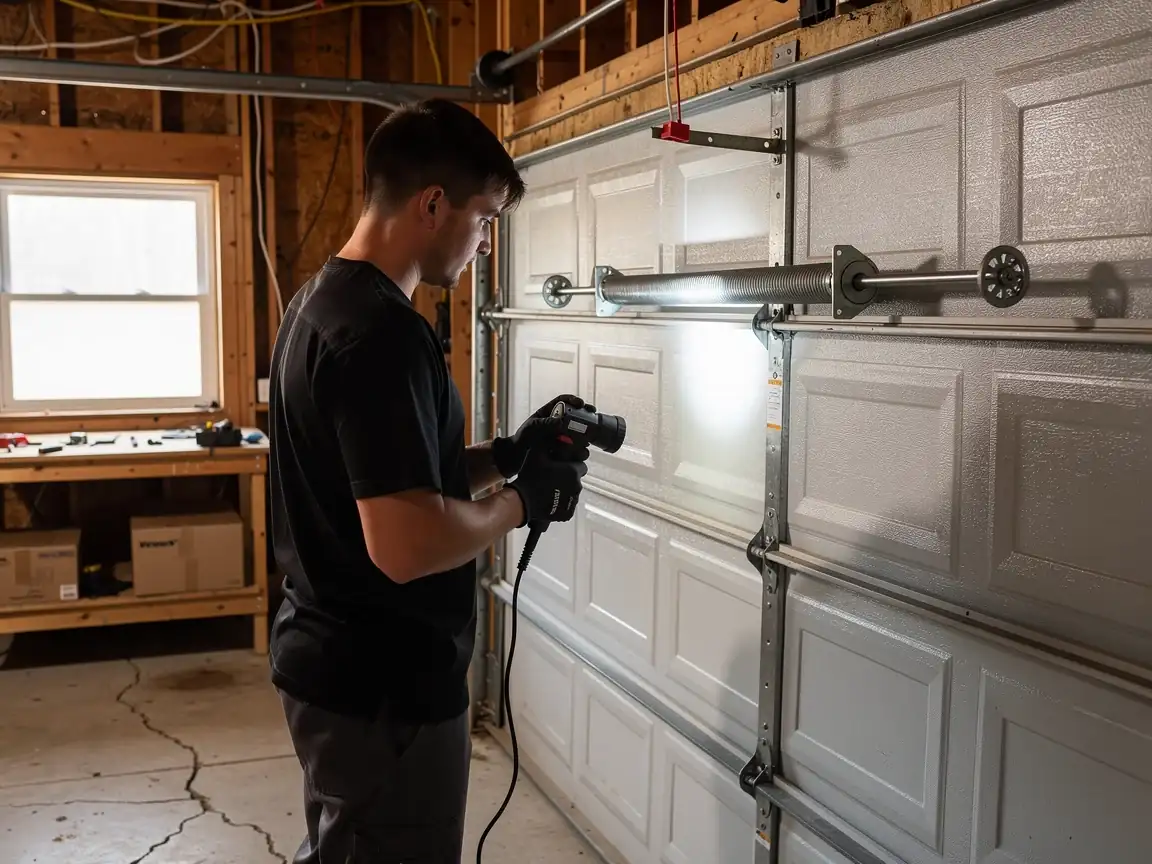
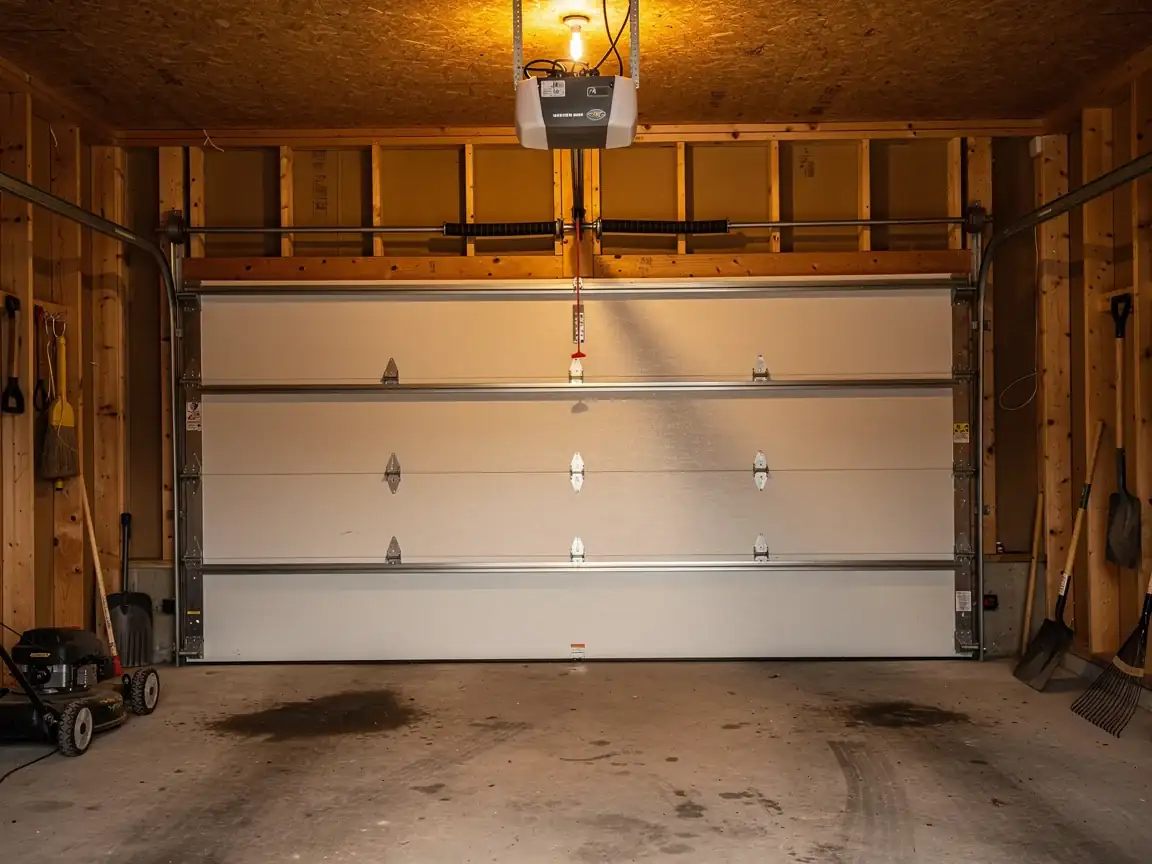
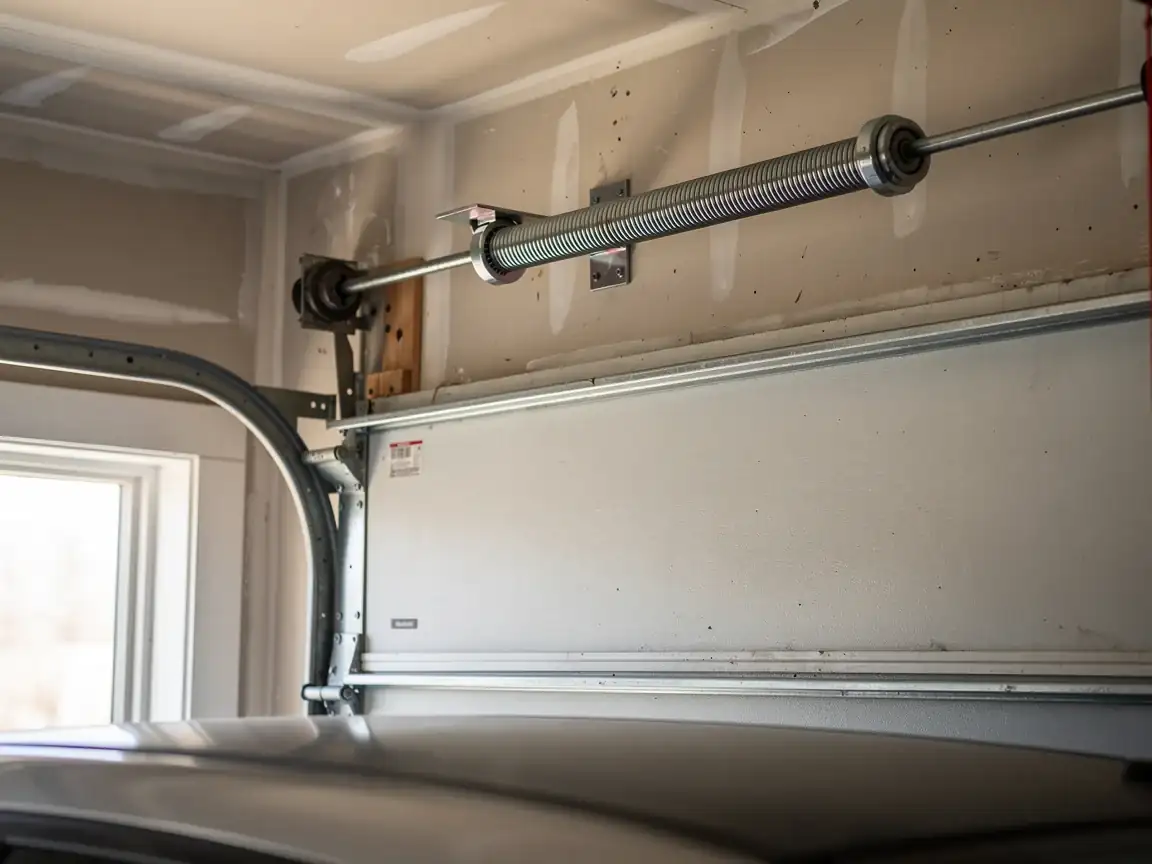
Most calls start the same way: the door stops mid-travel, or it runs down crooked and jams at the bottom corner. Pop the garage light on and look at the drums near the top corners of the door - if you see a cable bunched, off its track, or hanging loose while the other side still looks tight, that's your answer. Don't try to run the opener again once you see that; forcing it bends the track or cracks a panel, and that turns a cable job into a bigger one.
On Oakwood's older doors specifically, the failure is often gradual: a few visible frayed strands near the bottom bracket for weeks before the full snap, especially after a hard cold stretch. If you catch it at the frayed stage, that's the cheaper visit. If you catch it after the snap, we're also checking the drum and bracket for wear before we call it a simple cable swap.