Booking a Visit
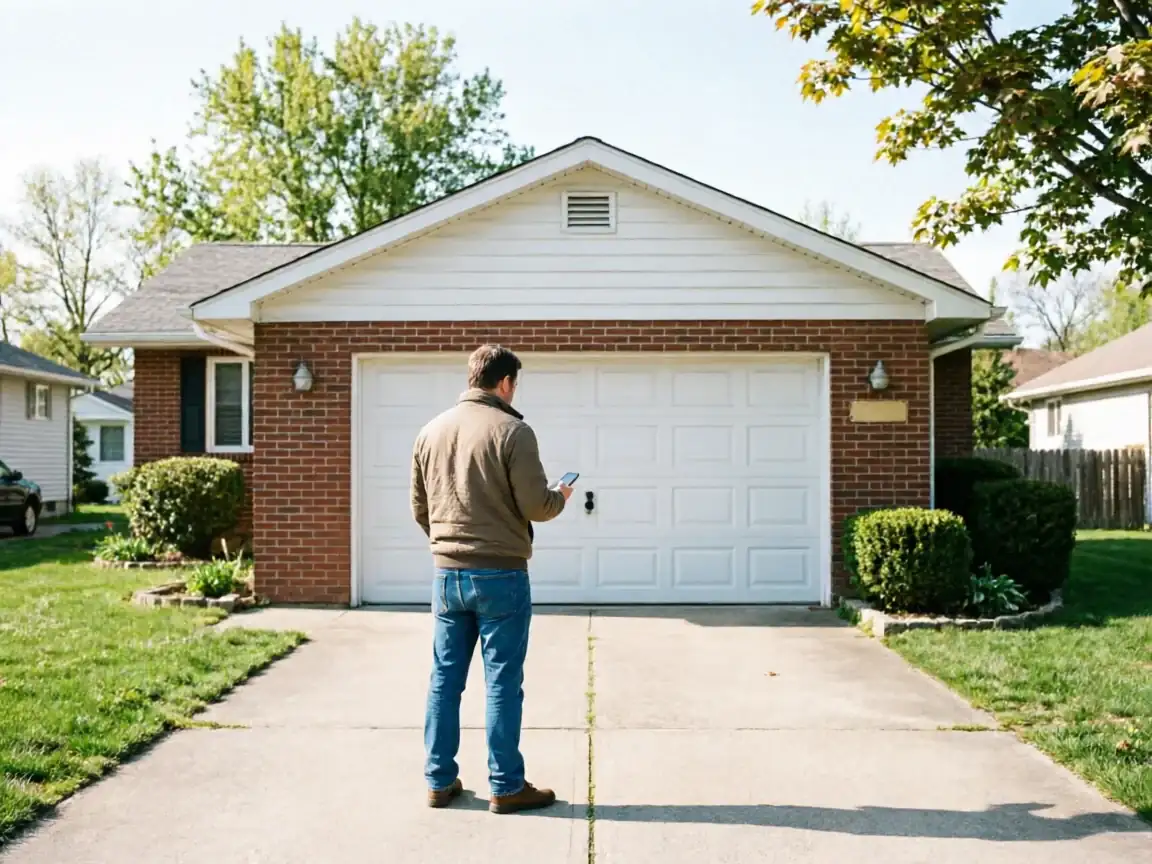
Huber Heights sits about 9 miles from our Beavercreek shop
And most of the calls we get from here follow the same pattern: a door that won't lift, or one that slammed down because a torsion spring let go. The median home in this part of town was built around 1975, which means the original garage hardware is now coming up on fifty years of cycling open and shut. That's well past the rated life of a torsion spring even in good conditions, and our winters aren't gentle on steel. When you call, tell us the door's weight if you know it (single or double, wood or steel) and whether the spring broke clean or is just sagging. That tells us what's riding in the truck before we head your way, instead of guessing once we're in the driveway.
- 9 miles
We don't keep a branch in Huber Heights
Every job here is a trip out from Beavercreek, so we ask for a window rather than an exact minute, especially on cold mornings when steel contracts and more springs decide to go at once across the area.
Time on the Job
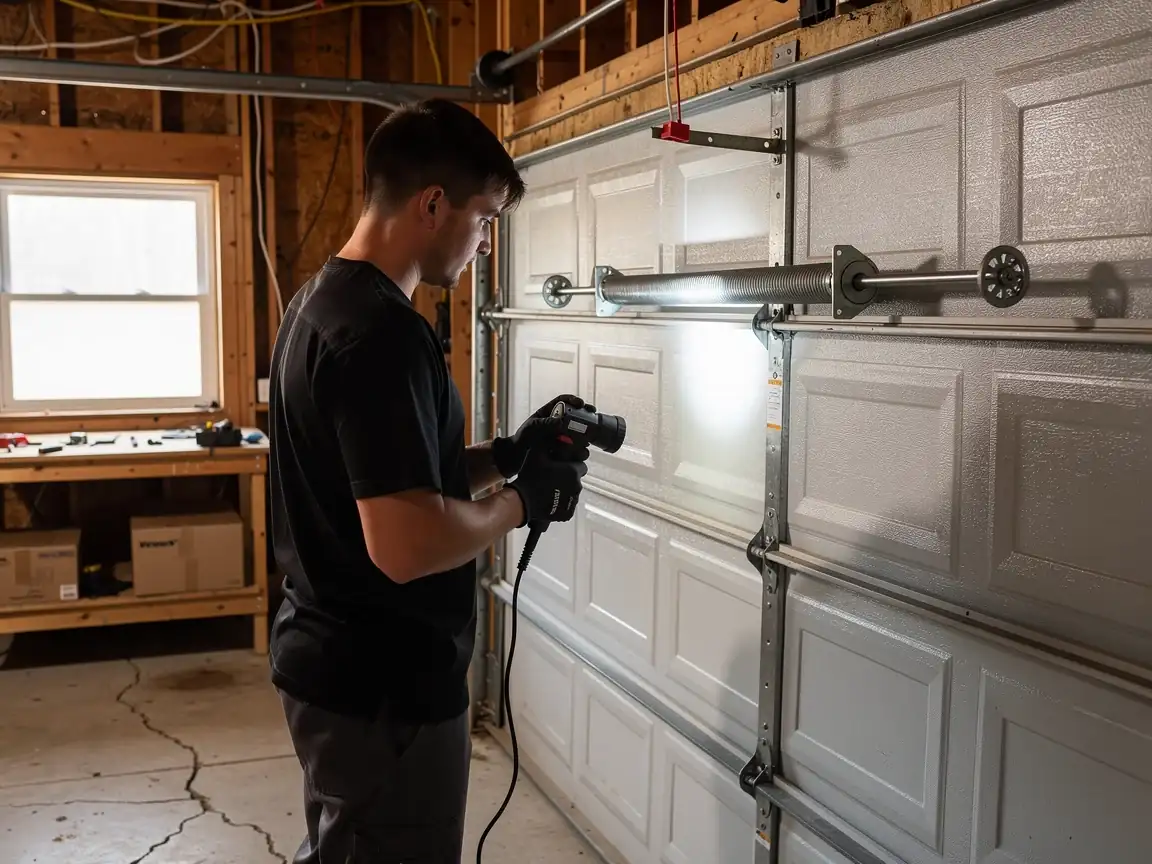
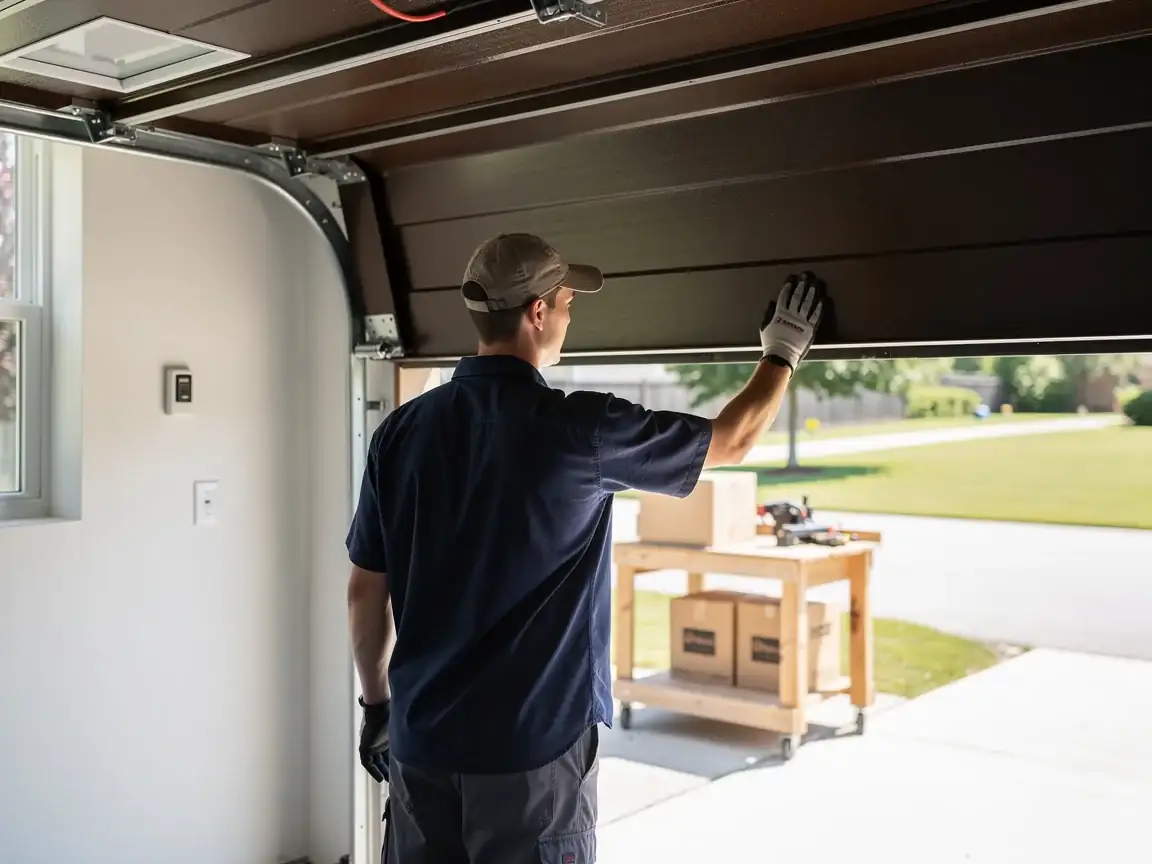
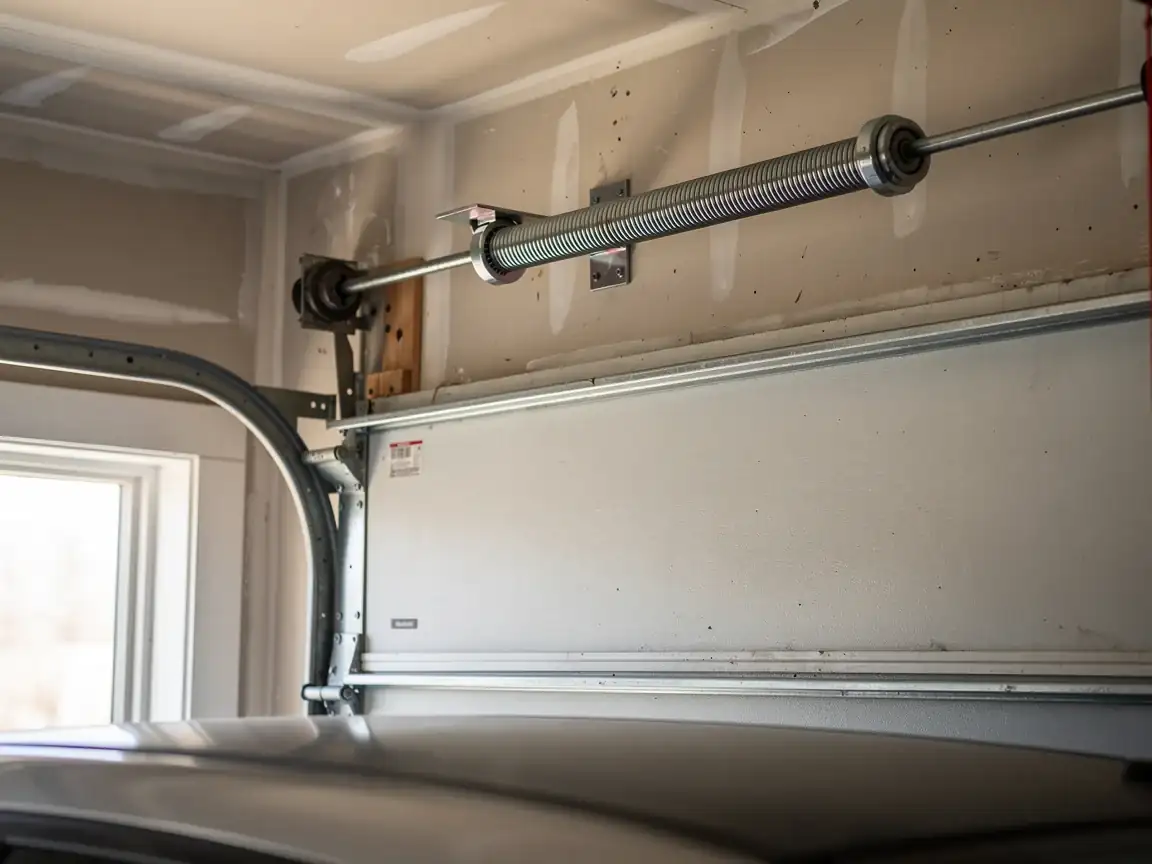
A single broken torsion spring on a standard door, once we're on site with the right size in hand, usually runs under two hours start to finish. That number holds whether the house is a 1975 build or something newer, because the clock is about the repair itself, not the age of the structure around it. What changes the time is what's attached to that spring: a 1970s-era door often still has its original track and end bearing plates, and on steel that's spent fifty winters in an unheated garage, those brackets can be rusted to the point where they need replacing alongside the spring, which adds time most newer installs don't need.
Double doors take longer than singles because they run on two springs and heavier shafts, and if both springs are original, we'll usually recommend replacing the second one even if it hasn't broken yet, since it's carrying the same age and the same wear. That's not an upsell so much as avoiding a second trip for the same root cause a few months out.
Can You Do This Yourself
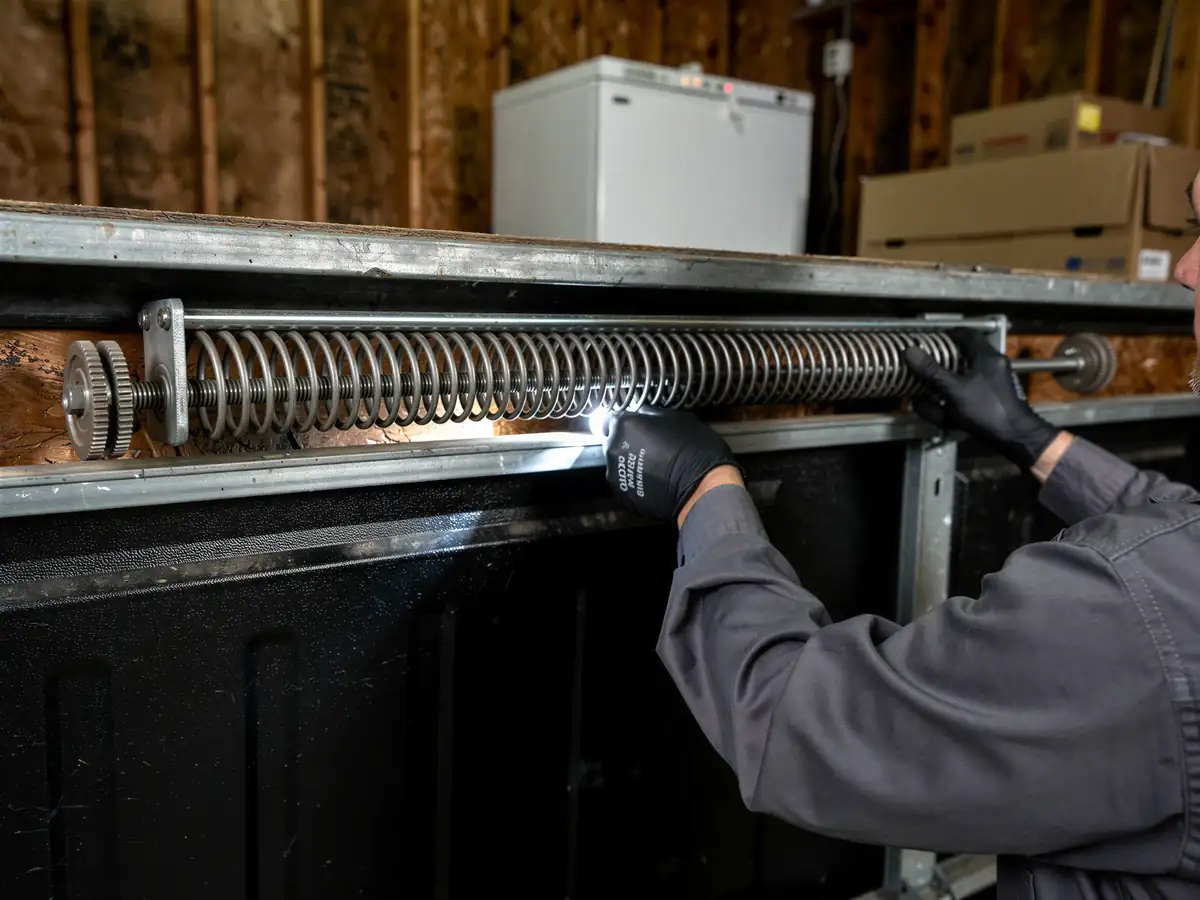
We'll say it plainly: don't. A wound torsion spring holds enough stored tension to break a wrist or worse if the winding bars slip, and that risk doesn't scale down just because the door looks ordinary. Extension springs along the horizontal tracks are a little more forgiving to look at, but they're still under load, and on a door this age the mounting hardware holding them is often weaker than it looks from the ground.
What you can safely do yourself: check that the door is binding on the track rather than the spring itself, listen for whether the noise is coming from a roller or from the spring area, and take photos of the spring (broken or intact) before you call. That saves time on-site. Replacing the spring, winding it to the correct turns for your door's weight, and balancing the door afterward is not a weekend project, and getting the turn count wrong on an old shaft can bend it.
What You Pay
We don't publish a flat number for spring repair here because the variable isn't Huber Heights
It's the door in front of us. A single spring on a lighter door costs less than two springs on a heavy insulated double, and if the original end bearings or center bracket on a 1970s installation have rusted through, that's additional parts on top of the spring itself. Homes built around the median year for this part of town are now old enough that we routinely find at least one other worn component once the spring is off and we can see the shaft.
What we can tell you without seeing the door
Springs are priced by size and door weight, not by zip code, and a straightforward single-spring job is the cheapest version of this repair. If you want a number before we arrive, have the door's rough dimensions ready when you call, and we'll narrow it down over the phone instead of guessing on-site.
The Complications
The complication we run into most in Huber Heights is original hardware. A door installed around 1975 was typically matched to lighter steel panels than what's sold today, and over the years some owners have swapped in a heavier insulated door without upgrading the spring to match. The spring that came with the house ends up undersized for the door now hanging on it, and it fails faster than it should. That mismatch isn't something you can see from the driveway; it shows up once we've got the door off its stops and are checking lift balance.
Cold is the other factor. Steel contracts in low temperatures, and a spring that's been slowly fatiguing for years often picks the coldest morning of the stretch to finally snap, because that's when the metal is least forgiving. We can't do much about the weather, and we won't pretend a repair postpones the next failure forever if the spring was already undersized for the door. Sometimes the honest answer is a correctly sized replacement spring, not just swapping like for like.