Why This Fails Locally
Miamisburg's houses center on a median build year of 1974
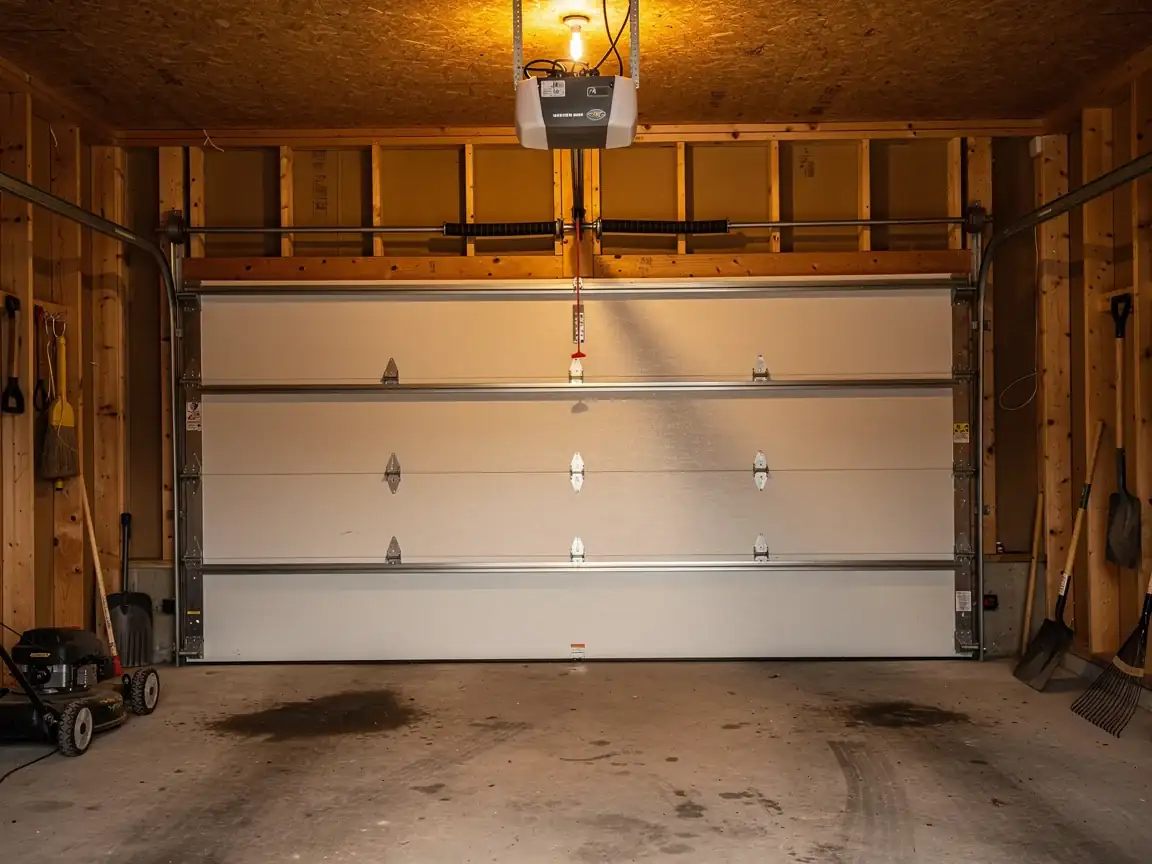
A few years past the 1971 median that covers the wider service area. That gap sounds small, but it puts a chunk of Miamisburg garage doors just past the point where the original chain-drive opener, if it's still the first one, is well into its second decade of lifting a heavier door than it was sized for. Owners in this area often replaced the door itself at some point without ever touching the opener, so you get a newer door riding on an old motor that was never matched to it.
The climate band here is cold and severe, which is harder on openers than most people think
It's not the motor that fails first - it's the capacitor, the gear sprocket, and the belt or chain tension, all of which stiffen and wear faster through repeated freeze-thaw cycles. A door that visibly struggles in January and runs fine in July usually isn't a door problem at all. It's the opener telling you its drivetrain has had enough.
Can You Do This Yourself
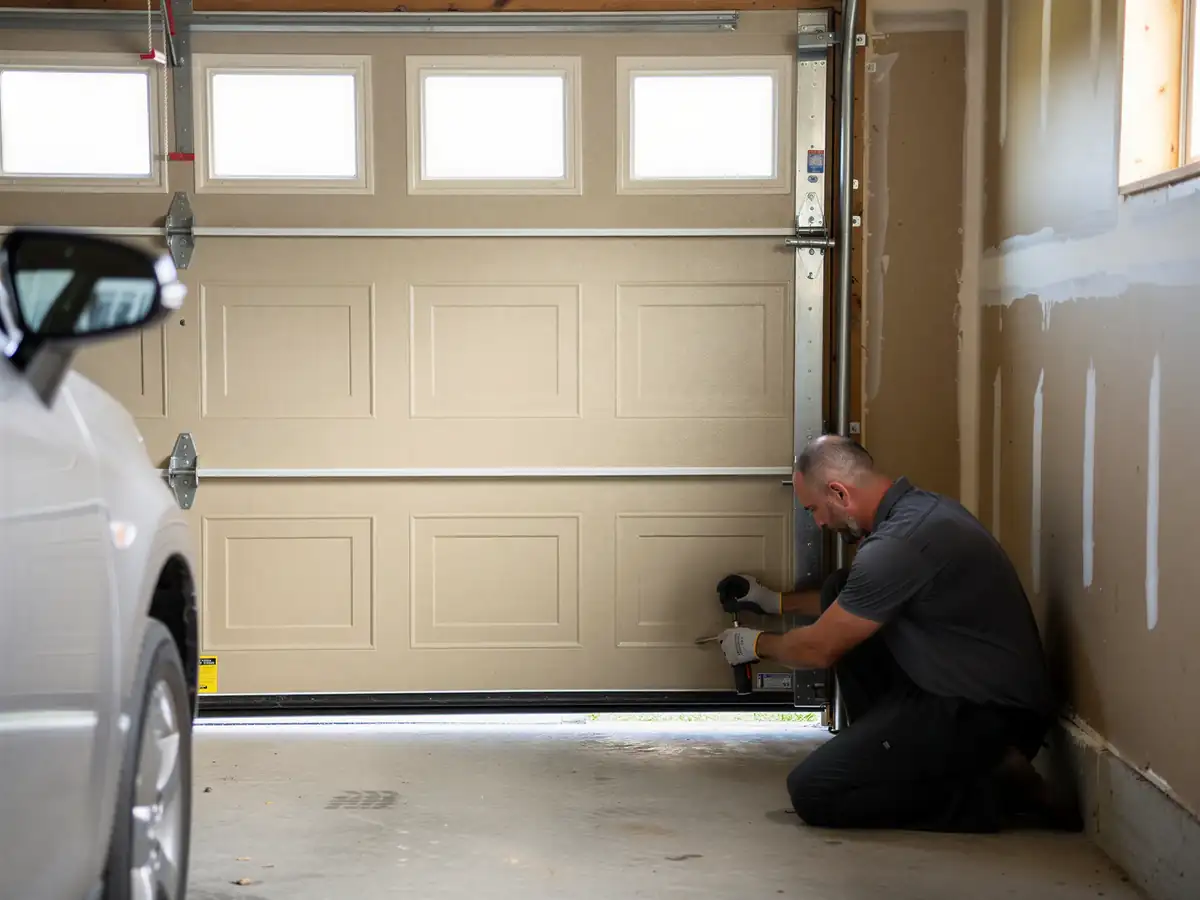
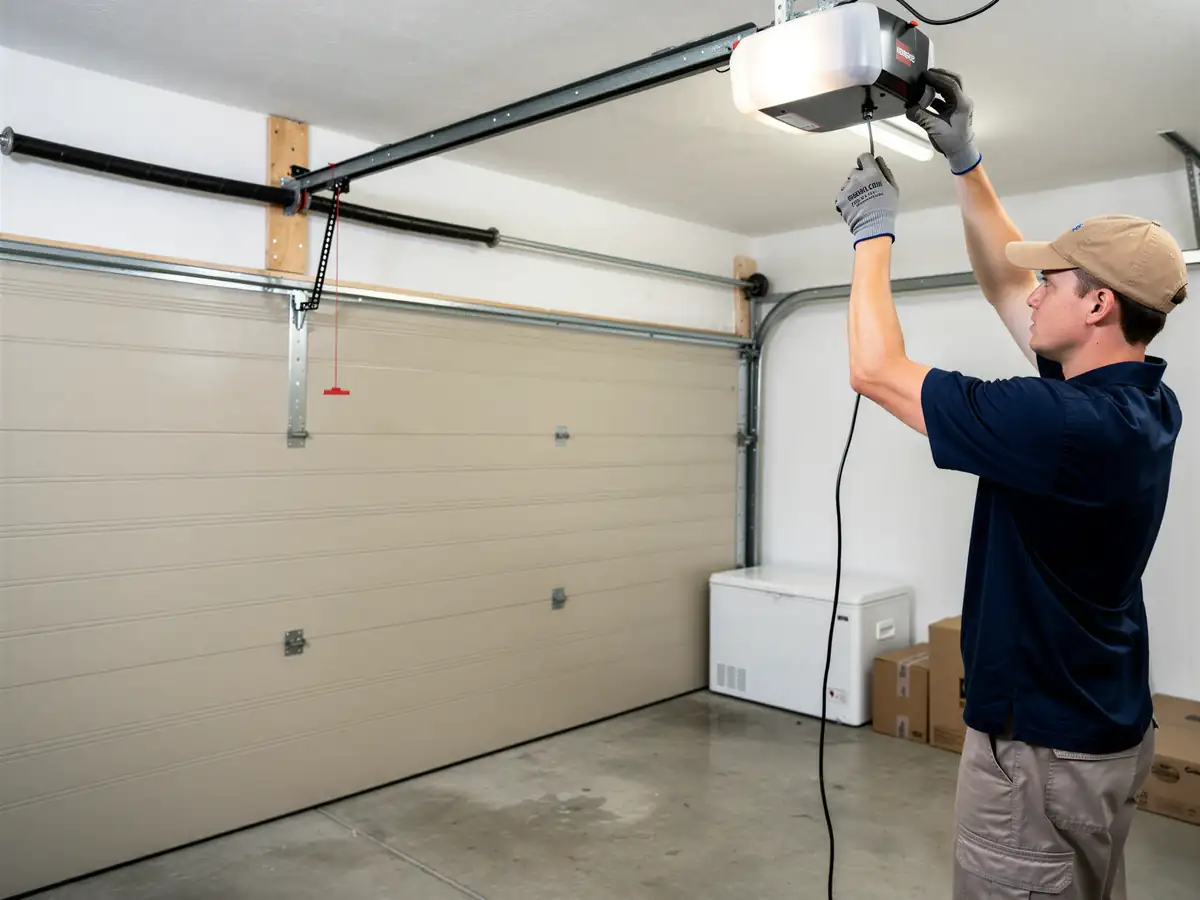
A straightforward swap - same rail length, same mounting points, matching an existing bracket setup - is within reach for someone comfortable on a ladder and patient with wiring a safety sensor correctly. Where people get hurt, or just get it wrong, is on the travel limits and force settings. Set those wrong and the door either won't reverse on an obstruction (a real safety problem) or reverses on nothing and never closes.
The honest limit here: if your current opener is hard-wired into an older household circuit, or the header above the door isn't square because the house has settled over fifty-plus years, that's not a one-afternoon DIY job anymore. We won't talk anyone into a job that turns into a bigger repair than it needed to be. If you're not sure which situation you're in, it's worth a second set of eyes before you buy a unit.
Time on the Job
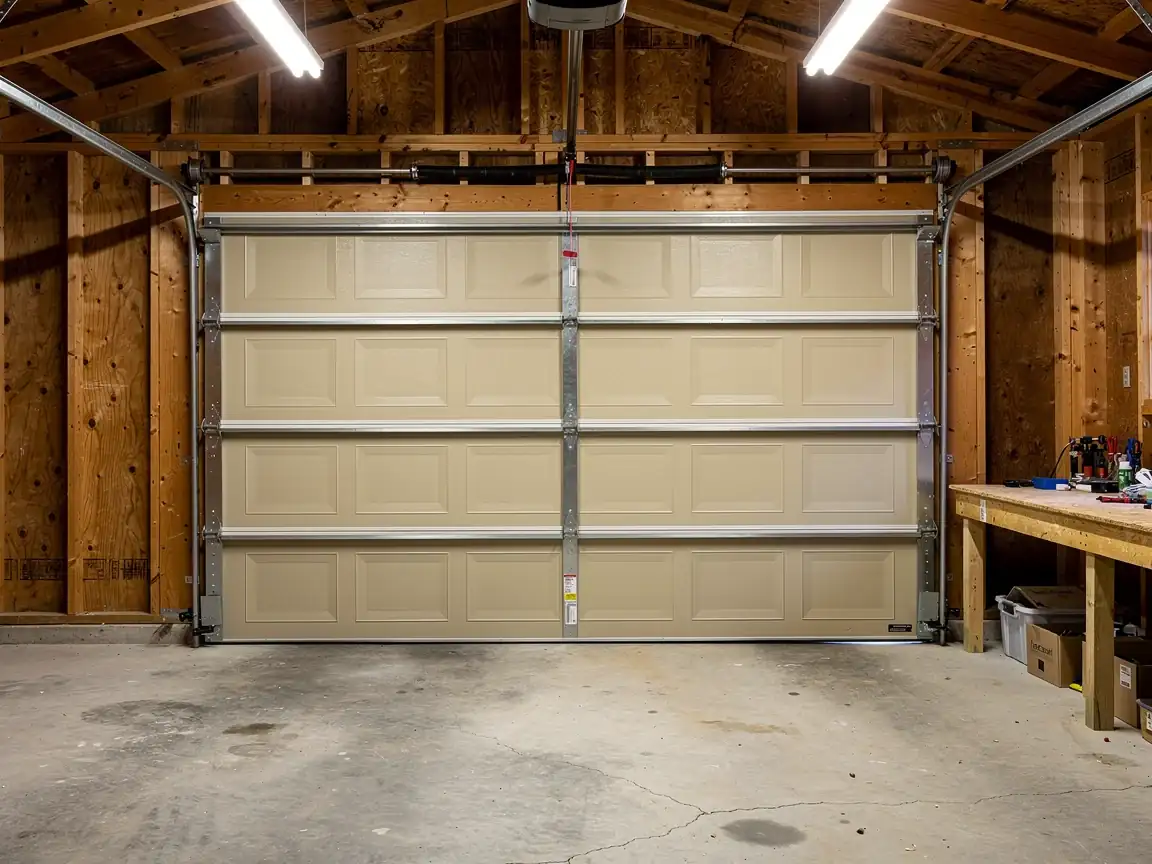
Most straight-swap installs - pulling an old opener and hanging a comparable new one on existing rail and brackets - run in the range of a single visit, not a multi-day project. Where the time goes isn't the motor mount, it's getting the safety sensors aligned and the force and limit settings tuned so the door reverses correctly on contact. Rush that part and you end up with a door that slams or won't shut, which is a bigger call-back than the original job.
If the bracket positions need to change, or the header needs reinforcing because it was never built for a heavier opener, plan on more time. We won't commit to a number here that doesn't hold for every driveway, but a same-day job is the norm when the structure underneath is sound.
What You Pay
We're not going to print a number that doesn't match what shows up on your invoice
So there's no flat price listed here. What does matter locally: Miamisburg's median household income sits at $82,095, noticeably above the $70,000 median across the rest of the service area, which is part of why belt-drive and smart openers come up more often in quotes here than in some of the older, lower-income pockets nearby.
What changes the price isn't the town, it's the job in front of us
Whether the old unit comes out clean, whether wiring needs updating, whether the header needs bracing. We'll walk you through what's driving the number before anything gets ordered.
Booking a Visit
Miamisburg sits about 13 miles from our Beavercreek base, farther out than closer stops like Riverside or Fairborn at five miles each, but well within a normal day's run. We don't keep a branch or drop-off point in Miamisburg - the truck comes from Beavercreek, and that drive is part of scheduling, not an extra fee tacked on after the fact.
See our service area for the full list of towns we reach, or check the Beavercreek opener installation page if you're closer to that side of the area.
How It Shows Up
In a lot of Miamisburg's 7,508 households, the first sign isn't total failure - it's a door that starts slow, groans partway up, or needs a second press of the remote on cold mornings. That's the drivetrain fighting stiff grease and a motor that's drawing more current than it used to. Left alone through another cold season, it usually ends with the opener not engaging at all, or the gear sprocket stripping outright.
A house built around the 1974 median here is old enough that the opener has likely been replaced once already, sometimes with a unit sized for a lighter door than what's hanging now. If your remote range has shrunk or the wall button works but the clicker doesn't, that's often a receiver going bad rather than the whole unit - worth ruling out before you replace anything.