What Is on the Truck
Most of the area we cover was built out between 1938 and 1998
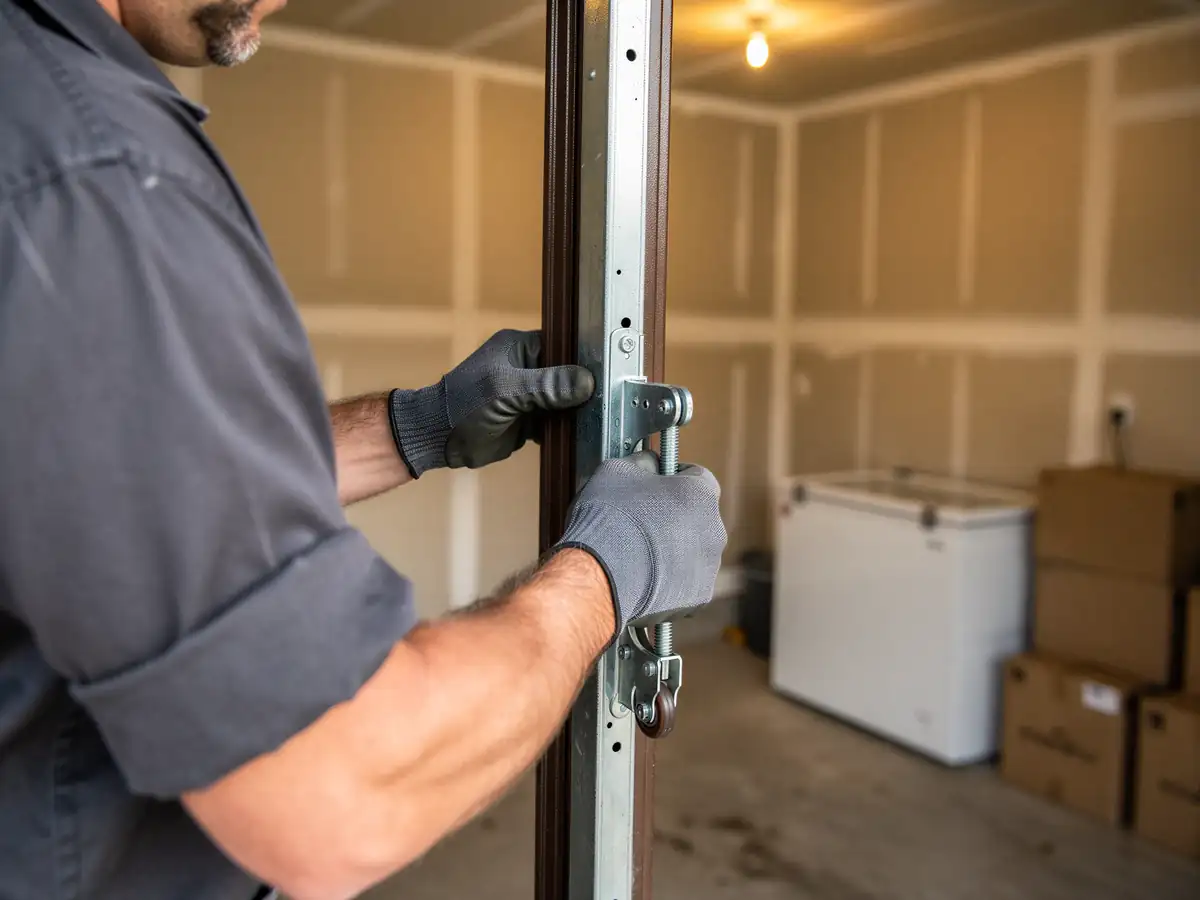
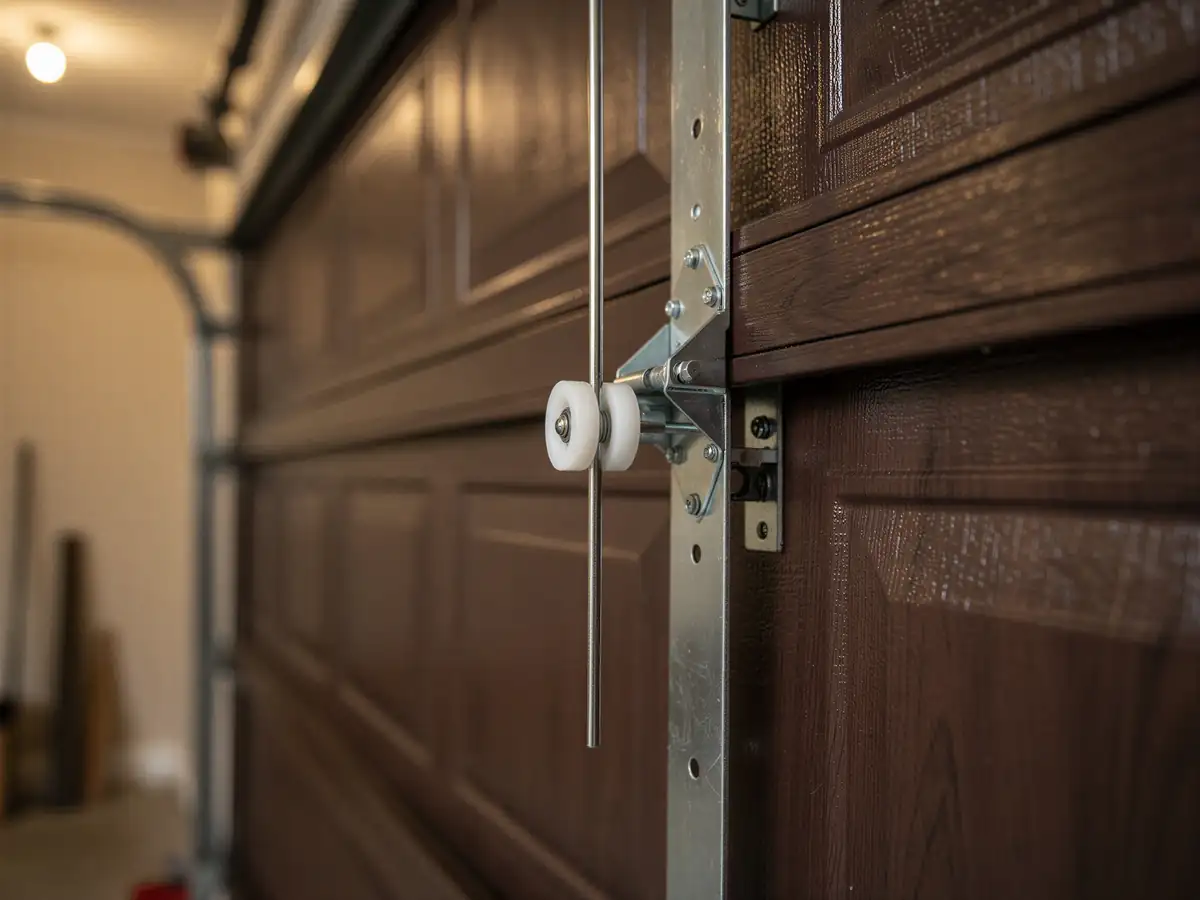
With a lot of that stock dating to the 1960s and 70s. Springboro skews newer - its housing runs closer to a mid-1990s median. That gap matters for rollers. A 1970s door usually has steel rollers on a stamped bracket, often without sealed bearings. A 1995-era door is more likely to have come with 7-ball nylon rollers from the builder-grade opener package, which wear out quietly instead of screeching first. We carry both: 2-inch and 2-inch nylon rollers with sealed bearings, short-stem steel rollers for older track gauges, and the longer-stem versions some newer builder tracks need. We also bring extra hinges, since a worn roller usually means the hinge hole next to it has egged out too.
We don't stock every proprietary roller from every national opener brand that shipped in the 90s
If your door uses one of those odd sizes, we may need to order it, and we'll tell you that on site rather than force a wrong-size part into your track.
How It Shows Up
On a newer door, the first sign usually isn't noise - it's a door that hesitates or jerks at one specific spot in the track every time, which is a flat spot on a nylon roller hitting the rail. On older steel-roller setups the sound comes first: a grinding or clicking that gets worse as the roller loses its bearing. Either way, this is a cold-climate problem before it's an age problem. In a severe cold winter band like this one, nylon gets brittle and steel bearings lose lubrication faster, so a roller that was marginal in October can crack or seize by January. If you're hearing a new sound only on cold mornings, that's the roller telling you first.
Can You Do This Yourself
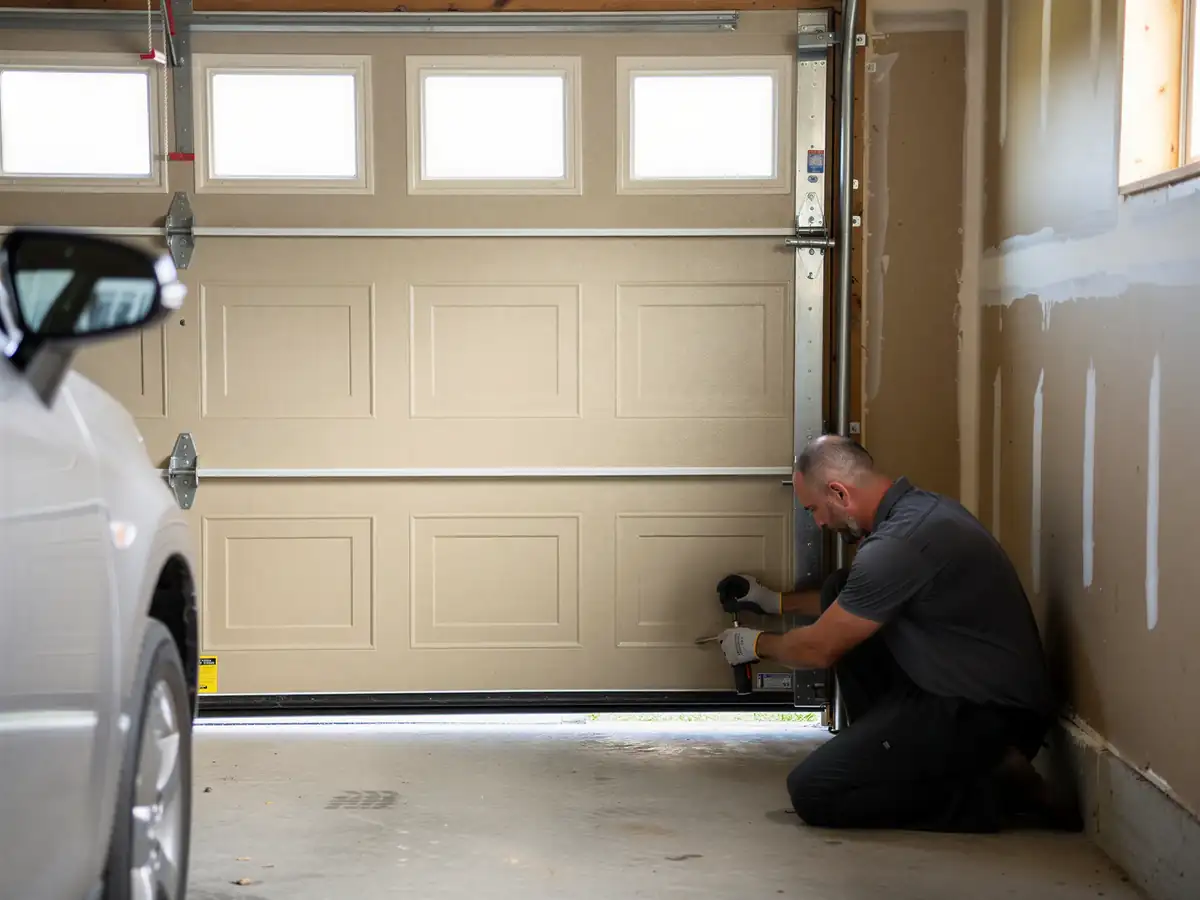
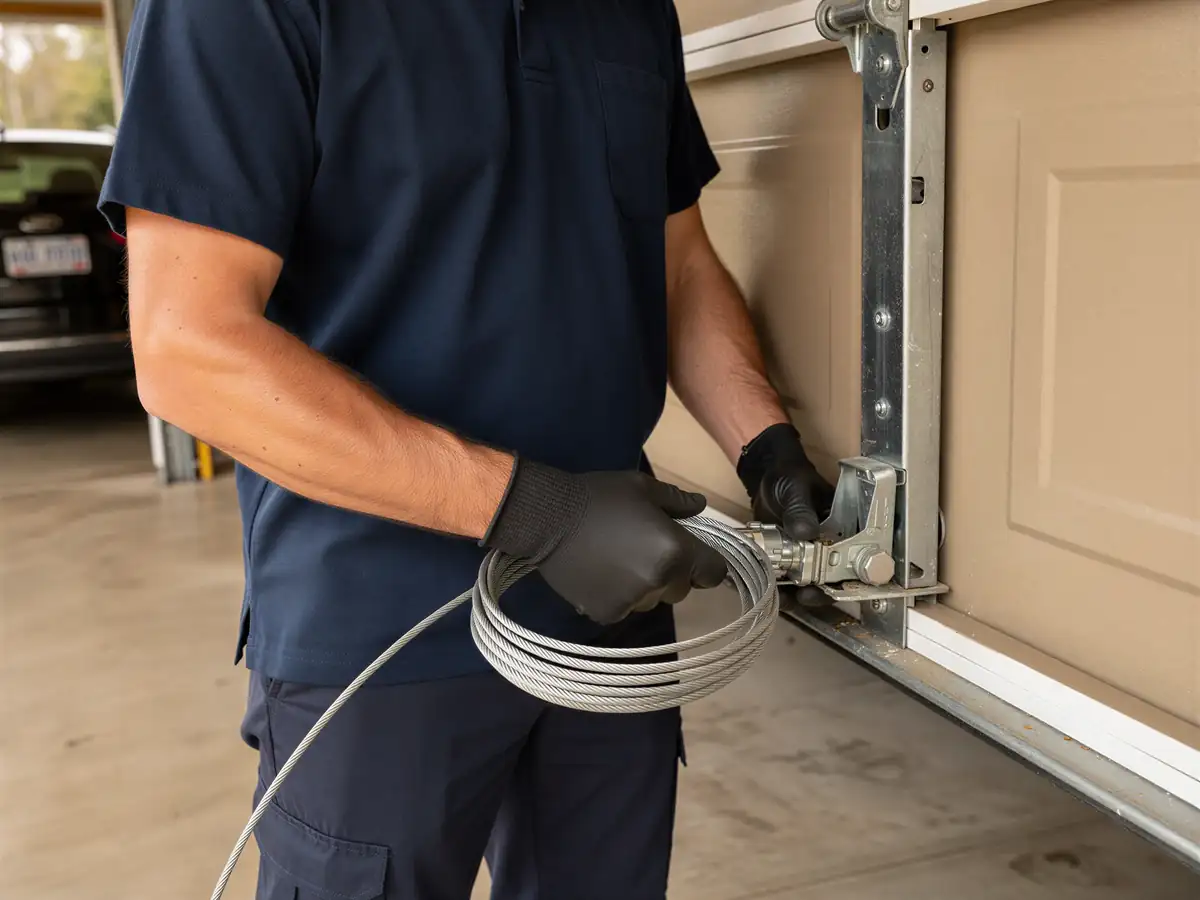
A single roller on a working door, with the door down and the opener disconnected, is a reasonable DIY job if you're comfortable with a wrench and you know which bracket holds spring tension and which doesn't. The bottom roller brackets, the ones near the cables and the bottom fixture, are not a DIY spot - those are under cable tension and the fixture can snap back. If more than two or three rollers on one side are bad, or if the track itself is bent where the rollers ride, that's a job where doing it in the wrong order can bend the track worse or pull a cable off a drum. We'd rather talk you out of a job you can do than show up for something you didn't need us for.
How We Fix It
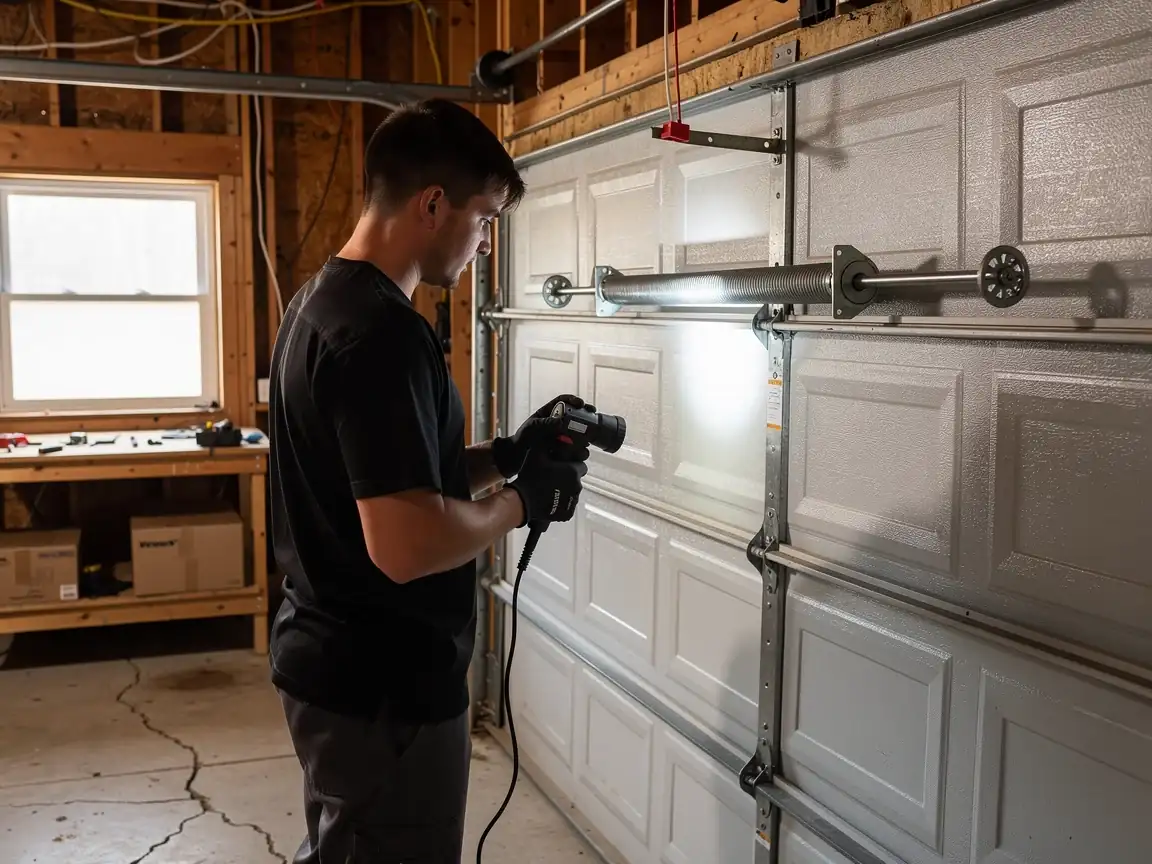
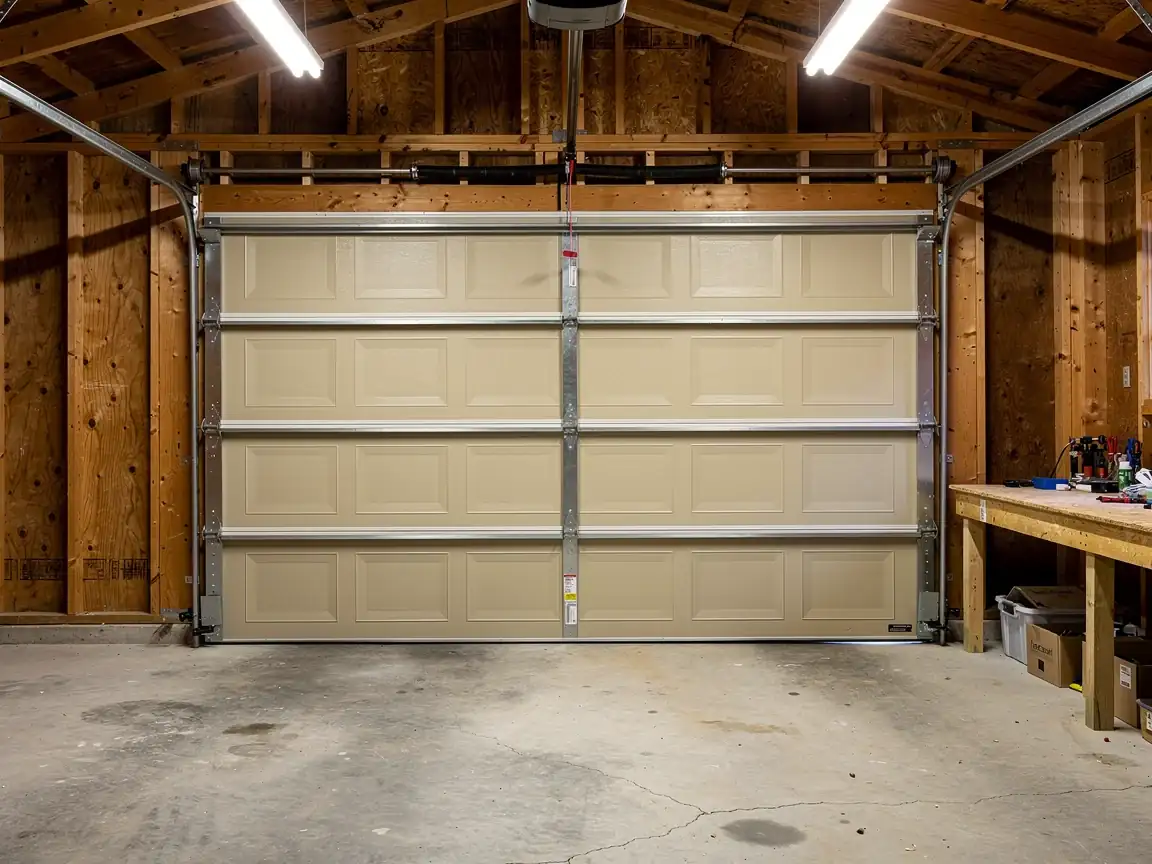
We disconnect the opener, secure the door, and go roller by roller rather than assuming the whole set needs replacing - on a house built in the mid-90s, it's common to find one side worn and the other still fine, since sun and door-use patterns rarely wear both tracks evenly. We check the track alignment at the same time, because a roller replaced into a bent or splayed track will just wear the same way again inside a season. If the hinges are egged out from the old roller stems, we swap those too rather than remount a new roller into a loose hole. Last step is running the door through a full cycle by hand before we hand it back to the opener, so you're not finding a second problem the week after we leave.